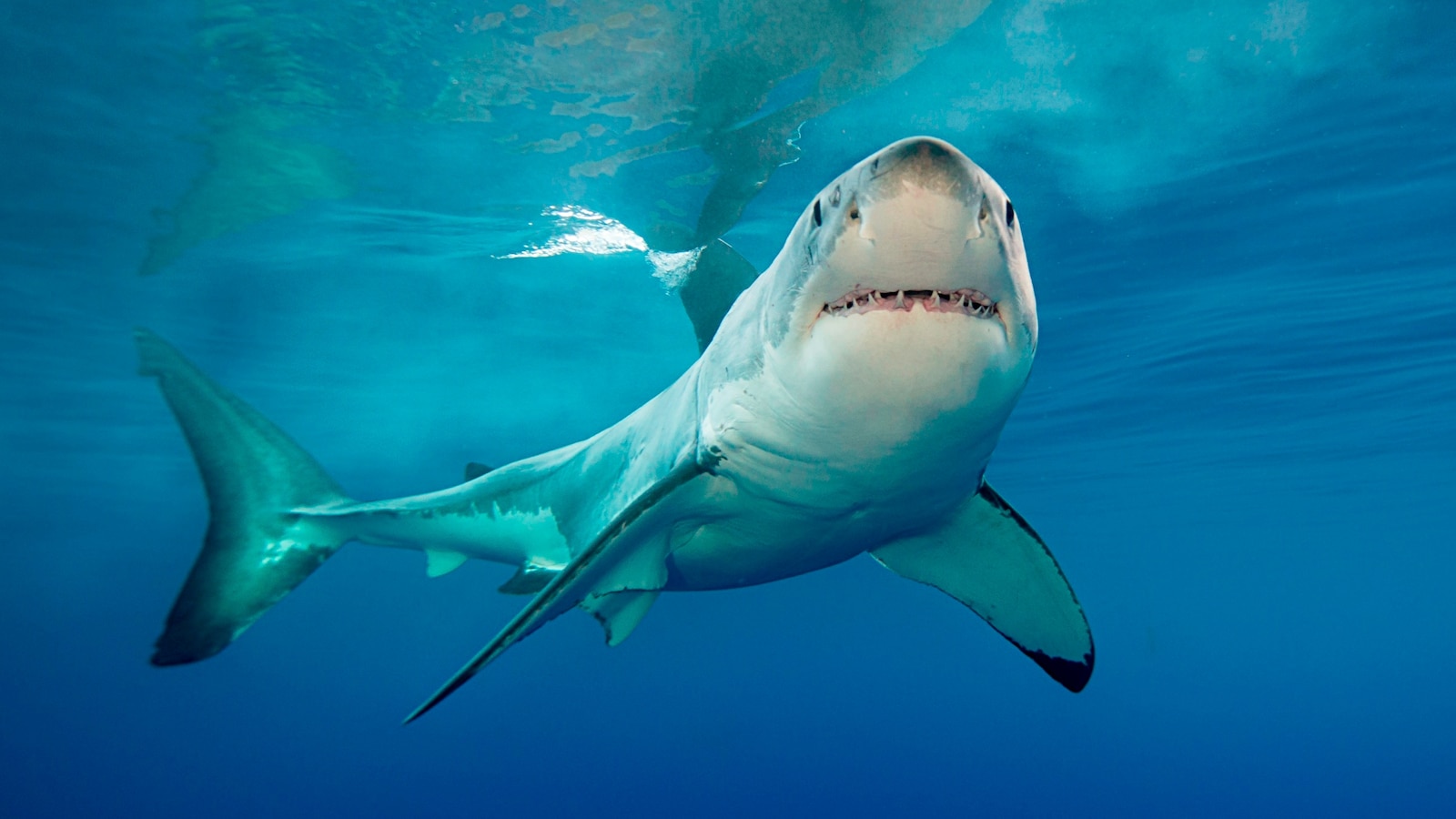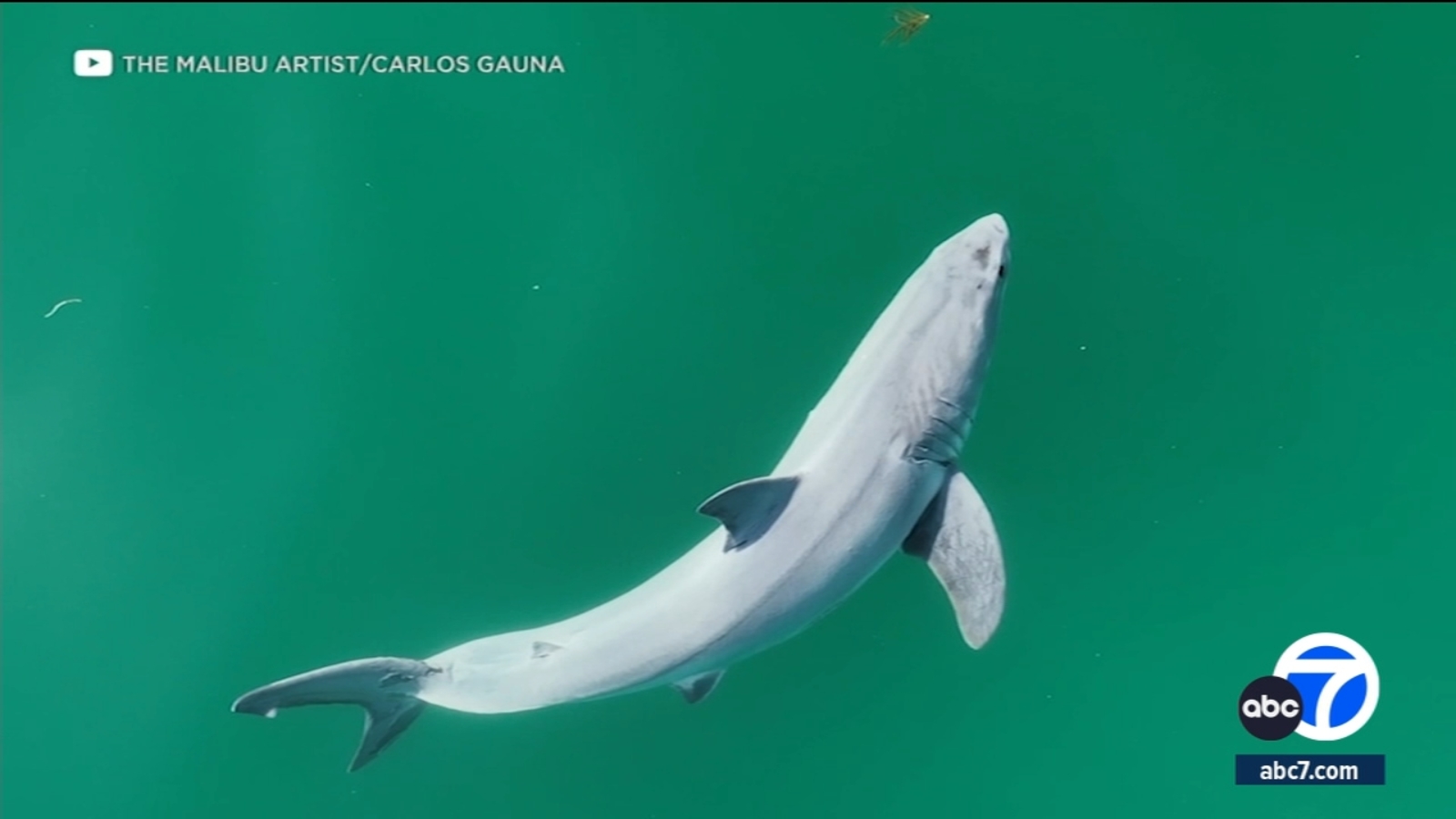
A Malibu filmmaker, in collaboration with UC Riverside researchers, may have captured the first-ever footage of a newborn Great White shark off the Santa Barbara coast. The 5-foot-long nearly all-white pup was spotted last July, and its discovery has raised questions among shark scientists about the predator's reproduction. The filmmaker believes the milky film seen on the shark is embryonic membrane from birth, and the shape of its dorsal fin suggests it's a newborn. The find has been published in a scientific journal, and researchers are eager to learn more about this elusive stage of the Great White shark's life.
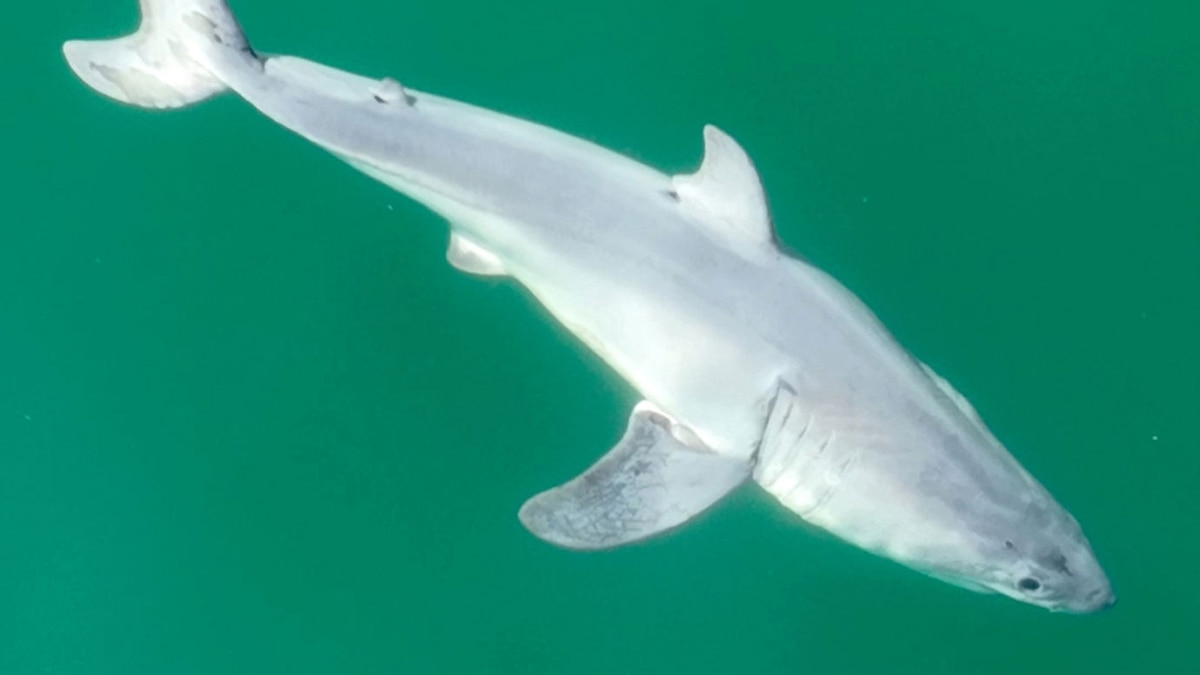
Filmmaker and biologist capture rare footage of a potential newborn great white shark off the coast of Santa Barbara, California, suggesting a previously unknown birthing location for the species. The young shark displayed unique features, including a milky white film flaking off its tail, possibly indicating a form of uterine "milk" or an undocumented skin condition. This discovery could provide crucial insights for conservation efforts and further research into the reproductive habits of great white sharks, a species listed as vulnerable to extinction.
The world's first-ever footage of a newborn great white shark was captured off the coast of Santa Barbara, California, by wildlife filmmaker Carlos Gauna and UC Riverside biology doctoral student Phillip Sternes. The 5-foot-long, white pup was veiled in a "milky" white substance, suggesting it had just been born. This discovery could provide crucial insights into the birthing locations and reproductive biology of great white sharks, which are listed as "vulnerable" worldwide.