
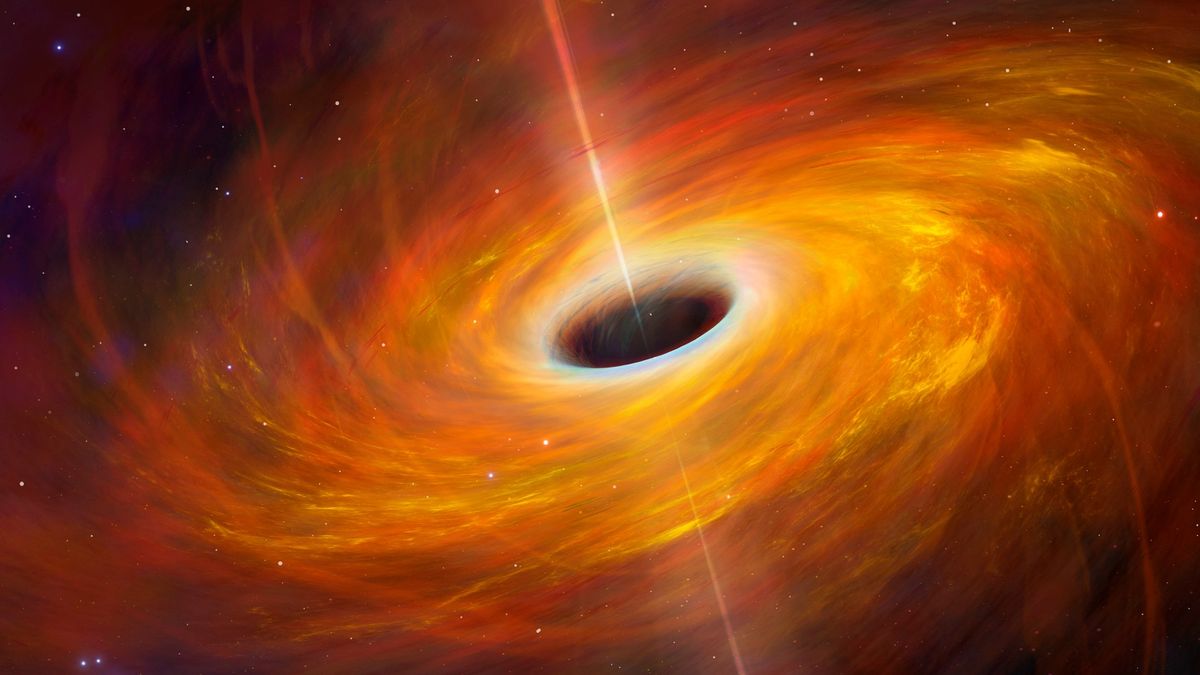
Unveiling the Rapid Growth and Recoiling Speed of Supermassive Black Holes
Scientists are puzzled by the rapid growth of supermassive black holes in the early universe, as their existence challenges existing theories of black hole growth. The discovery of supermassive black holes with masses equivalent to billions of suns just 13 billion years after the Big Bang raises questions about how they could have grown so quickly. One possible explanation is the concept of "heavy seeds," where supermassive black holes start off much larger than previously thought. The launch of the Laser Interferometer Space Based Antenna (LISA) is expected to provide more insights into the demographics of black holes in the early universe and potentially solve this mystery within the next 5 to 10 years.