Tag

Secure Boot

All articles tagged with #secure boot

Why I Recommend Switching to Linux Instead of Upgrading to Windows 11

Originally Published 2 months ago — by Hacker News

The article argues that Windows 11's requirements like TPM and Secure Boot are not as restrictive as they seem and can promote security and user choice, but also highlights concerns about potential misuse for surveillance and platform lock-in. The author recommends promoting Linux to customers as a more open and flexible alternative, emphasizing ease of use, software availability, and control over privacy.

How to Free Upgradе Your Incompatible Windows 10 PC to Windows 11

Originally Published 2 months ago — by CNET

Featured image for How to Free Upgradе Your Incompatible Windows 10 PC to Windows 11
Source: CNET

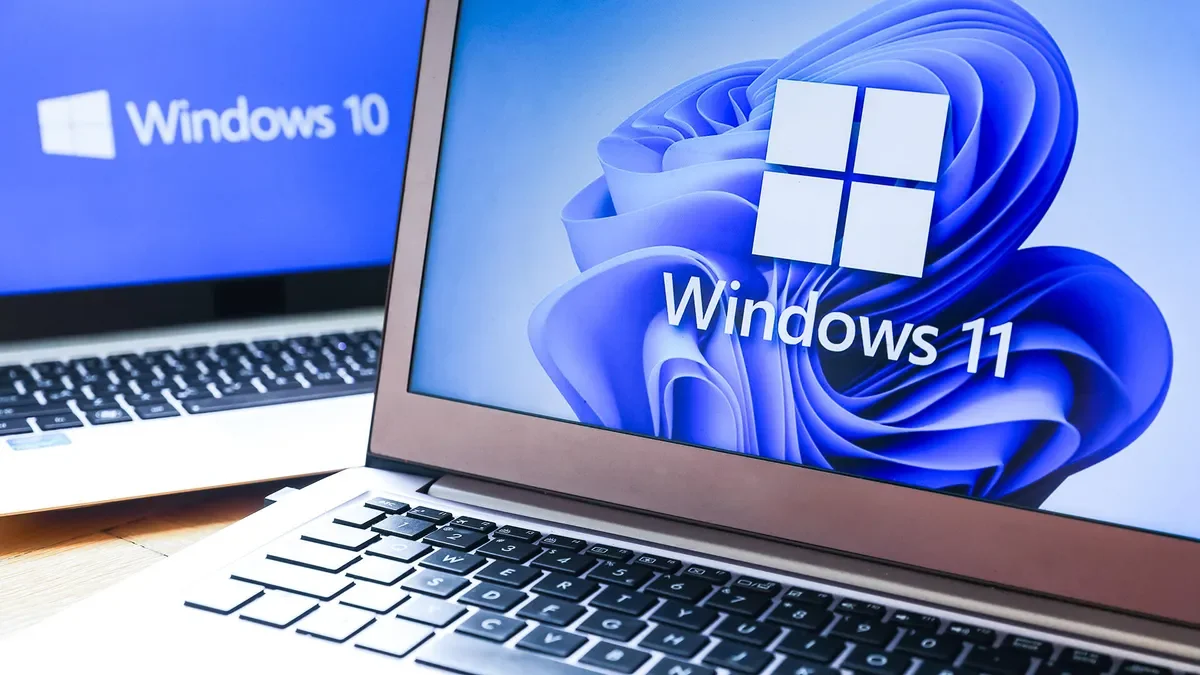
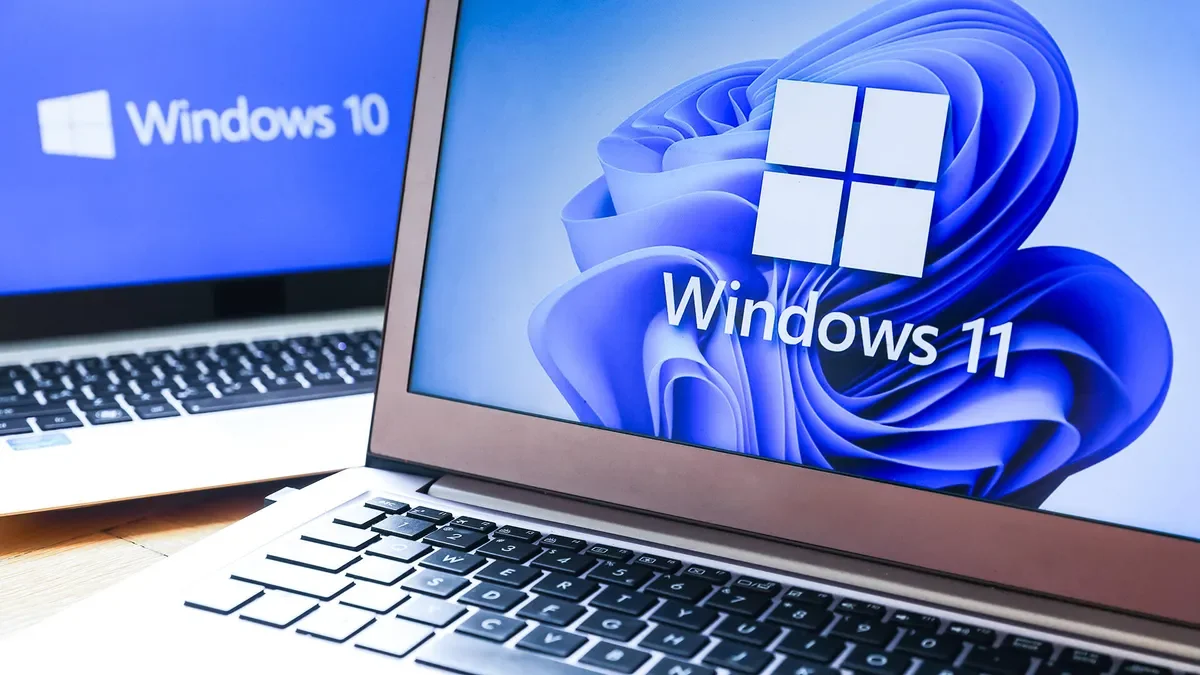
Many Windows 10 PCs that are flagged as incompatible with Windows 11 may actually be upgradeable by enabling Secure Boot and TPM in the BIOS, with simple tweaks and checks using Microsoft's PC Health Check app. If your hardware supports UEFI and Secure Boot, and you can enable TPM, you can often upgrade to Windows 11 for free, even if initial notifications suggest otherwise.

How to Upgrade to Windows 11 and What to Expect After Windows 10 Ends

Originally Published 3 months ago — by CNET

Featured image for How to Upgrade to Windows 11 and What to Expect After Windows 10 Ends
Source: CNET

Many Windows 10 PCs, even those marked as incompatible, can be upgraded to Windows 11 for free by adjusting settings like Secure Boot and TPM in the BIOS, often without needing new hardware. The process involves checking compatibility with Microsoft's PC Health Check app, enabling UEFI, Secure Boot, and TPM in BIOS, and possibly modifying registry settings for older hardware. If hardware isn't compatible, adding TPM modules might be an option, but older systems may require replacement. Upgrading is recommended for security reasons, especially as support for Windows 10 ends.

Battlefield 6 Developer Expresses Frustration Over Secure Boot Limiting Player Access

Originally Published 4 months ago — by Eurogamer

Featured image for Battlefield 6 Developer Expresses Frustration Over Secure Boot Limiting Player Access
Source: Eurogamer

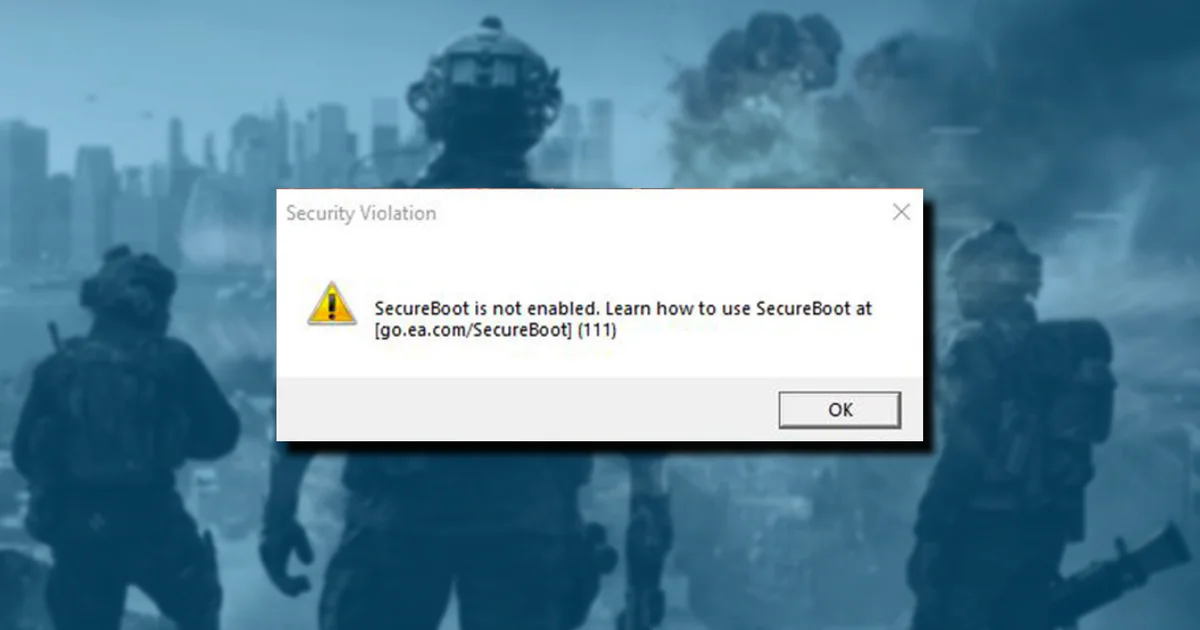
Battlefield 6's technical director expressed pride in the game's anti-cheat efforts, which include Secure Boot and kernel-level protections, but also acknowledged the ongoing, never-ending cat-and-mouse battle against cheaters and the frustration caused by the Secure Boot requirement that prevents some players from accessing the game.

Battlefield 6 thwarted 330,000 cheating attempts in open beta

Originally Published 5 months ago — by Video Games Chronicle

Featured image for Battlefield 6 thwarted 330,000 cheating attempts in open beta
Source: Video Games Chronicle

During Battlefield 6's open beta, the game's anti-cheat system prevented 330,000 cheating attempts, with additional reports of potential cheaters, and emphasized the importance of Secure Boot for security and cheat detection. The second beta weekend is scheduled for August 14-17.

Battlefield 6 Stops 330,000 Cheating Attempts with New Anti-Cheat System

Originally Published 5 months ago — by Eurogamer

Featured image for Battlefield 6 Stops 330,000 Cheating Attempts with New Anti-Cheat System
Source: Eurogamer

During Battlefield 6's open beta, EA's anti-cheat system Javelin has successfully blocked over 330,000 cheat attempts and reviewed more than 100,000 potential cheaters, highlighting the ongoing effort to combat cheating with evolving detection techniques and security measures like Secure Boot, which helps prevent vulnerable drivers from loading and aids in cheat detection.

EA's Javelin Blocks 330,000 Cheat Attempts in Battlefield 6 in Two Days

Originally Published 5 months ago — by DSOGaming

Featured image for EA's Javelin Blocks 330,000 Cheat Attempts in Battlefield 6 in Two Days
Source: DSOGaming

EA's Javelin anti-cheat system prevented 330,000 cheat attempts in the first two days of Battlefield 6's open beta, with efforts to improve detection, especially against sophisticated hardware-based cheats that bypass traditional systems. Despite ongoing cheater activity, EA emphasizes their multi-layered approach, including Secure Boot, to combat cheating, while acknowledging the challenges posed by advanced hardware methods. The beta is now open to all, with server capacity improvements noted.

Secure Boot Becomes a Must-Have for Newest Battlefield and Call of Duty Games

Originally Published 5 months ago — by IGN

Featured image for Secure Boot Becomes a Must-Have for Newest Battlefield and Call of Duty Games
Source: IGN

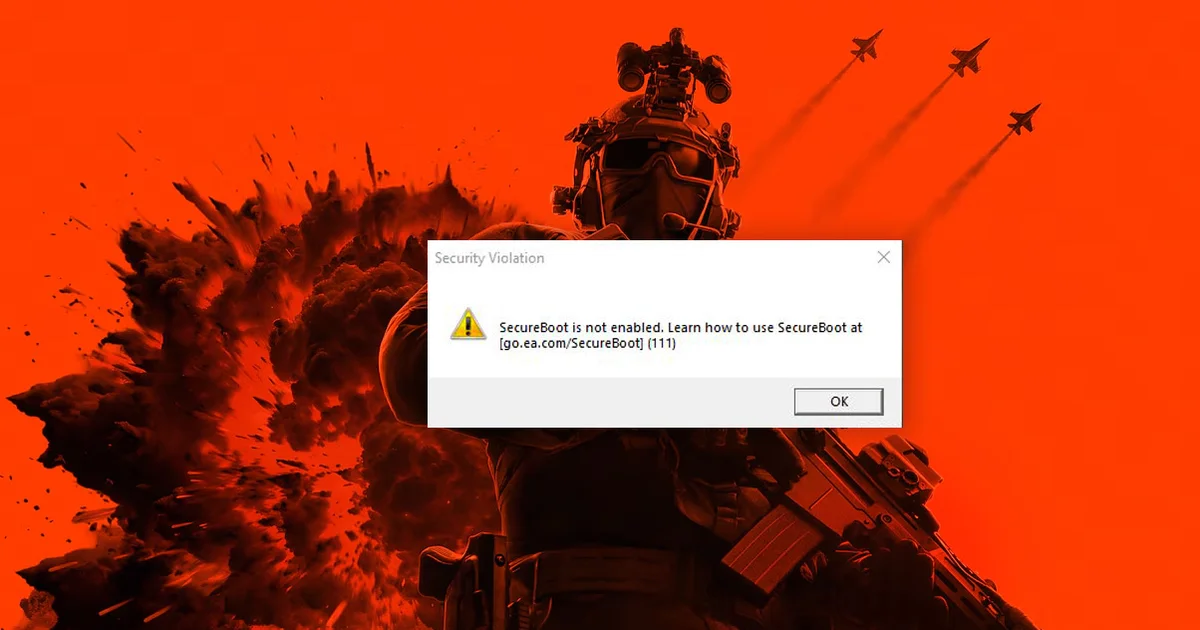
The Battlefield 6 open beta on PC requires players to enable Secure Boot in their BIOS, which can be complex and intimidating for some users, involving TPM 2.0 and GPT disk configurations. This security measure aims to combat cheating and will also be required for upcoming Call of Duty: Black Ops 7, reflecting a broader industry move towards hardware-based security features to enhance game integrity.

Call of Duty and Battlefield 6 to Enforce Secure Boot and TPM 2.0 for Enhanced Security

Originally Published 5 months ago — by GameSpot

Featured image for Call of Duty and Battlefield 6 to Enforce Secure Boot and TPM 2.0 for Enhanced Security
Source: GameSpot

Activision is enhancing security in Call of Duty with new PC features like TPM 2.0 and Secure Boot for Season 5, aiming to prevent cheating and ensure a fair gaming environment, while also taking legal action against cheat developers. These features will be mandatory for Black Ops 7 later this year, and the company continues to target cheat makers and account boosting activities.

Call of Duty Titles Require Secure Boot and TPM 2.0 for PC Compatibility

Originally Published 5 months ago — by The Verge

Featured image for Call of Duty Titles Require Secure Boot and TPM 2.0 for PC Compatibility
Source: The Verge

Activision and EA are requiring PC players of Call of Duty: Black Ops 7 and Battlefield 6 to enable Secure Boot and TPM 2.0 for improved anti-cheat measures, with these features performing checks during system startup and not affecting gameplay quality. The move aims to combat cheaters, though it has raised concerns about system performance and user control. Two-factor authentication is also encouraged, with potential future requirements.

Urgent: Secure Boot Vulnerability Allows Bootkit Malware Installation

Originally Published 7 months ago — by BleepingComputer

Featured image for Urgent: Secure Boot Vulnerability Allows Bootkit Malware Installation
Source: BleepingComputer

Security researchers have uncovered a critical flaw (CVE-2025-3052) in Secure Boot that affects nearly all systems trusting Microsoft's UEFI CA 2011 certificate, allowing attackers with admin rights to disable Secure Boot and install bootkit malware. Microsoft has addressed the issue by revoking affected modules and releasing security updates, but users are urged to patch immediately to prevent exploitation.

Bootkitty: First UEFI Bootkit Malware Targets Linux Systems

Originally Published 1 year ago — by Ars Technica

Featured image for Bootkitty: First UEFI Bootkit Malware Targets Linux Systems
Source: Ars Technica

A new exploit, dubbed LogoFAIL, allows attackers to bypass Secure Boot protections on certain Linux machines by injecting malicious code into a bitmap image during the boot process. This code installs a cryptographic key that tricks the UEFI into treating a backdoored GRUB and Linux kernel as trusted, effectively creating a bootkit. The exploit targets devices with Insyde UEFI firmware, affecting models from Acer, HP, Fujitsu, and Lenovo. Insyde has released a patch, but unpatched devices remain vulnerable.

"Shim Bootloader Vulnerability Threatens Linux Distros"

Originally Published 1 year ago — by Hackaday

Featured image for "Shim Bootloader Vulnerability Threatens Linux Distros"
Source: Hackaday

Linux has a shim problem due to Secure Boot and GPLv3, resulting in a broken shim with serious vulnerabilities. LastPass was banned from the App Store due to a suspiciously similar app. Reports of three million compromised smart toothbrushes used in a DDoS attack were found to be based on a hypothetical scenario, not actual events. Security researchers are facing challenges due to the abundance of honeypots, while undocumented SSH access with a known root password was discovered in some heat pumps. A vulnerability in Mastodon's federated account handling was published, prompting an update to address the issue.