Uncovering the Missing Link in Alzheimer's Disease Research
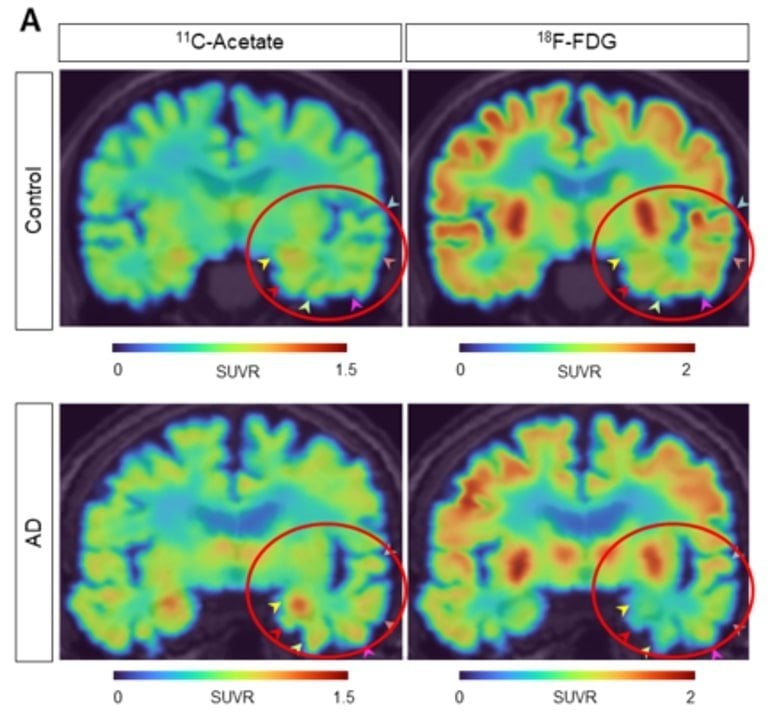
South Korean scientists have developed a new imaging technique that can directly observe the astrocyte-neuron interactions in Alzheimer's disease (AD) patients. The technique uses positron emission tomography (PET) imaging with radioactive acetate and glucose probes to visualize the changes in neuronal metabolism in AD patients. The researchers discovered that acetate, the main component of vinegar, is responsible for promoting reactive astrogliosis, which induces putrescine and GABA production and leads to dementia. The study offers a new possibility of using PET imaging for early diagnosis of AD and suggests a new target for AD treatment.