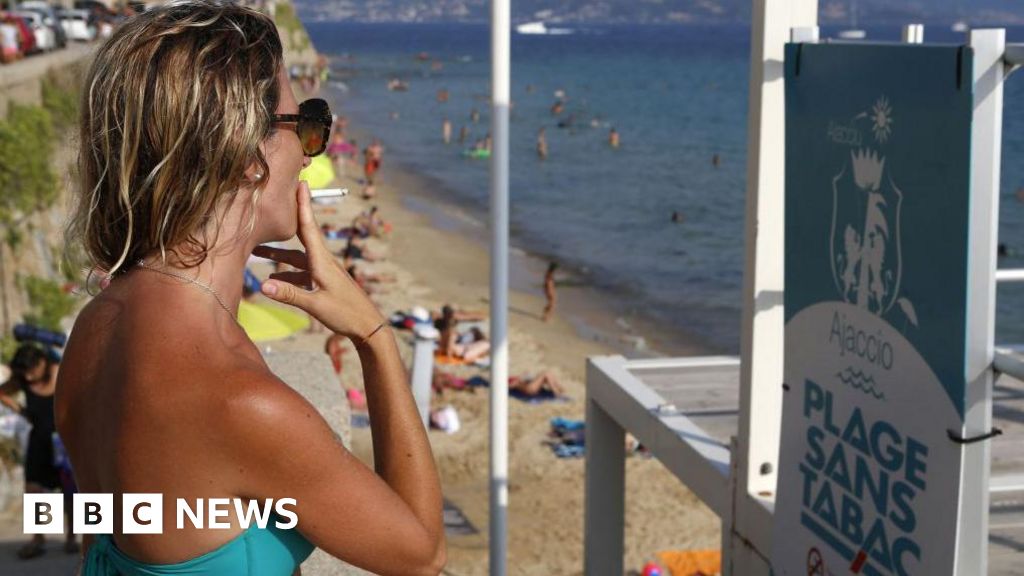
France has implemented a comprehensive outdoor smoking ban in public parks, beaches, and areas where children are present, aiming to reduce smoking rates and protect minors, with fines for violators and support for a tobacco-free generation by 2032.
France has implemented a new law banning smoking in beaches, parks, and areas near schools and public facilities to protect children from passive smoking, with fines for violators, as part of its goal to create a tobacco-free generation by 2032, though the ban does not extend to bar terraces or electronic cigarettes.
France will implement a ban on smoking in beaches, parks, and various public spaces from Sunday to protect children from passive smoking, with violators facing fines; electronic cigarettes are not included in the ban.
France will implement a nationwide ban on smoking in outdoor public places frequented by children, including beaches, parks, and outside schools, starting July 1, with fines for violations, aiming to protect children's health and reduce smoking-related deaths.
A federal appeals court has reinstated a lower court's block on California's ban on guns in most public places, just a week after the law was allowed to take effect. The ban, which was part of Senate Bill 2, faced legal challenges from concealed-carry permit holders and gun-rights organizations, leading to a back and forth in the courts. The law, signed by Governor Gavin Newsom, divided public places into 26 categories where guns are prohibited, but the recent ruling has halted its enforcement once again.
China's National Health Commission (NHC) has recommended reducing large gatherings in public places as a response to the spike in infectious diseases. The NHC has also required medical institutions to expand their services and optimize medical processes to facilitate people seeking treatment. The National Influenza Center under the Chinese Centre for Disease Control and Prevention (China CDC) has stated that current antiviral drugs are effective against influenza viruses, and the China CDC is conducting surveillance of mutations. The suggestion to reduce large gatherings aims to avoid high levels of people gathering in public venues, with the possibility of dynamically diverting passenger flow to prevent further spread of the diseases.
A collection of photos showcases various examples of poor design decisions in public places, highlighting the importance of empathetic and user-centered design. The article emphasizes the need for privacy in public restrooms and the benefits of single-occupancy, all-gender toilets. It also discusses the significance of accessibility, comfort, safety, and environmental considerations in public place design. The balance between aesthetics and functionality is crucial, ensuring that spaces are both visually appealing and practical for users. The article concludes by highlighting the importance of consensus between the public and professionals in designing public spaces.