
Tag

Proton Transport

All articles tagged with #proton transport

science-and-technology2 years ago

"Unleashing the Power of Graphene: A Game-Changer for Renewable Energy"

Researchers at the University of Manchester's National Graphene Institute have discovered a method to accelerate proton transport through graphene using light. This breakthrough could have significant implications for the development of renewable energy, particularly in the production of green hydrogen. Graphene's unique structure allows for the diffusion of protons through its edges, flaws, and functionalization, and the use of light can enhance this process, opening up new possibilities for clean energy technologies.
science-and-technology2 years ago

"Game-Changing Graphene Breakthrough: Cheap and Sustainable Hydrogen Generation"

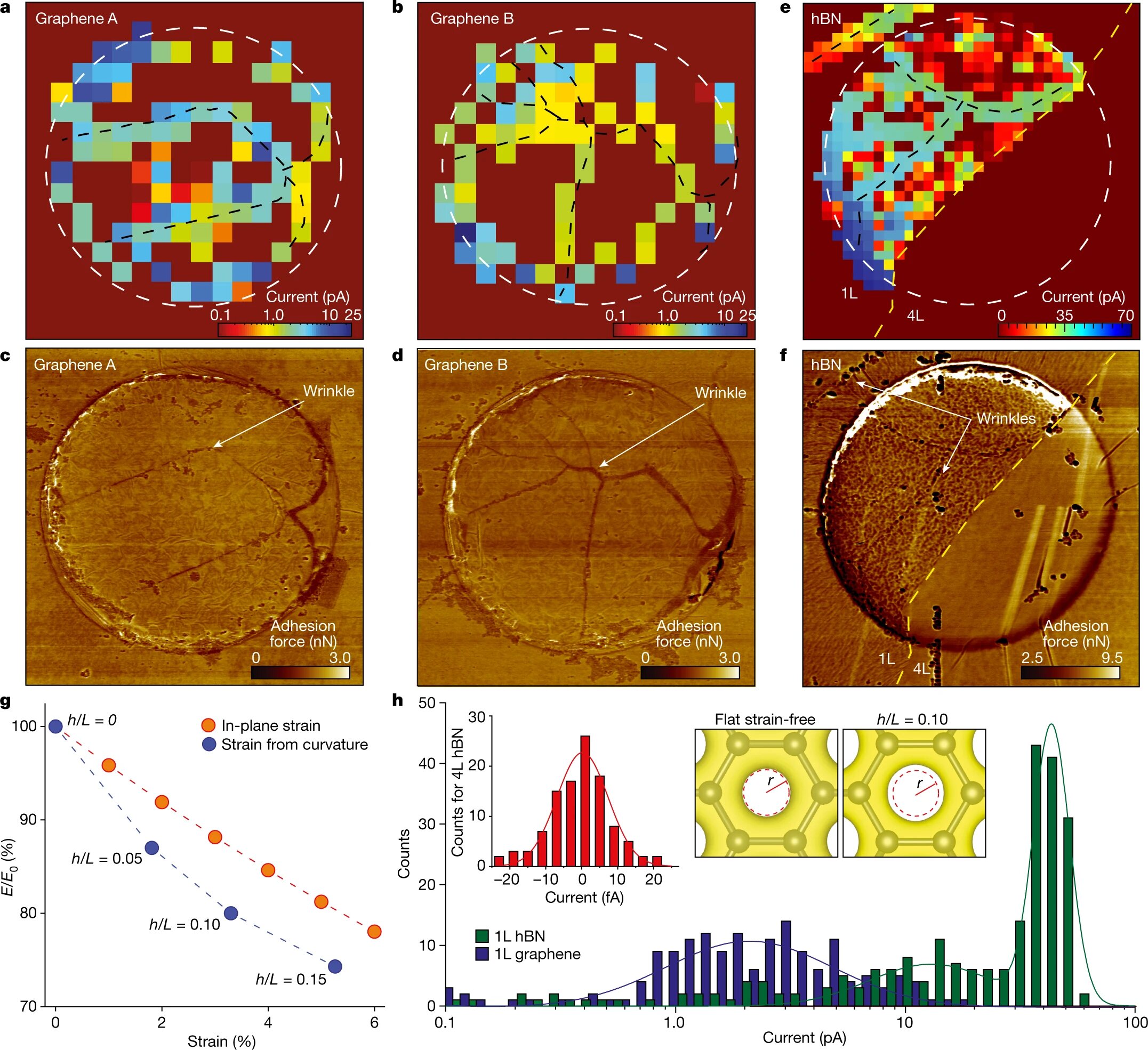
Scientists have discovered that graphene, a single layer of carbon atoms arranged in a 2D lattice, is naturally permeable to protons and allows for their accelerated movement around nanoscale wrinkles. This breakthrough challenges previous theories and has significant implications for the hydrogen economy, as it offers sustainable alternatives to costly catalysts and membranes. By replacing these with graphene, the production of green hydrogen can be advanced, reducing carbon emissions and aiding the transition to a Net Zero carbon environment. The researchers used scanning electrochemical cell microscopy to visualize proton currents through graphene membranes and found no evidence of holes in the graphene structure, confirming its intrinsic permeability. This discovery opens up possibilities for the development of low-cost catalysts for hydrogen-related technologies.

science-and-technology2 years ago

"Revolutionary Graphene Breakthrough: Unlocking Affordable and Eco-Friendly Hydrogen Production"

Researchers from The University of Manchester and the University of Warwick have discovered that graphene is permeable to protons, contrary to previous theories. The team used scanning electrochemical cell microscopy (SECCM) to measure proton currents through graphene membranes and found that protons are accelerated around nanoscale wrinkles and ripples in the crystal lattice. This discovery has the potential to accelerate the hydrogen economy by replacing expensive catalysts and membranes with more sustainable 2D crystals, contributing to the generation of green hydrogen and reducing carbon emissions.