Actor from Perry's 2016 film files a lawsuit accusing him of unwanted advances and sexual battery, marking the second such case against Perry this year, raising concerns about power abuse in Hollywood.
Lurker is a social thriller that explores the dark side of fame and ambition in the music industry, following a retail worker who ingratiates himself into a pop star's entourage, revealing the manipulative and exploitative nature of social and professional escalation. The film highlights themes of power, parasocial relationships, and the obsession with fame, set against a modern backdrop of social media influence.
The throwing of sex toys onto WNBA courts, initially seen as a humorous act by some fans, is revealed to be a calculated act of exploitation and power assertion by men linked to a cryptocurrency group, aiming to sexualize and threaten women athletes and fans, and to profit from disruption, highlighting ongoing issues of gender-based violence and systemic inequality in sports.
The article discusses how Elon Musk's recent feud with Donald Trump highlights the dangers of overestimating one's influence in political and business power struggles, drawing parallels with historical and Russian examples of advisors and leaders who overstepped, and emphasizing Musk's potential vulnerabilities given his dependence on government support and the risks of challenging a strongman like Trump.
The power dynamics in American soccer are shifting, with MLS exerting significant influence over the U.S. Open Cup. The U.S. Soccer Federation has compromised with MLS, allowing only eight of its 26 eligible teams to participate in the 2024 Open Cup, along with eleven "MLS Next Pro" teams. This compromise reflects the growing influence of MLS owners and the league's financial contributions to U.S. Soccer, raising questions about who truly controls the sport and highlighting the federation's dependency on MLS.
The 2024 NFL head coaching carousel has concluded with several high-profile and qualified candidates being left out, signaling a shift in the power dynamic between owners and coaches. The hiring cycle also indicates that being an offensive coaching wunderkind is no longer a direct pipeline to a top job, as defensive expertise was prioritized. With more qualified candidates than available jobs, the 2025 coaching cycle is already underway, potentially leading to a significant shake-up in the league.
In the drama "Miller's Girl," high school student Cairo Sweet, played by Jenna Ortega, navigates a complex relationship with her creative writing teacher, Mr. Miller, portrayed by Martin Freeman. The film delves into themes of power dynamics, sexuality, and the blurred lines between teacher and student, raising questions about agency, manipulation, and the nature of inspiration. As Cairo's infatuation with Mr. Miller unfolds, the story challenges traditional tropes of teacher-student dynamics and explores the impact of longing and the pursuit of validation.
Writer and director Emerald Fennell and actor Barry Keoghan discuss the provocative sex scenes in the film "Saltburn." The first scene involves Oliver, played by Keoghan, drinking bathwater mixed with Felix's semen, symbolizing his desire to absorb Felix's social status. In the second scene, Oliver manipulates Felix's troubled sister, Venetia, by smearing menstrual blood on their faces during a sexual encounter. The final scene shows Oliver having sex with Felix's gravesite after his plan to become part of the wealthy Catton family falls apart. Fennell and Keoghan explain the motivations behind these scenes and the themes of power and desire explored in the film.
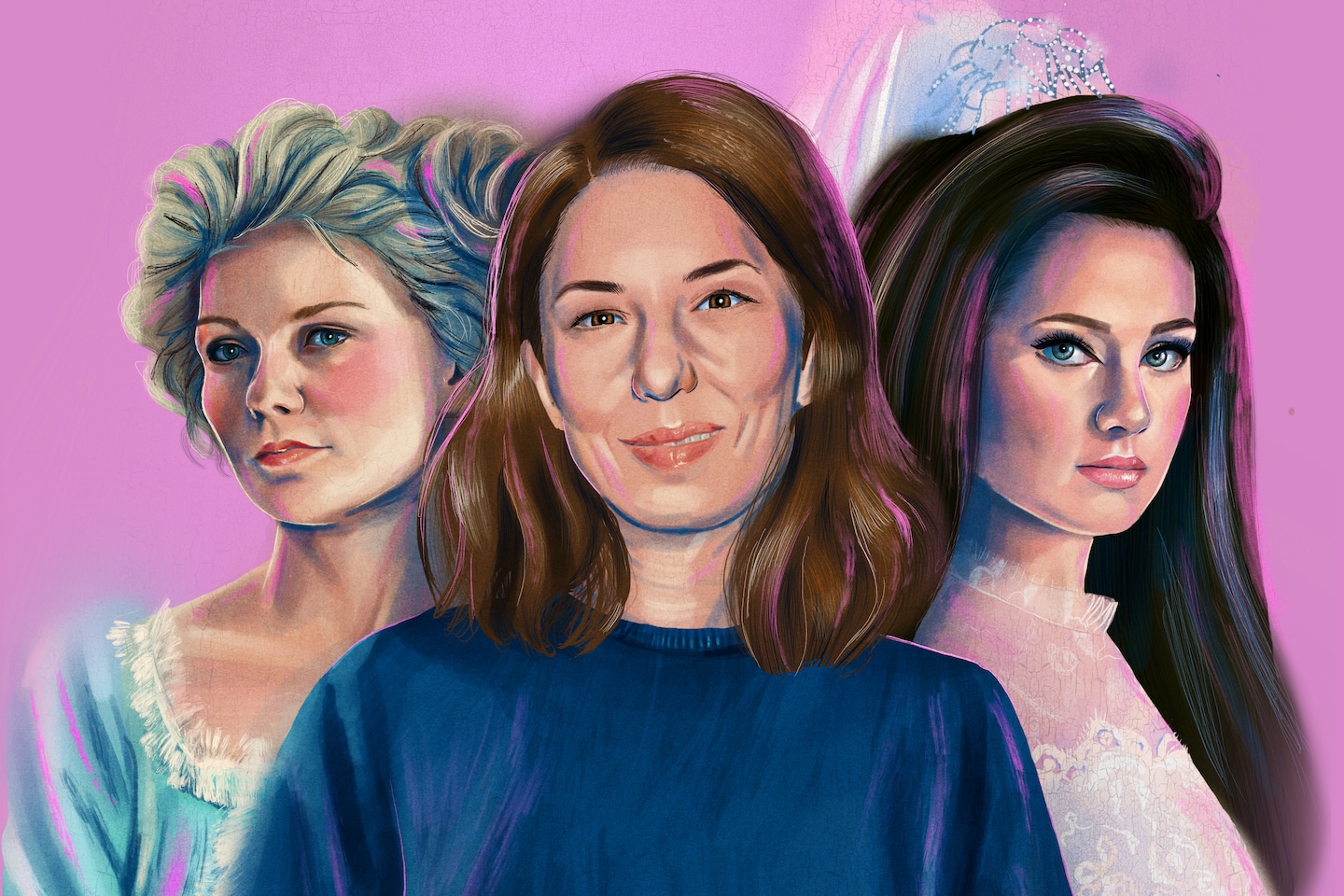
Sofia Coppola's latest film, "Priscilla," explores the unbalanced power dynamic between a young Priscilla Beaulieu and Elvis Presley, depicting her journey from a naive adolescent to a trapped wife. Coppola's films often focus on privileged characters who are adrift and isolated, and "Priscilla" is no exception. The film delves into the monotony and control of Priscilla's life at Graceland, highlighting the emotional and physical abuse she endures. Coppola's storytelling offers a unique perspective, challenging audiences to empathize with Priscilla's gradual recognition of her misery and casting a shadow on the legacy of a pop culture legend.
Director Chloe Domont discusses the shocking ending of her film "Fair Play," explaining that the intention was to create a gray area in the power dynamics between the characters. The film explores a toxic relationship between financial analysts Emily and Luke, culminating in a brutal rape scene. Domont emphasizes that the film is not about revenge or female empowerment, but rather about male fragility and the destructive nature of power dynamics in relationships. She hopes the provocative conclusion will spark conversations about these dynamics and encourage people to confront and address them.
Matt Gaetz's rise to power and influence in Washington is a direct result of America's broken information environment, particularly in the right-wing media space. The power dynamics have shifted, with high-profile media personalities holding more sway than traditional political positions. The Republican Party has become controlled by right-wing talkers and propagandists who have radicalized the GOP base and pulled the party further to the fringe. Gaetz, along with other attention-seeking politicians like Marjorie Taylor Greene and Jim Jordan, exploit the media platforms to fuel their rise to power. The media ecosystem rewards traits like conflict and division, which explains Gaetz's growing popularity and the ousting of Kevin McCarthy as speaker of the House.
A reader is concerned about his girlfriend's dinner with her ex-boss, which he perceives as a setup for an affair or a power play. The columnist suggests that the reader's reaction may stem from his own insecurities and lack of trust. While the setup may have been questionable, if nothing inappropriate occurred, the reader should focus on building trust in the relationship rather than jumping to conclusions. It is important to manage emotions, distinguish between real problems and false alarms, and accept that life is unpredictable.
Kim Yo Jong, the sister of North Korean leader Kim Jong Un, has been described as "the most dangerous woman in the world" by experts. Sung-Yoon Lee, a professor at Tufts University, argues that Kim Yo Jong's rise to power and her position as a "de-facto deputy" to her brother make her a formidable figure. Lee believes she may serve as a regent to her brother's rumored children until they are old enough to take power. Kim Yo Jong has made bold declarations on behalf of her brother's government and has been involved in high-profile diplomatic events. Her authority and involvement in nuclear threats raise concerns about her influence and the stability of the region.
Kim Yo Jong, the sister of North Korean leader Kim Jong Un, is considered by experts to be "the most dangerous woman in the world" due to her rise to power and influence within the regime. As a younger woman in a male-dominated society, she brings a softer image to the brutal facade of North Korea. Analysts believe she may serve as a regent to her brother's rumored children until they are old enough to take power. Kim Yo Jong has made bold declarations on behalf of her brother's government and has been involved in issuing nuclear threats, which is unprecedented for a female leader. Experts warn against underestimating her ambition, intelligence, and ruthlessness.
On the 10th anniversary of the release of Bong Joon-ho's sci-fi thriller "Snowpiercer," the film's exploration of revolution and power dynamics is still relevant. The movie reveals a twist where the train's engineer has orchestrated multiple rebellions to maintain control and reduce the population. The revolution's failure highlights the slim chances of instigating meaningful change and the demoralizing realization that oppressors can predict and exploit anarchic passion. Rather than seeking to replace the leader, the characters must break free from linear and cyclical thinking and consider an uncertain future outside the train. The film's ending emphasizes the need to make the existing power structure obsolete rather than attempting to redistribute power within it.