
"Evidence of Eukaryotic Multicellularity 1.63 Billion Years Ago Found in North China Fossils"
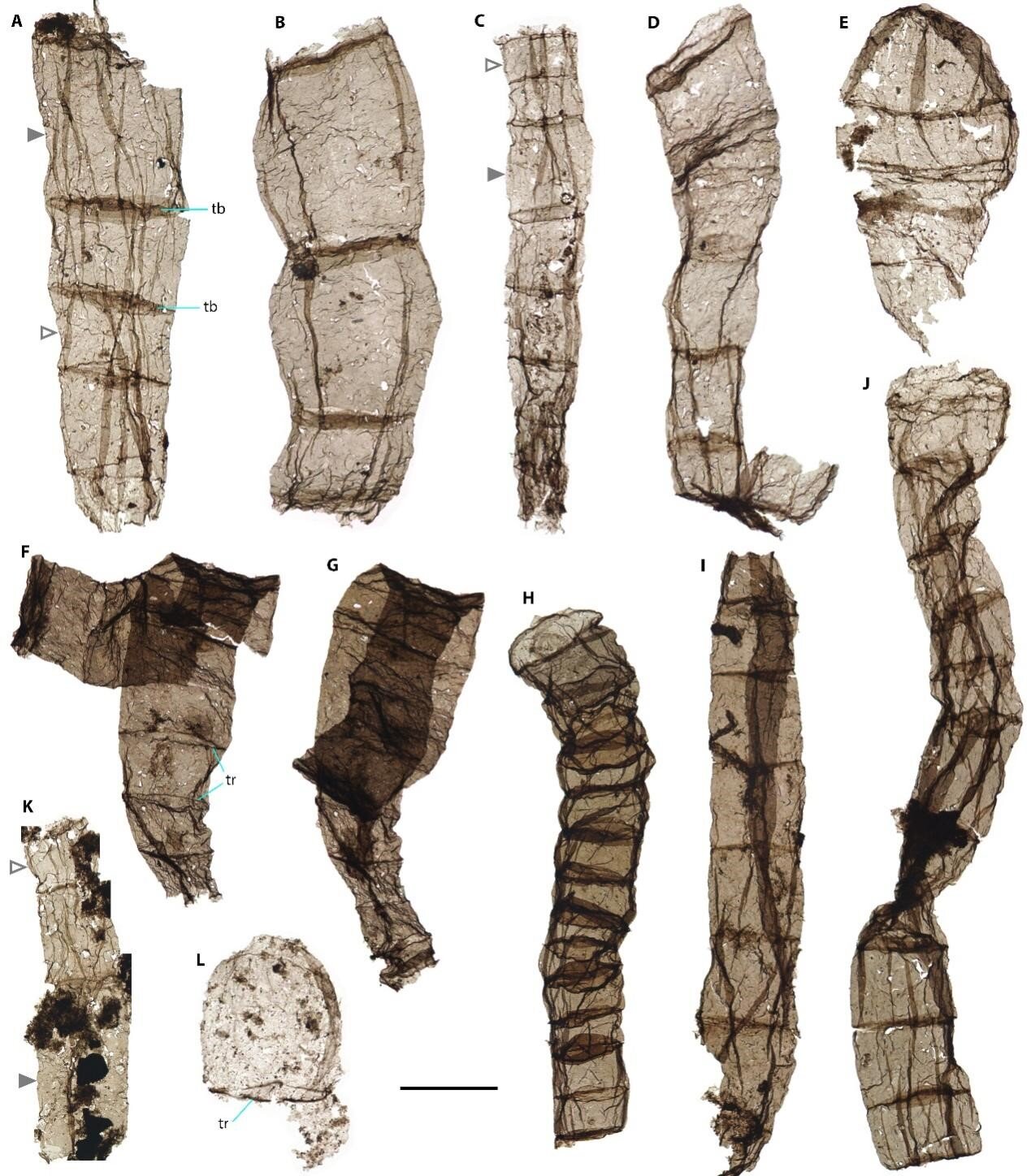
Researchers have discovered 1.63-billion-year-old multicellular fossils in North China, providing evidence that eukaryotes first acquired multicellularity around this time. The fossils, found in the late Paleoproterozoic Chuanlinggou Formation, are considered the oldest record of multicellular eukaryotes and demonstrate a certain degree of complexity based on their morphological variation. Named Qingshania magnifica, these fossils suggest that eukaryotes likely reproduced by spores and show eukaryotic affinity due to their large cell size and morphological features. This discovery pushes back the emergence of multicellularity in eukaryotes by about 70 million years.