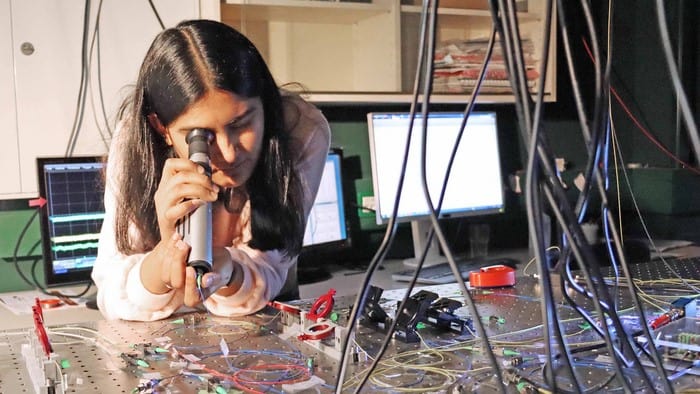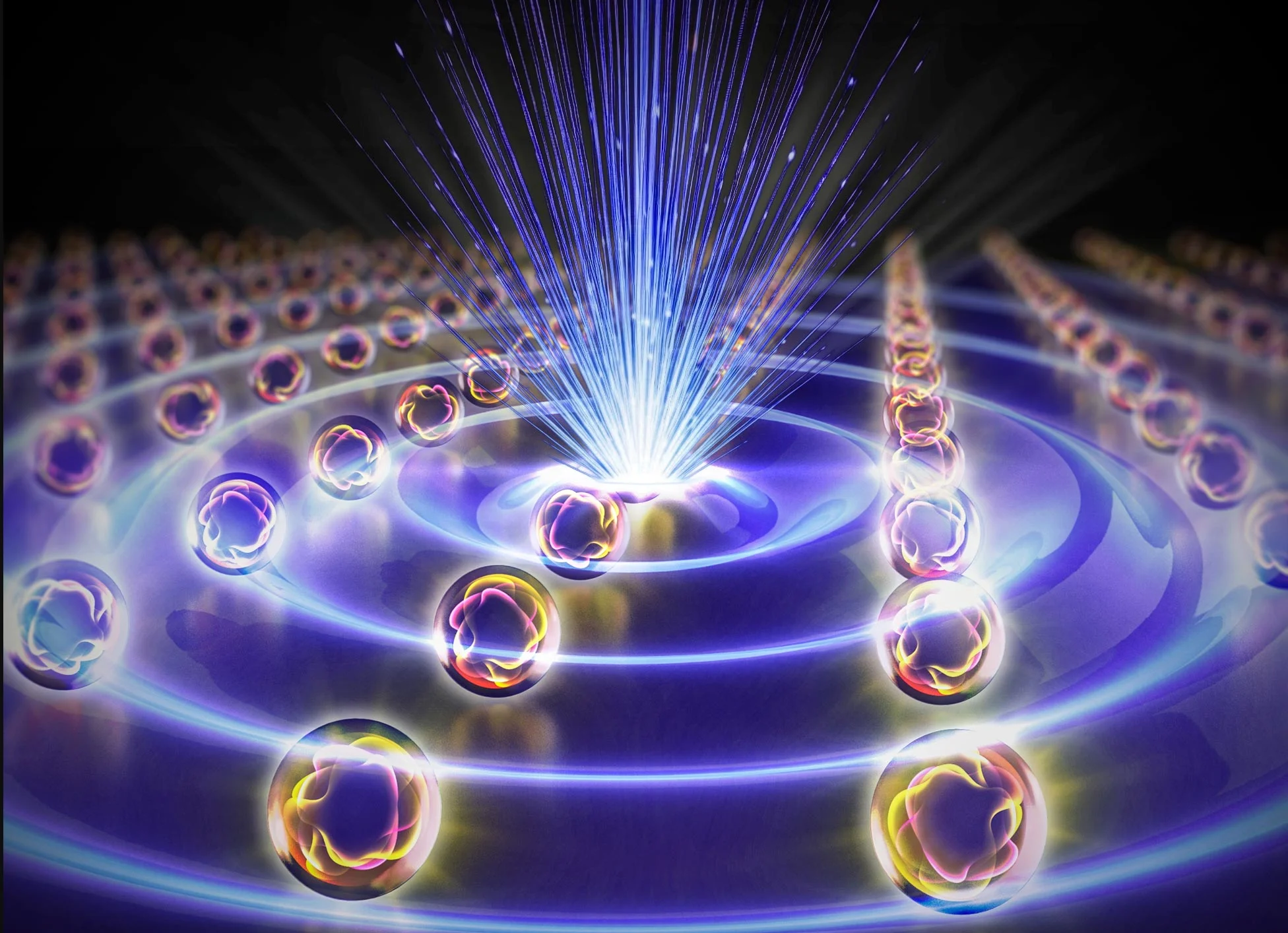
Scientists have developed photonic time crystals, materials that can exponentially amplify light, potentially revolutionizing fields like communication, imaging, and sensing. These crystals, which oscillate in time rather than space, create unique states where light intensity grows exponentially, offering applications in advanced sensors and lasers. The research, involving an international team, proposes a practical approach to creating these crystals for visible light using silicon spheres, overcoming previous technical challenges.
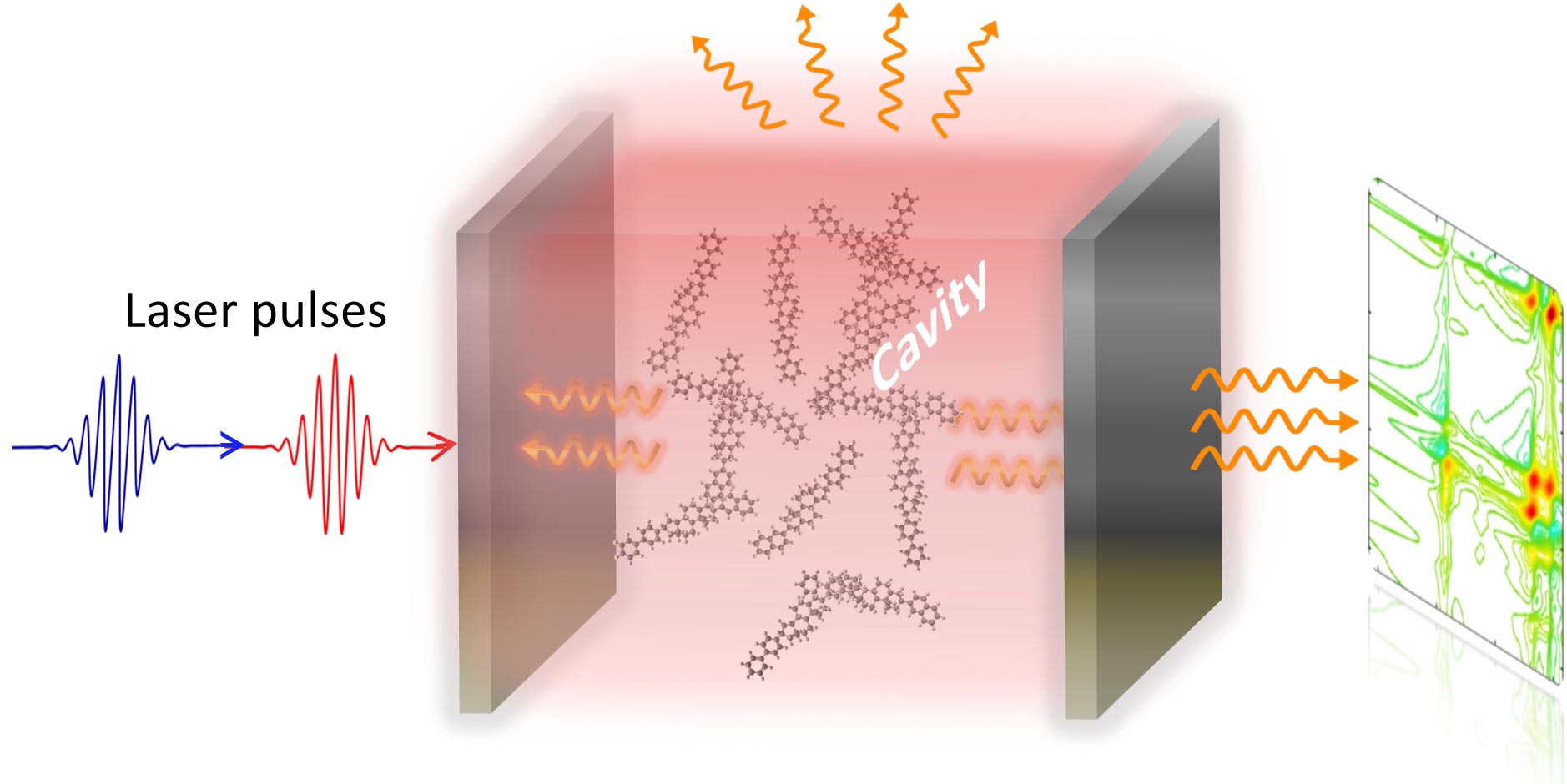
Scientists at the City University of Hong Kong have developed a new quantum theory that explains the "light-induced phase" of matter, offering potential for advancements in quantum photonics and control at room temperature. The theory improves our understanding of excited state dynamics and optical properties of molecules, leading to breakthroughs in optical communications, biological imaging, and quantum metrology. The theory integrates advanced quantum electrodynamics into ultrafast spectroscopy, enabling the precise control and sensing of particle motion at room temperature. It also facilitates the design of next-generation light-harvesting and emitting devices, as well as laser operation and detection, with potential applications in various fields such as optical communications and energy-efficient light-harvesting devices.
Researchers in Germany and the US have created photon gases that can exist at “negative temperatures” while undergoing basic thermodynamic processes – including expansion and compression. The research could lead to the development of new optical technologies including those for data transmission. The team hopes to create negative temperature regimes in other degrees of freedom available to photons beyond their velocity: including space, frequency, and polarization.