Japanese researchers set a new world record for internet speed at 125,000 GBps using a revolutionary optical fiber capable of transmitting data equivalent to 19 standard fibers, over a distance of 1,120 miles, potentially transforming global data infrastructure and high-speed communication.
Researchers in Japan have set a new world record for internet speed, transmitting over 125,000 gigabytes per second over 1,120 miles using a novel optical fiber that significantly enhances long-distance data transmission, surpassing previous records and promising advancements in global communication infrastructure.
Researchers from Aston Institute of Photonic Research have set a new world record for data transmission speed at 402 terabits per second using standard optical fiber. This breakthrough, achieved by operating across six wavelength bands, could stabilize broadband costs amid rising demand and significantly enhance global communication infrastructure.
Flawless Photonics has successfully produced over 5 kilometers of ZBLAN optical fiber on the International Space Station, a feat that has eluded other companies attempting to manufacture fluoride glass in microgravity. This achievement has significant implications for energy savings and national security, as ZBLAN's improved transparency could revolutionize undersea communications cables. The European Space Agency and Luxembourg Space Agency funded Flawless Photonics' machine for drawing optical fiber in space, and NASA plans to study the quality and composition of the fibers upon their return to Earth in April. The company's next step is to manufacture preforms in space, leveraging microgravity to continue improving their products.
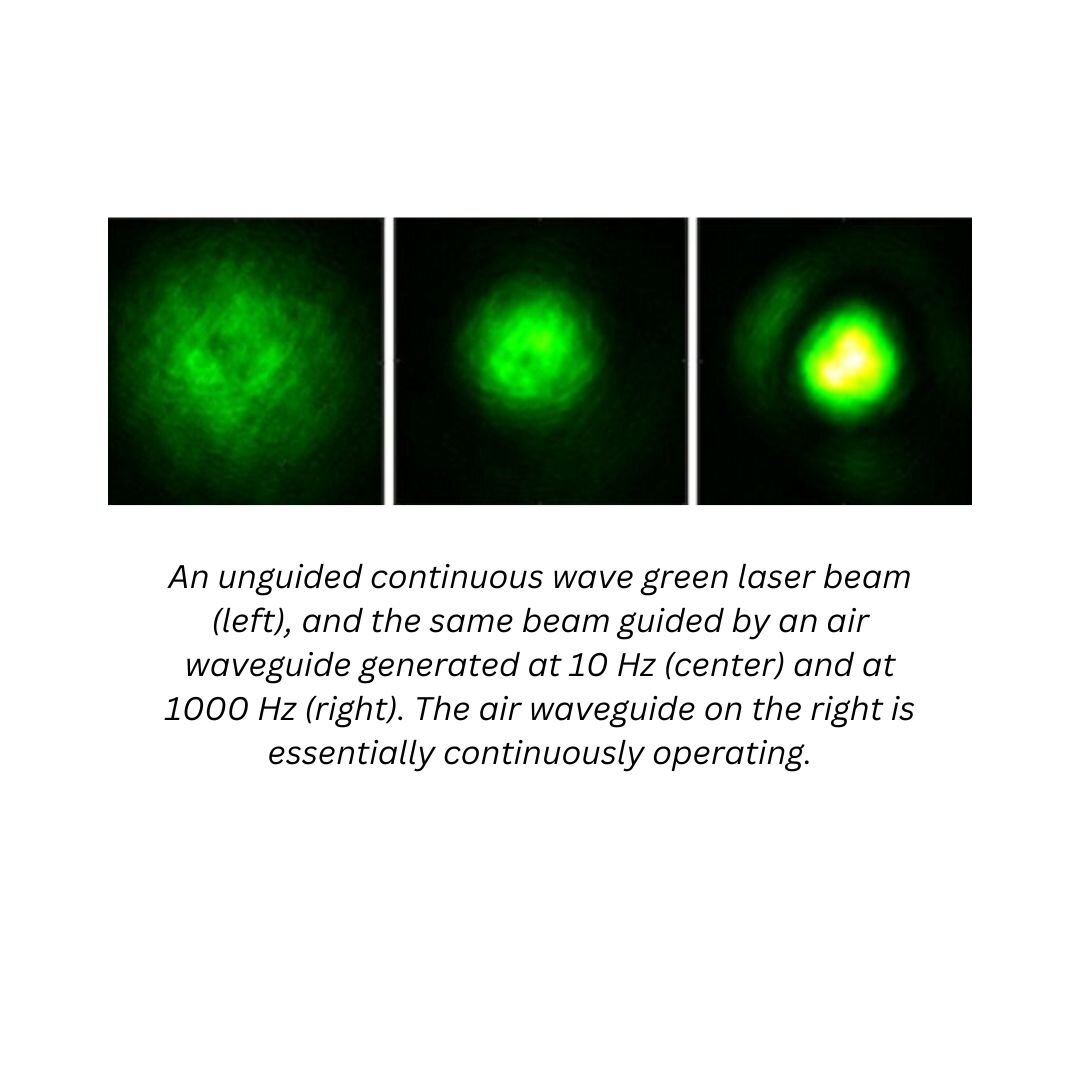
Researchers at the University of Maryland have demonstrated a continuously operating optical fiber made of thin air using auxiliary ultrashort laser pulses to sculpt fiber optic waveguides in the air itself. The air waveguide can be arbitrarily "unspooled" and directed at the speed of light in any direction, making it an exceptional candidate for directed energy. The waveguide method is straightforwardly scalable to 1 kilometer and longer, and the air waveguide is continuously maintained by heating and deepening the waveguide faster than the surrounding air can cool it, making continuous air waveguiding over kilometer and longer ranges easily achievable with existing laser technology and modest power levels.