Tag

Neutronstars

All articles tagged with #neutronstars

"Exploring the Quark Matter Mystery at the Heart of Super-Dense Neutron Stars"
science-and-technology2 years ago

"Exploring the Quark Matter Mystery at the Heart of Super-Dense Neutron Stars"

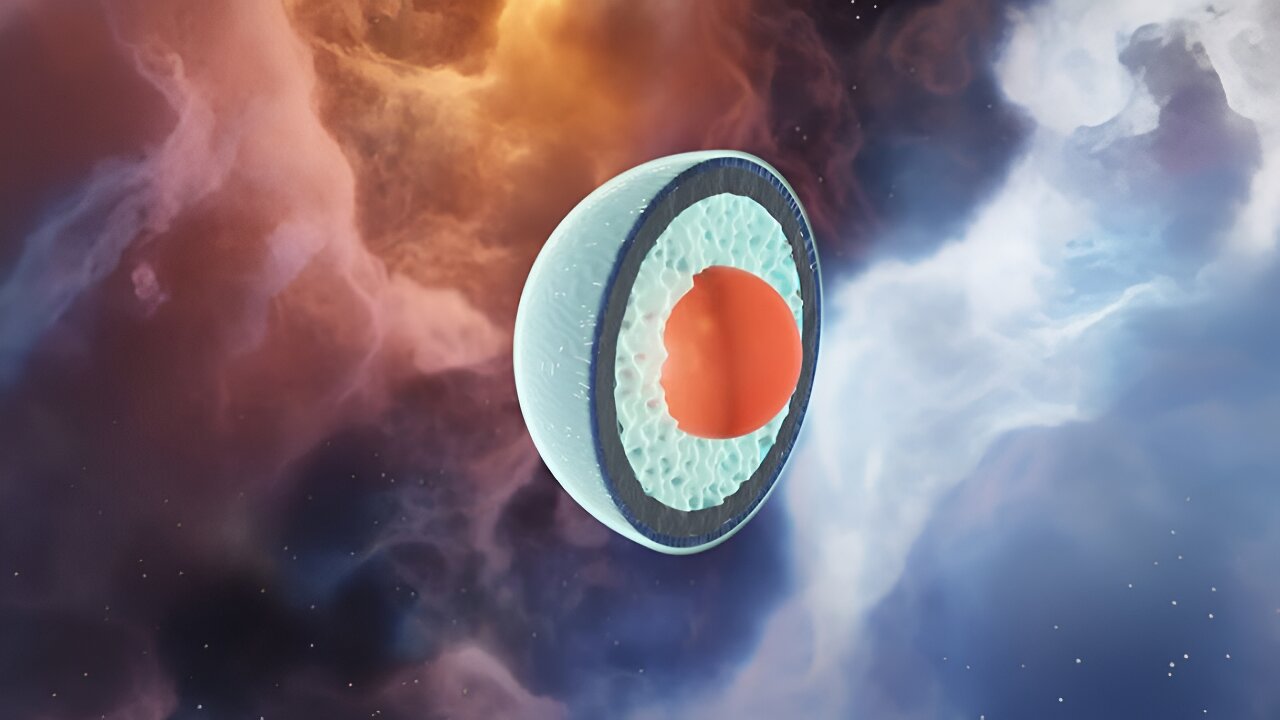
A new study published in Nature Communications suggests that the most massive neutron stars, with masses over twice that of the sun, have a high likelihood (80%-90%) of containing quark cores. This conclusion was reached using Bayesian statistics applied to observational data on neutron star mass and size, rather than solely relying on the complex Tolman-Oppenheimer-Volkoff (TOV) equation. While the data set is currently limited, more observations in the future could help confirm the presence of quark matter and identify the transition point between regular neutron stars and those with quark cores.
"Probing the Pulsations of the Brightest X-ray Pulsar, M82 X-2"
science-and-technology2 years ago

"Probing the Pulsations of the Brightest X-ray Pulsar, M82 X-2"

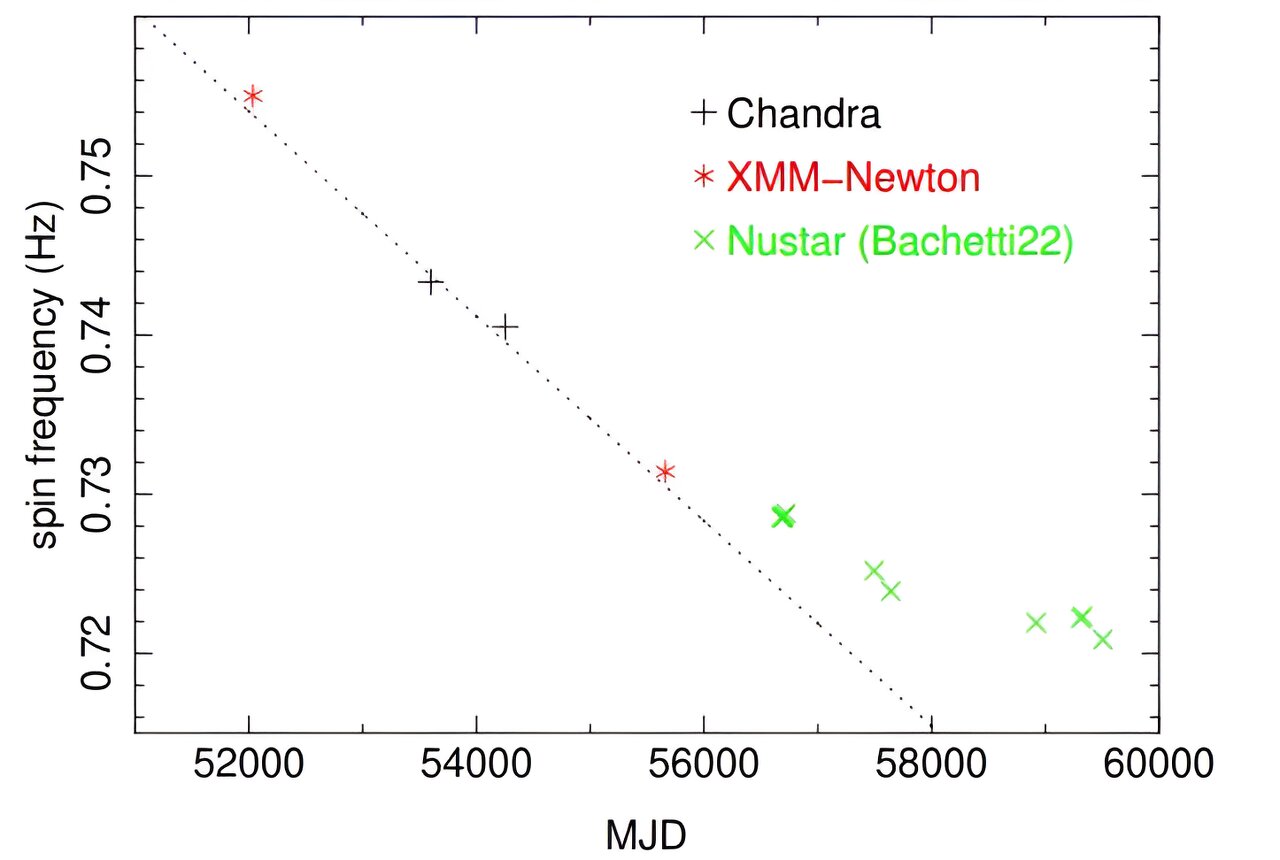
Chinese astronomers have utilized NASA's Chandra spacecraft and ESA's XMM-Newton satellite to study the pulsations of M82 X-2, an ultra-luminous X-ray pulsar (ULXP) located in the Cigar Galaxy, revealing a long-term spin-down trend interspersed with spin-up events over two decades. This behavior suggests varying accretion rates and a possible magnetic threading cause, with an estimated pulsar magnetic field of 12 trillion Gauss. The findings, published on the arXiv pre-print server, contribute to the understanding of ULXPs, which are neutron stars with emissions exceeding those of a million suns.

"Exploring the Quark Core: The Enigmatic Interior of Massive Neutron Stars"
science-and-technology2 years ago

"Exploring the Quark Core: The Enigmatic Interior of Massive Neutron Stars"

A new study published in Nature Communications suggests that the densest neutron stars, with masses greater than two solar masses, have an 80-90% likelihood of containing quark cores—a bizarre state of matter. This finding was derived using Bayesian statistics on observational data of neutron stars' mass and size, rather than solely relying on the complex Tolman-Oppenheimer-Volkoff (TOV) equation. The study indicates that the most massive neutron stars may transition from dense neutron matter to a quark matter core, a hypothesis that could be further confirmed with additional data on neutron stars' mass and radius in the future.

"Deciphering the Golden Kilonova: How Neutron Star Collisions Forge Cosmic Riches"
science-and-technology2 years ago

"Deciphering the Golden Kilonova: How Neutron Star Collisions Forge Cosmic Riches"

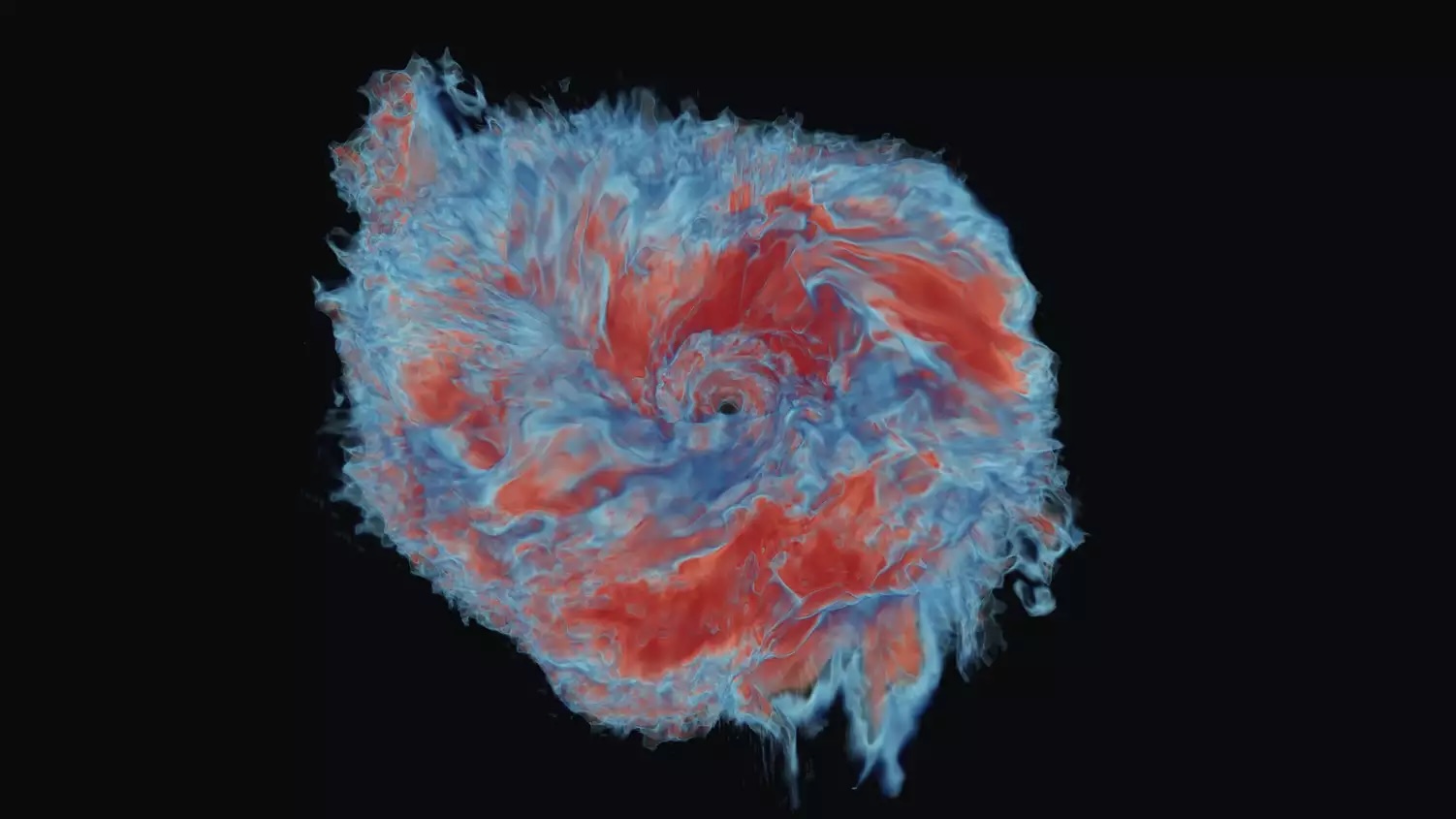
Astronomers have developed a new simulation tool that accurately predicts the outcomes of neutron star collisions, matching observations from the 2017 event detected by LIGO/Virgo. Neutron stars, incredibly dense remnants of supernovae, often exist in binary systems and eventually collide, emitting gravitational waves. The international research team, including the Max Planck Institute for Gravitational Physics and the University of Potsdam, combined various data sources, including X-ray and radio signals, to refine their model. The successful simulation offers insights into the formation of heavy elements under extreme conditions and will be used to analyze future neutron star mergers.

"Potaroo Cloud: Unraveling the Mysteries of a Speed-Demon Star's Powerful Winds"
science-and-astronomy2 years ago

"Potaroo Cloud: Unraveling the Mysteries of a Speed-Demon Star's Powerful Winds"

Astronomers have discovered a new pulsar wind nebula, named "Potoroo," powered by a rapidly spinning neutron star, PSR J1638–4713, which completes 14 rotations per second and is moving at 2.2 million miles per hour. The nebula, located 33,000 light-years from Earth, is 69 light-years wide in radio waves and has a comet-like shape with a dense nucleus and a trailing tail. This discovery, made using telescopes in Australia and South Africa, provides insights into the behavior of particles in the vicinity of neutron stars. The research has been accepted for publication in the Publications of the Astronomical Society of Australia and is available on arXiv.

"Pulsar Discovery Shines in Cluster GLIMPSE-C01"
science-and-technology2 years ago

"Pulsar Discovery Shines in Cluster GLIMPSE-C01"

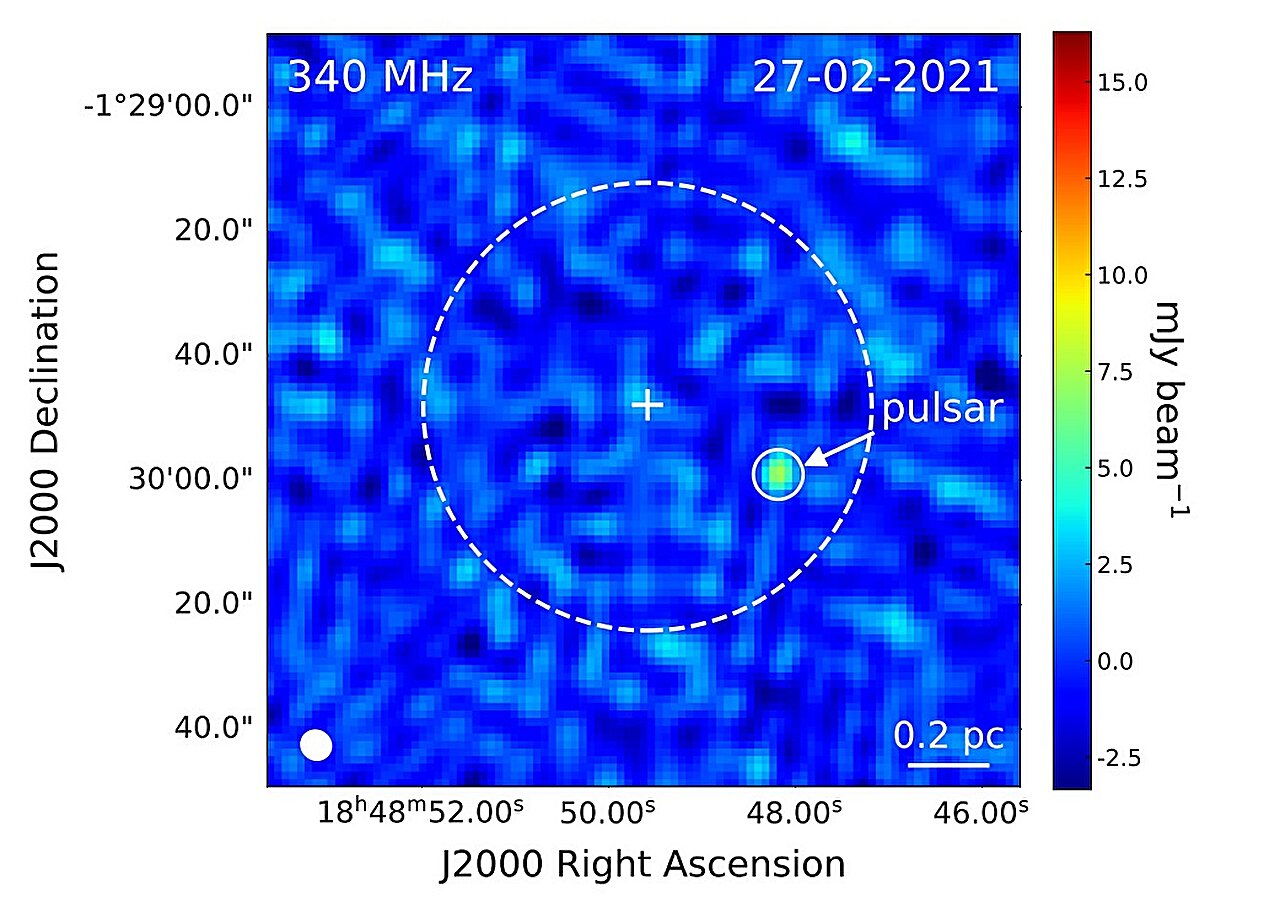
Astronomers using the VLA have discovered the first millisecond pulsar in the globular cluster GLIMPSE-C01, which is located about 10,760 light years from Earth. This pulsar, named GLIMPSE-C01A, has a spin period of 19.78 milliseconds and exhibits a high magnetic field and hard X-ray luminosity, suggesting unique properties compared to most millisecond pulsars in globular clusters. The discovery, made through a radio imaging search and confirmed by additional data, highlights the effectiveness of spectral index searches for pulsars and opens up further research opportunities to understand its characteristics.

"Uncovering the Enigma of Cannibal Stars in Neighboring Galaxies"
science-and-technology2 years ago

"Uncovering the Enigma of Cannibal Stars in Neighboring Galaxies"

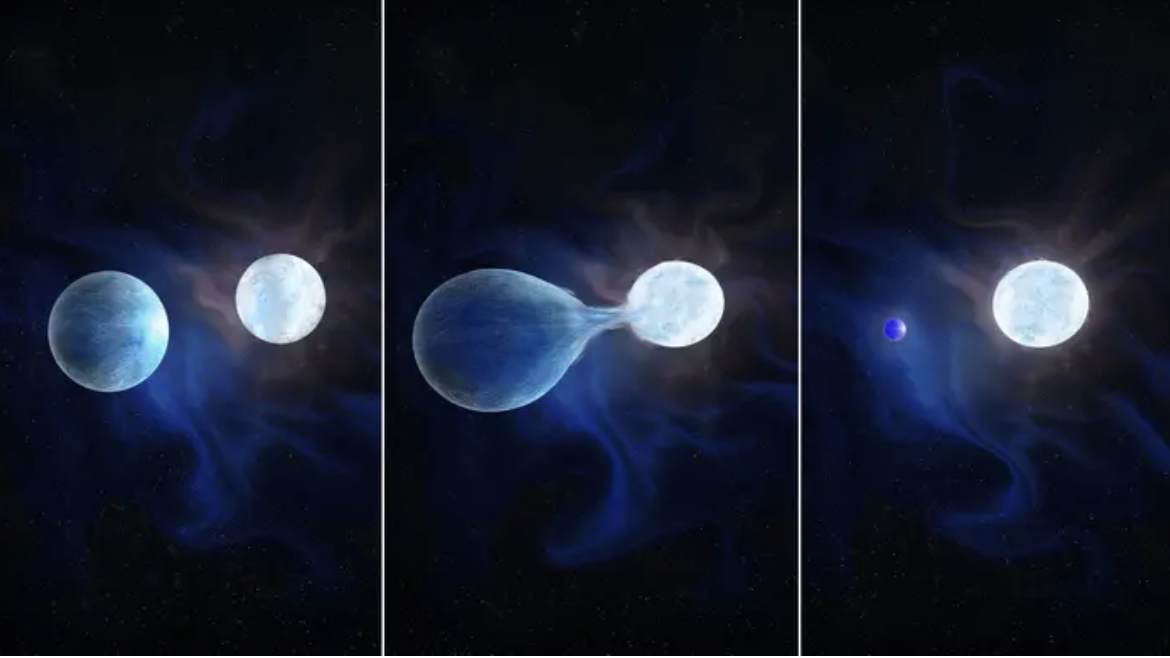
Astronomers have discovered a population of hot helium stars in the Large and Small Magellanic Clouds, which are thought to be precursors to neutron star mergers and hydrogen-poor supernovae. These stars form in binary systems where one star strips the hydrogen envelope from the other, leaving a hot helium core. The finding, published in Science, supports the theory that a third of massive stars undergo this process and has significant implications for our understanding of stellar evolution and related cosmic phenomena.