Scientists have developed a new method to power DNA-based computers using heat, allowing these molecular devices to recharge themselves through temperature cycling, which could lead to sustainable data storage and biological analysis tools in the future.
Researchers have discovered a new type of non-reciprocal molecular interaction, termed kinetic asymmetry, which does not require external forces such as hydrodynamics. This phenomenon could redefine our understanding of molecular interactions and has implications for the evolution of life and the design of molecular machines. The study, conducted by scientists from the University of Maine and Penn State, suggests that local gradients of reactants and products around catalysts, like enzymes, can lead to one molecule being repelled by yet attracting another molecule. This insight into kinetic asymmetry could also inform the development of synthetic molecular motors and pumps, offering a deeper understanding of the origins of life and the complex behavior of matter.
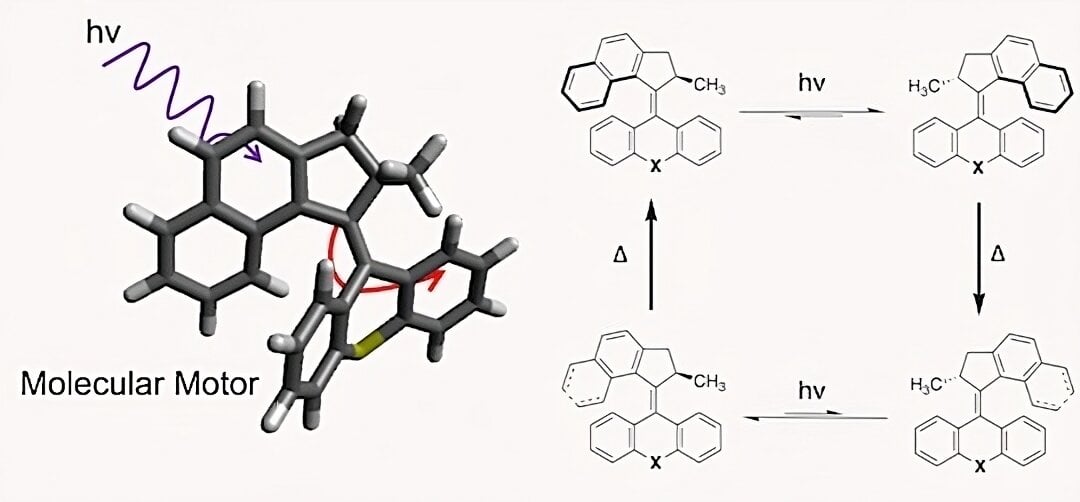
Scientists at Rice University have used light-activated molecular machines to trigger intercellular calcium wave signals, offering a new approach to controlling cellular activity. By rotating small-molecule-based actuators with visible light, they induced a calcium-signaling response in smooth muscle cells. This breakthrough could lead to improved treatments for heart problems, digestive issues, and other diseases characterized by calcium-signaling dysfunction. The ability to control cell-to-cell communication in muscle tissue at the molecular level has the potential to revolutionize medical interventions.