

Tag

Molecular Behavior

All articles tagged with #molecular behavior

Unveiling the Unthinkable: The Discovery of an Impossible Hidden World

Originally Published 2 years ago — by Giant Freakin Robot

Featured image for Unveiling the Unthinkable: The Discovery of an Impossible Hidden World
Source: Giant Freakin Robot

Scientists have made a breakthrough in nanofluidics by using boron nitride to illuminate and track molecules within nanofluidic structures. This two-dimensional material allows for the direct observation and tracing of individual molecules, providing insights into molecular interactions and surface defects. The discovery has vast implications for understanding the behavior of ions and molecules in biological systems and opens up possibilities for visualizing nanoscale flows caused by pressure or electric fields. This optical imaging technology offers a groundbreaking approach to studying hidden worlds like nanofluidic structures.
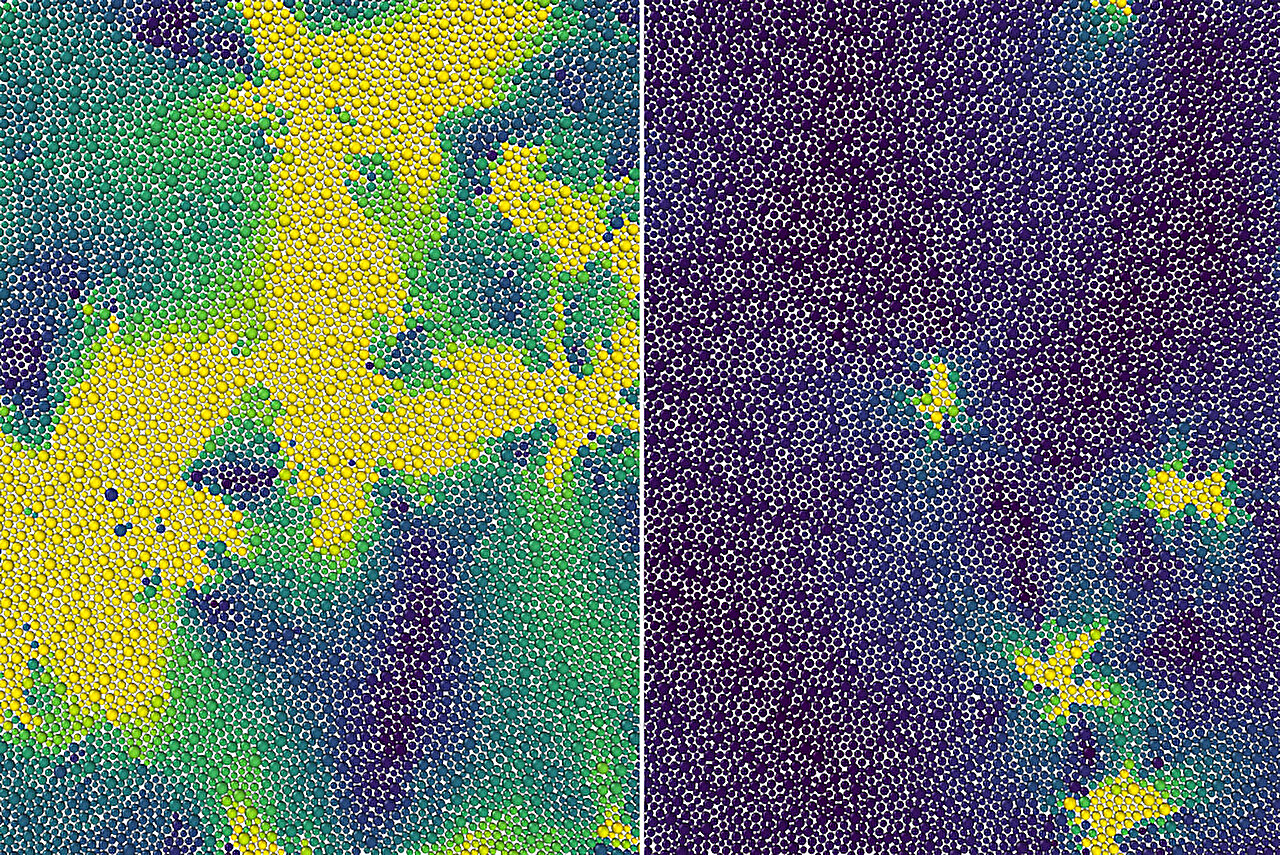
Unveiling the Enigmatic Liquid-Solid Phase Transition: Scientists' Theoretical Breakthrough

Originally Published 2 years ago — by Phys.org

Featured image for Unveiling the Enigmatic Liquid-Solid Phase Transition: Scientists' Theoretical Breakthrough
Source: Phys.org

Scientists at Lawrence Berkeley National Laboratory have proposed a theory explaining the molecular behavior of supercooled liquids, which represents a hidden phase transition between a liquid and a solid. The researchers found that at a certain temperature called the onset temperature, the molecules in supercooled liquids become so viscous that they barely move, resulting in a transition from a liquid-like state to a solid-like state. This improved understanding could aid in the development of new amorphous materials for various applications.

Unveiling the Intricacies of Cell Division: A Groundbreaking Revelation

Originally Published 2 years ago — by ScienceAlert

Featured image for Unveiling the Intricacies of Cell Division: A Groundbreaking Revelation
Source: ScienceAlert

Researchers have developed a new imaging process called PINE nanoscopy, which uses scattered light instead of fluorescent molecules to observe cellular processes like cell division. By imaging randomly distributed gold nanorods, the system allows for longer observations at a highly detailed resolution. Using this technique, scientists were able to observe the behavior of actin molecules during cell division, discovering that actin expands when the cell contracts and vice versa. This breakthrough could lead to a better understanding of how molecular defects in tissues and organs contribute to disease development.