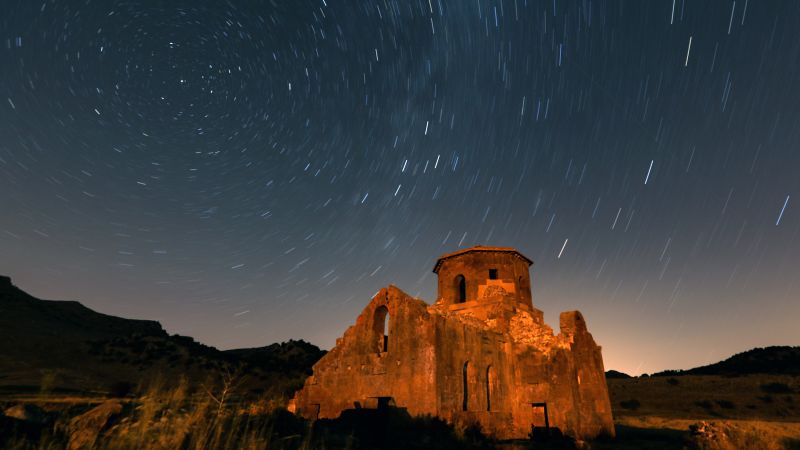
In ancient China, meteor showers like the upcoming Northern Taurids, which will peak on November 11-12, were seen as more than just celestial events. They were often interpreted as omens, with early records suggesting that 'falling stars' could signify impending consequences.
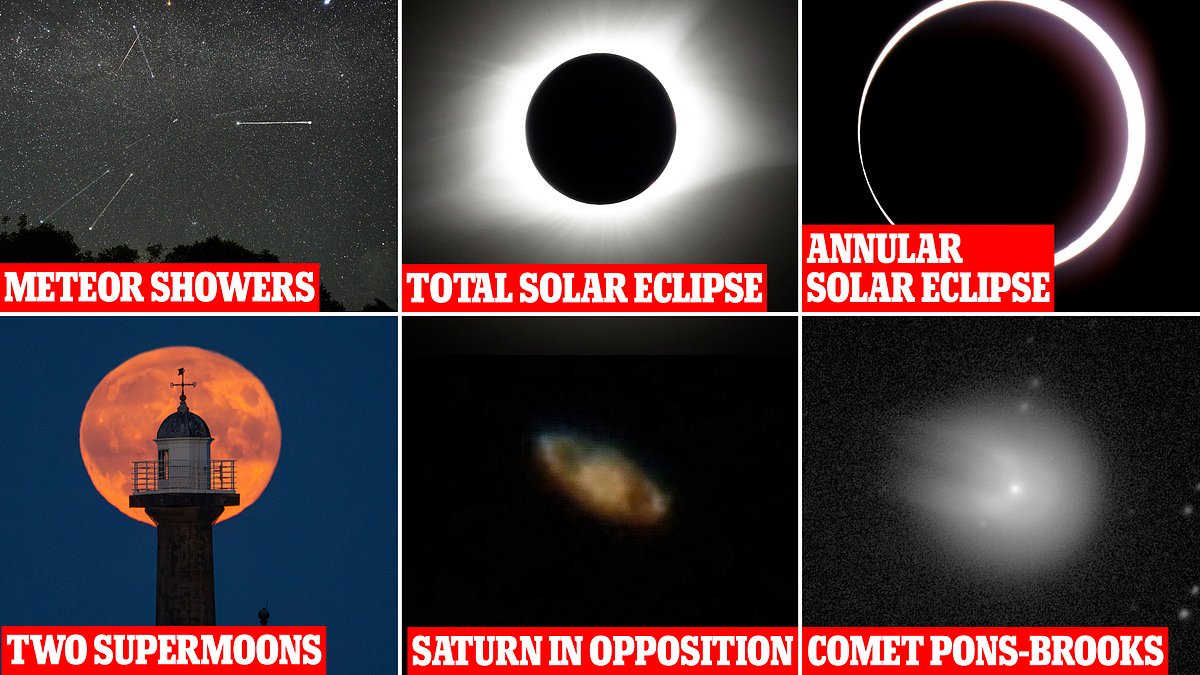
The year 2024 promises a plethora of astronomical events for skywatchers, including a total solar eclipse on April 8 visible across North America, 11 meteor showers with the Geminids being the most prolific, two supermoons, and Saturn in opposition on September 8 offering a great view of the ringed planet. Additionally, the comet Pons-Brooks will make a close approach to Earth, providing a unique viewing opportunity. These events offer an accessible and spectacular alternative to space tourism, with the best views available in dark skies away from light pollution.
The year 2024 promises a spectacular array of celestial events for stargazers, including full moons, supermoons, meteor showers, and a total solar eclipse visible across North America on April 8. Increased solar activity is expected to peak, potentially affecting technology on Earth but also enhancing auroral displays. Notable meteor showers like the Quadrantids, Perseids, and Geminids will occur throughout the year, alongside various lunar and solar eclipses, offering numerous opportunities for skywatching.
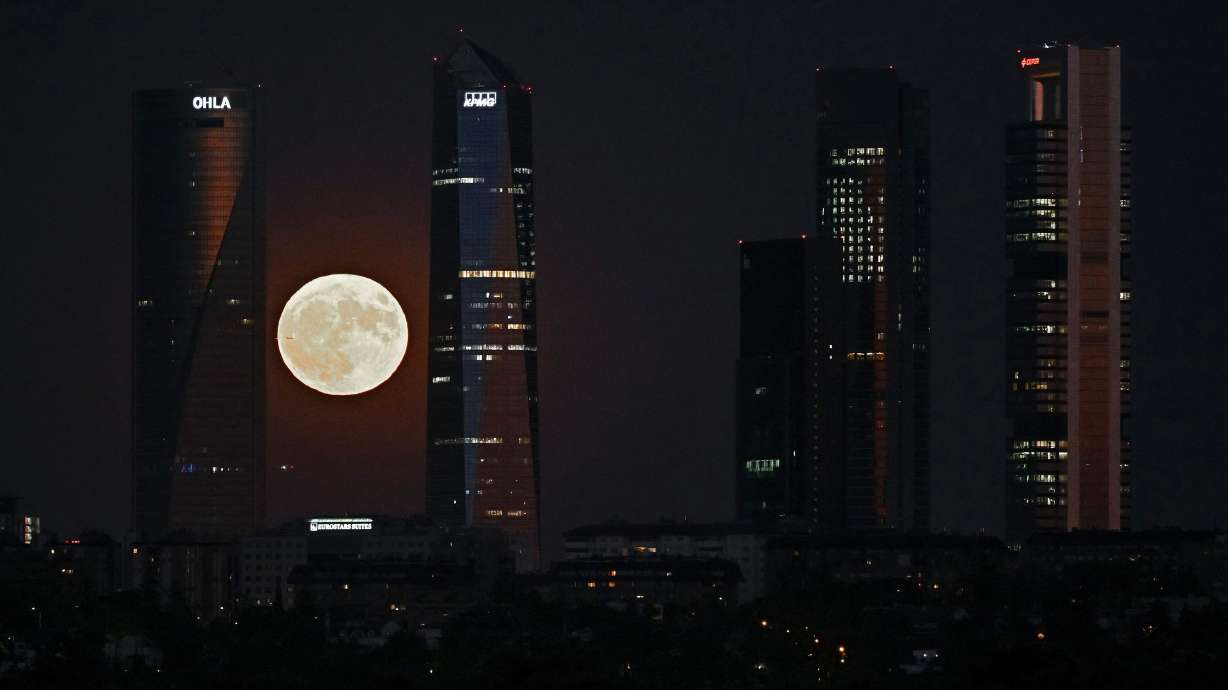
The year 2024 promises a spectacular array of celestial events for astronomy enthusiasts, including a total solar eclipse across North America in April, supermoons, meteor showers, and increased solar activity leading to stunning aurora displays. Stargazers can expect twelve full moons, with the Harvest and Hunter's moons being supermoons. Eclipses will feature prominently, with a total solar eclipse, an annular solar eclipse, a penumbral lunar eclipse, and a partial lunar eclipse occurring throughout the year. The sun's peak activity may cause disruptions but also enhance auroras near the poles. Meteor showers will pepper the sky starting with the Quadrantids in early January, and several others following suit across the months.
The year 2024 promises a spectacular array of celestial events for stargazers, including full moons, supermoons, meteor showers, and a total solar eclipse visible across North America on April 8. Increased solar activity is expected to peak, potentially affecting technology on Earth but also enhancing auroral displays. Notable events include supermoons in September and October, various meteor showers throughout the year, and both solar and lunar eclipses. Observers are encouraged to prepare with telescopes, binoculars, and eclipse glasses to safely enjoy the phenomena.
The year 2024 promises a spectacular array of celestial events for stargazers, including full moons, supermoons, meteor showers, and significant solar and lunar eclipses. The most anticipated event is the total solar eclipse on April 8, visible across North America. Increased solar activity is expected to peak, potentially affecting technology on Earth but also enhancing auroral displays. Stargazers should prepare with telescopes, binoculars, and eclipse glasses to fully enjoy the year's astronomical offerings.
The New York Times has released a comprehensive calendar of space and astronomy events for 2024, including meteor showers, eclipses, and spacecraft launches. Highlights include Earth's closest approach to the sun on January 3, the Quadrantid meteor shower peaking on January 3-4, the launch of the new Vulcan rocket, and Axiom Space's crewed mission to the ISS. The calendar also notes the total solar eclipse on April 8, the potential launch of NASA's Artemis II mission around the moon in November, and various other celestial events and space missions throughout the year. Readers are encouraged to bookmark the page or subscribe to the interactive feed for regular updates.
The year 2024 promises a spectacular array of celestial events for stargazers, including full moons, meteor showers, and a total solar eclipse visible across the United States in April. September and October will feature supermoons, and various solar and lunar eclipses will occur throughout the year. Increased solar activity is expected to peak, potentially affecting technology on Earth but also enhancing auroral displays. Enthusiasts are advised to prepare with telescopes, binoculars, and eclipse glasses to safely enjoy the phenomena.
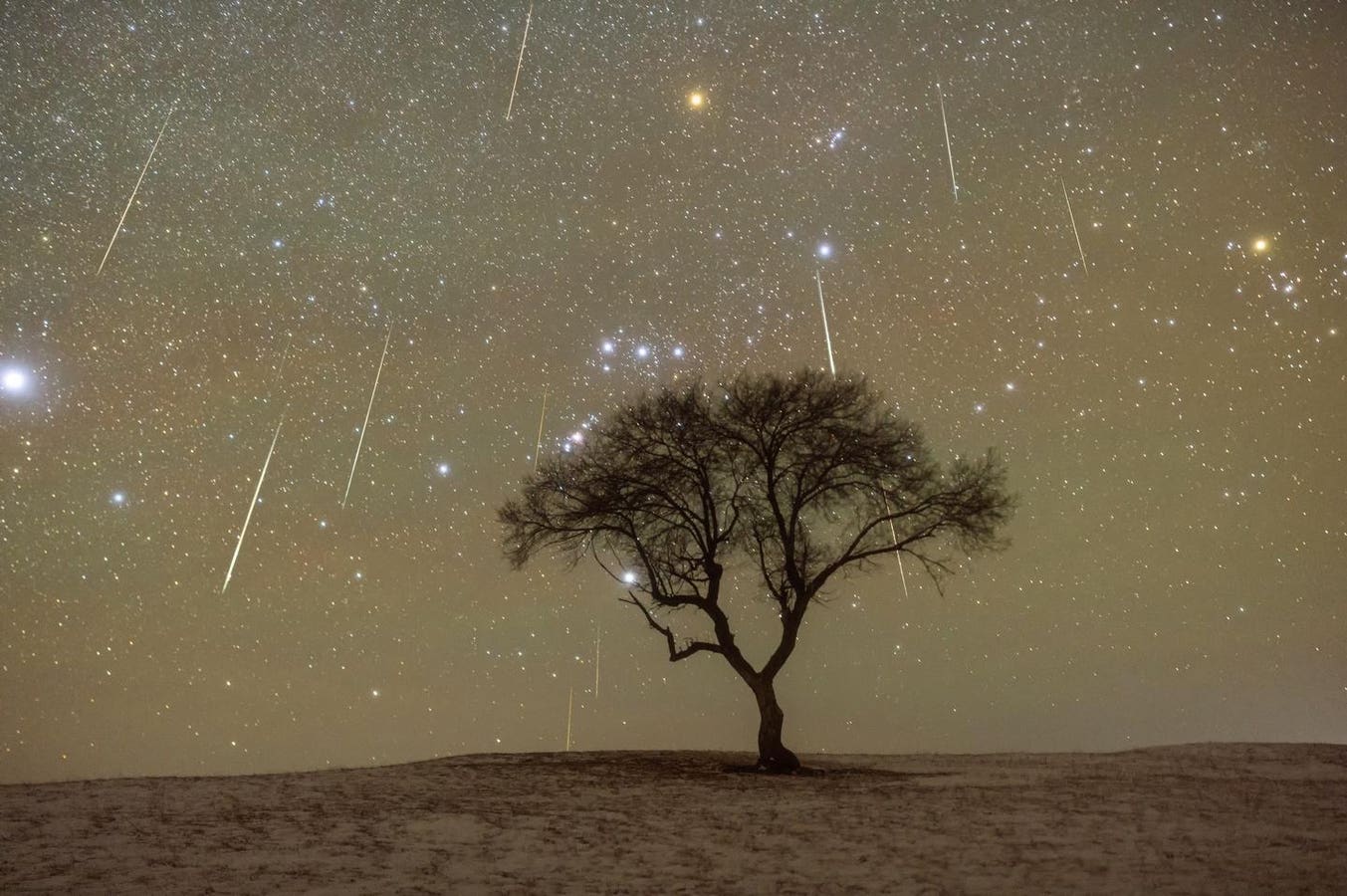
The top three meteor showers to watch in 2024 are the Quadrantids in early January, the Eta Aquariids in May, and the Perseids in August, all occurring under dark skies with minimal moon interference. The Quadrantids can offer up to 120 shooting stars per hour, the Eta Aquariids up to 50 per hour, and the Perseids are the most popular with 100 per hour. To best experience these celestial events, find a dark location, be patient, and avoid using phones or binoculars to maintain night vision.