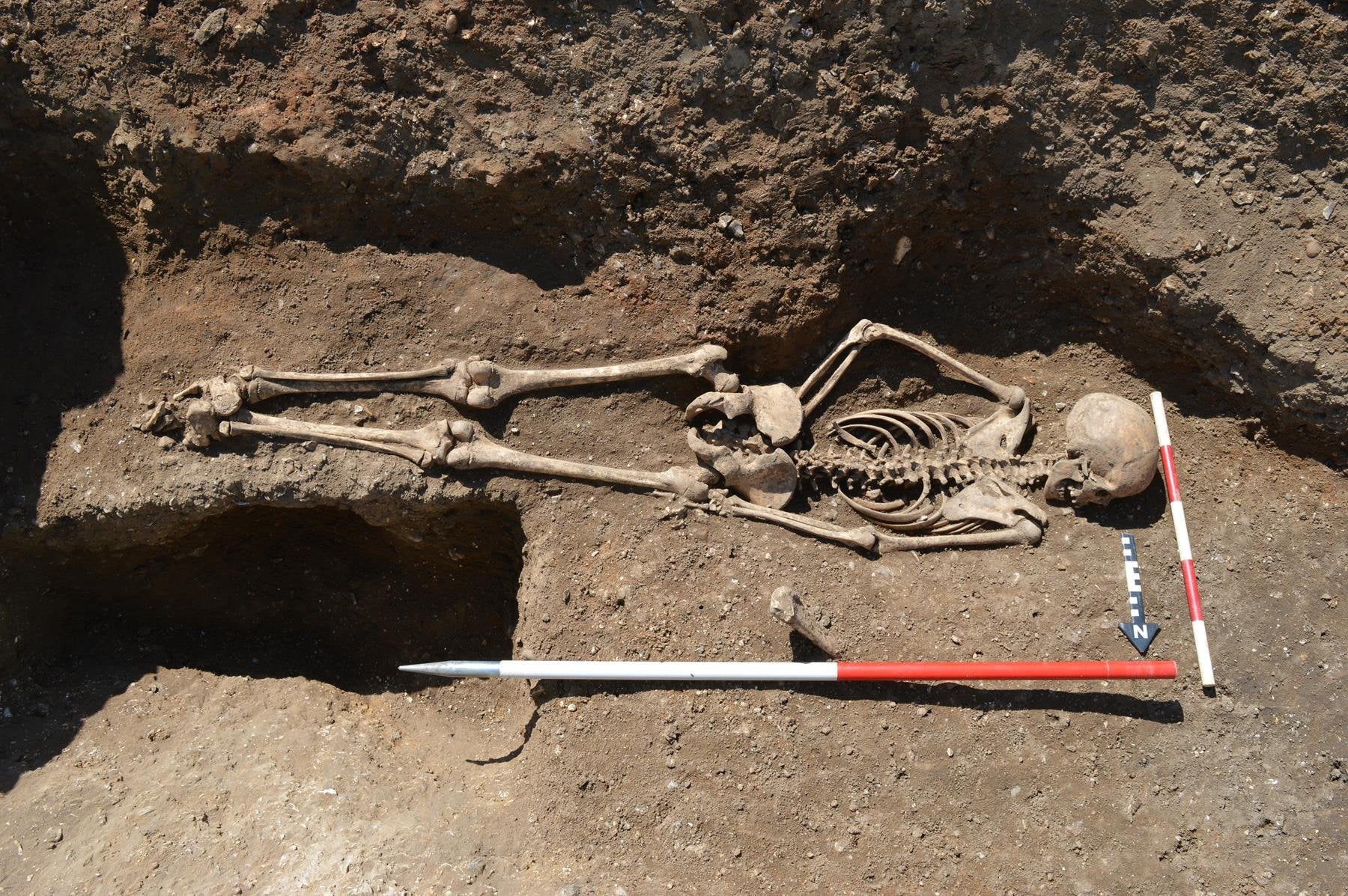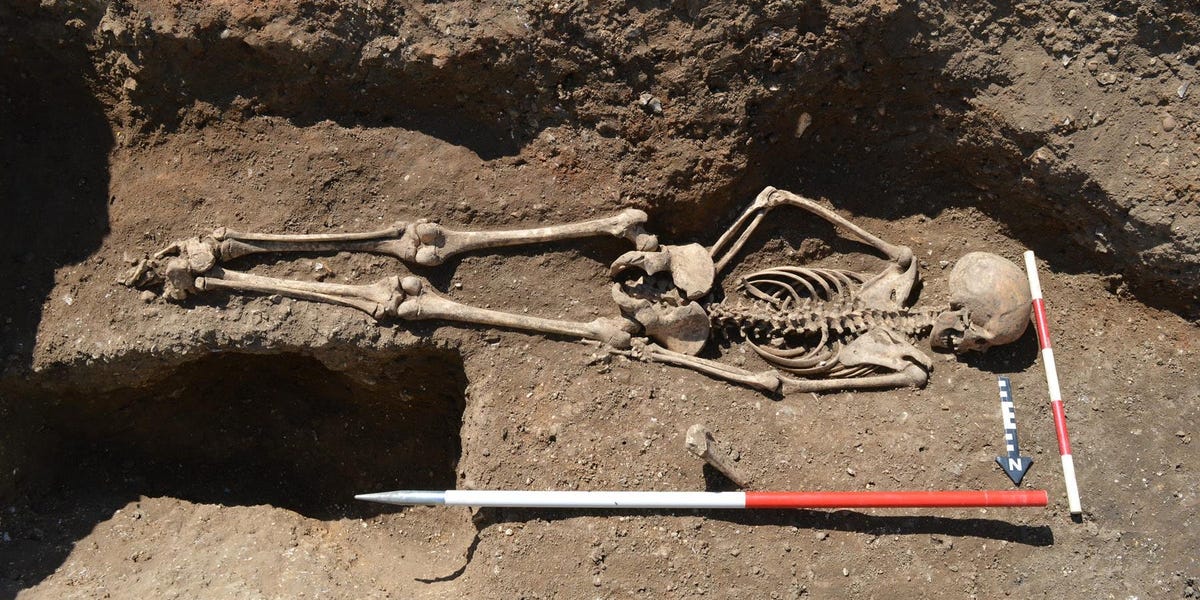
Researchers from the Museum of London Archaeology have discovered the burial site of a 15-year-old girl in England dating back to the 9th century. The girl was buried face-down, a deviation from typical burial practices of the time, leading researchers to believe that the community wanted to prevent her from returning from the dead. The burial site suggests that early Medieval villagers may have feared the undead, even before the widespread belief in vampires. The girl's burial position and the possible tying of her ankles indicate that extra measures were taken to ensure she could not come back. The analysis also revealed signs of childhood malnutrition and a spinal joint disease, suggesting she was of low social status.
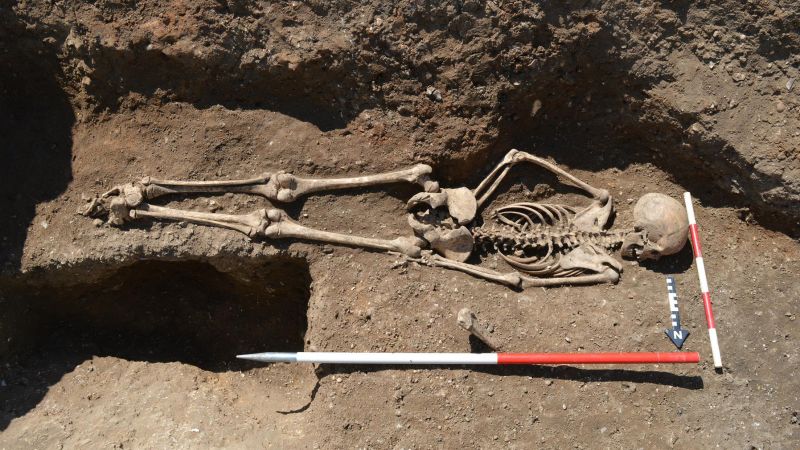
Archaeologists have discovered the remains of a 15-year-old girl buried face down with her ankles potentially tied together in an Early Medieval settlement in Cambridgeshire, England. The burial position suggests that extra measures were taken to prevent her from "returning" from the grave, indicating she may have been considered an outsider or of low social status. Analysis of her bones revealed signs of childhood malnutrition and spinal joint disease, suggesting a life of tough manual labor. The burial location, on a boundary and near a wooden post, is similar to another burial of a woman in the late 8th to 9th century, indicating the significance of borders and boundaries in burial practices during that period. Radiocarbon dating places the girl's death between 680 AD and 880 AD.
Archaeologists in Cambridgeshire have discovered the remains of a 9th-century teenage girl buried in an unusual manner, face down in a pit with her ankles possibly bound together. The burial suggests she may have led a tragic life and was considered an outsider in her community. Analysis of her remains revealed evidence of childhood malnutrition and a spinal joint disease, indicating low social status and hard manual labor. The burial may have been a symbolic closure of the settlement as it was abandoned.