
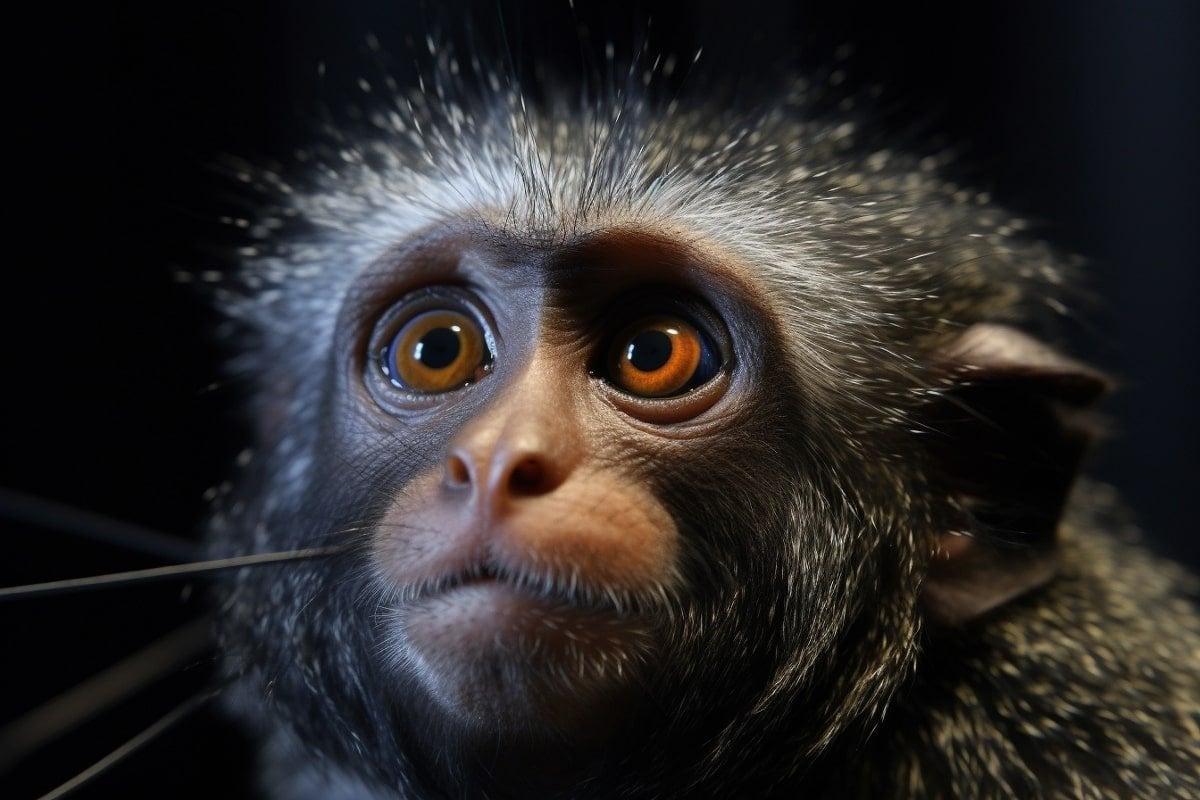
Marmoset Gaze Unlocks Secrets of Spatial Navigation in the Brain.
Researchers have discovered that the common marmoset navigates its surroundings differently from previously studied rats, reflecting its unique ecological adaptations. Marmosets use visual cues, relying on rapid head-gaze shifts while stationary, and minimize head movements while navigating. In contrast, rats use low-velocity head movements and tactile whisker explorations. On a cellular level, the marmoset’s hippocampal regions show selectivity for 3D view and head direction, suggesting that gaze, not place, is key to their spatial navigation.