
"Arctic Sea Ice Trend Reversal: Predicted 'Ice-Free' Summers by 2030s"
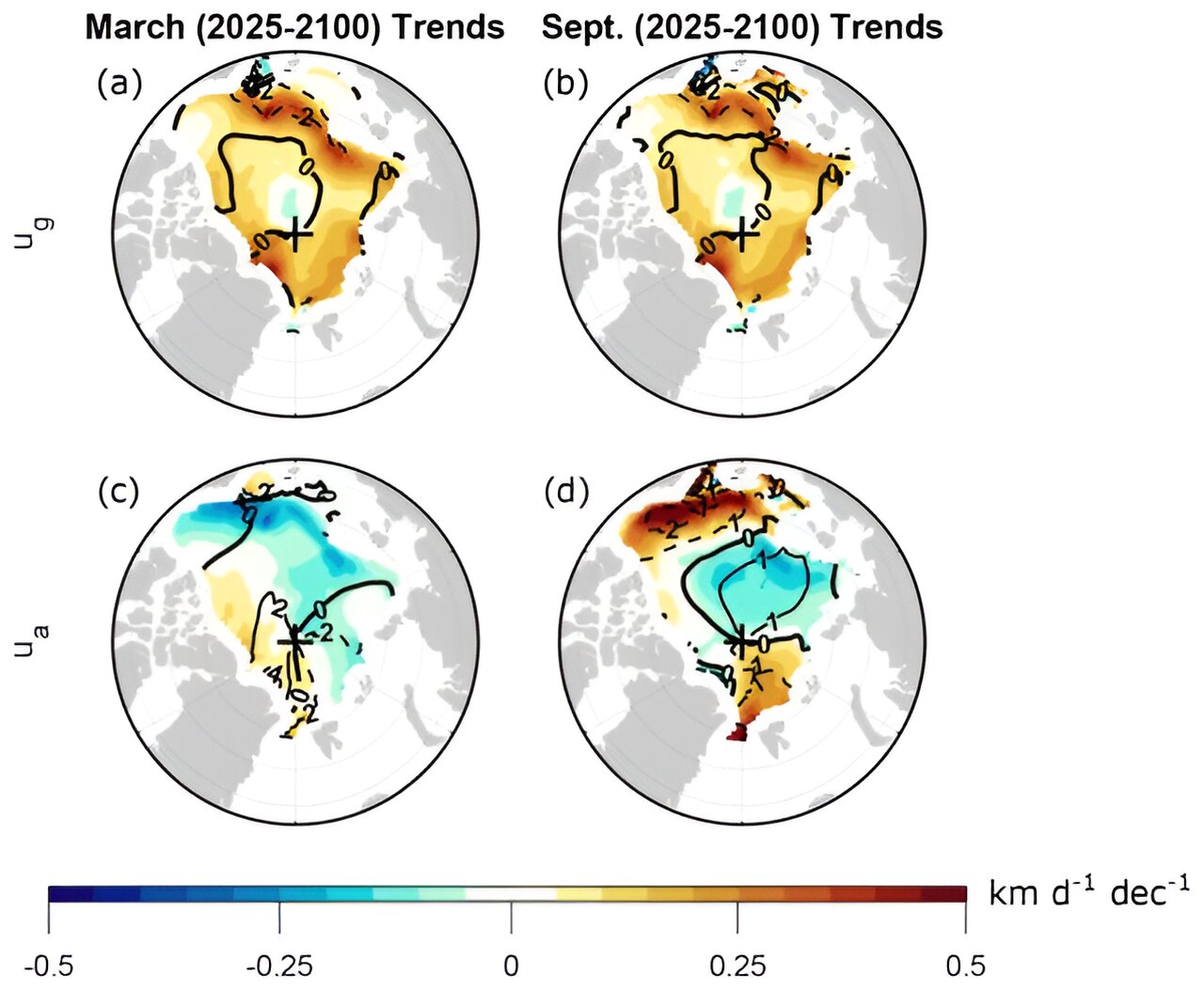
Observational data suggests that Arctic sea ice has been moving faster, but climate models project a future slowdown in ice speeds during the summer season. This projected reversal has implications for marine transportation safety and the rate of ice cover loss, which affects Northern Indigenous communities, ecosystems, and the global climate system. While the mechanisms driving the ice slowdown are plausible, questions remain about the timing of the slowdown, with some models suggesting it could occur within the next decade. Despite potential benefits for marine transport, the overall decline in sea ice cover remains a concern due to its impact on ecosystems, Indigenous populations, and the global climate.