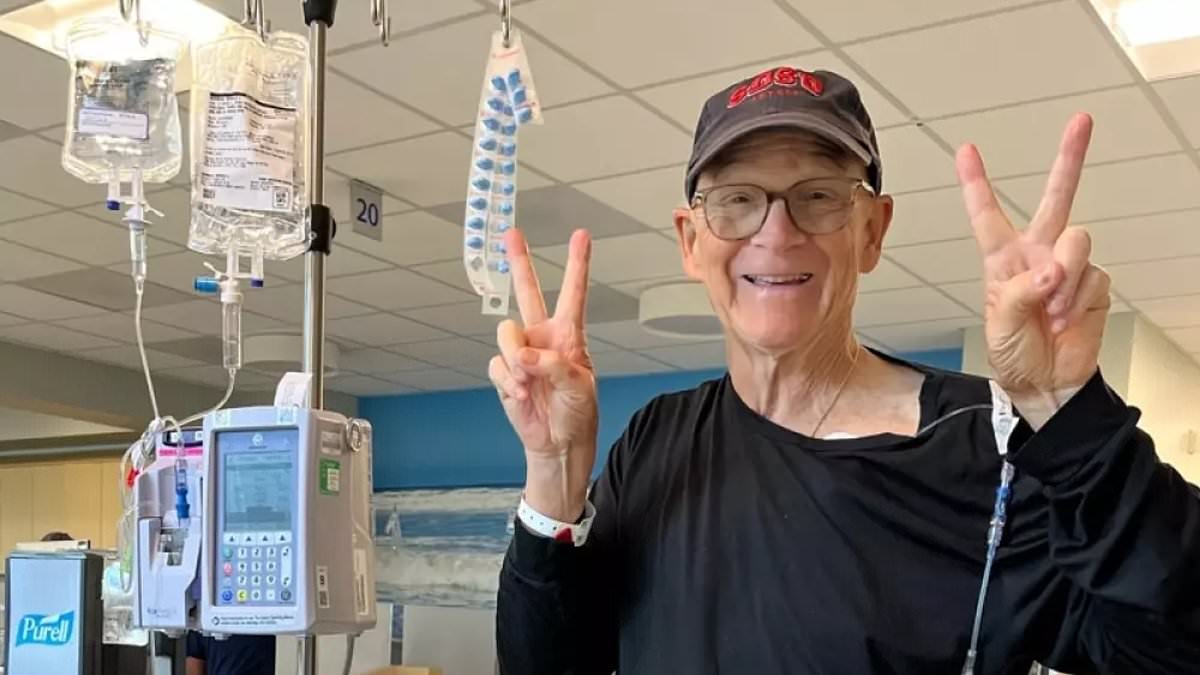
Ronald Norman, a retired male professor, was diagnosed with breast cancer after being struck in the nipple during a game of pickleball. Initially assuming it was just a bruise, Norman sought medical attention when a lump behind his nipple persisted. He was shocked to learn that he had male breast cancer, which had also spread to his lymph nodes. Norman opted for an alternative, natural treatment method that resulted in the tumor shrinking. However, he ultimately had to undergo a mastectomy and subsequent rounds of chemotherapy and radiation. Norman encourages men to regularly examine their chests and seek medical attention for any suspicious lumps, emphasizing the importance of early detection.

Woody Miller, a 66-year-old male breast cancer survivor, credits his wife for saving his life by encouraging him to seek medical attention. Miller urges other men to undergo yearly mammograms, emphasizing that breast cancer is not just a women's disease. Despite experiencing occasional chest pain, Miller had no other symptoms. After his wife insisted, he sought medical help and was diagnosed with cancer. Miller underwent surgery and radiotherapy, and subsequent tests confirmed he was cancer-free. He now uses his story to empower other survivors and supports them financially, highlighting the importance of early detection and a strong support system.
Robert George, a 61-year-old man from New York, was diagnosed with stage 2 male breast cancer after ignoring skin irritation on his chest for months. Despite healthcare providers initially dismissing it as a non-cancerous cyst, Mr. George underwent a mastectomy and had nearby lymph nodes removed. Male breast cancer is rare, with an estimated 2,800 new cases expected in 2023 compared to nearly 298,000 cases in women. Black men are at a higher risk, being diagnosed with the cancer at a 52% higher rate than white men. Mr. George is using his experience to raise awareness and highlight the need for improved outcomes in male breast cancer.