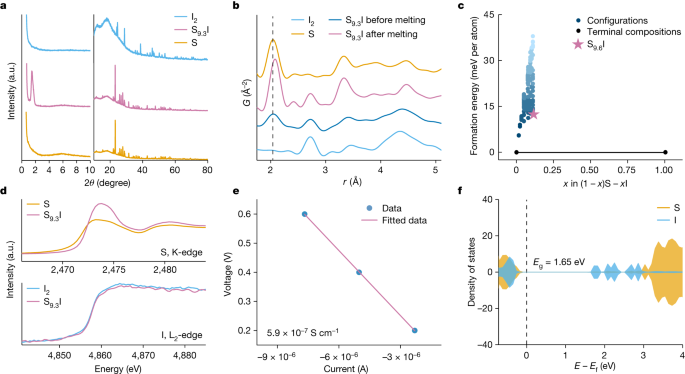
Researchers have developed a healable and conductive sulfur iodide material for use in solid-state lithium-sulfur batteries, which are known for their high energy storage potential. The study's data is available upon request from the corresponding author. The research builds on previous work in the field of all-solid-state batteries and offers potential advancements in battery technology.
Argonne National Lab in Illinois has made progress in improving the performance of lithium-sulfur batteries, which have the potential to be lighter, smaller, more powerful, and less expensive than current batteries. Sulfur is cheap and abundant, making it an attractive option for reducing battery costs and enabling more affordable electric vehicles. Additionally, lithium-sulfur batteries eliminate the need for cobalt or nickel, addressing concerns about the social cost of mining these materials. The researchers at Argonne have developed a catalyst that prevents the loss of sulfur during charge/discharge cycles, improving the battery's performance. While it may still take time for lithium-sulfur batteries to become commercially viable, this research brings us closer to a more sustainable and efficient energy storage solution.
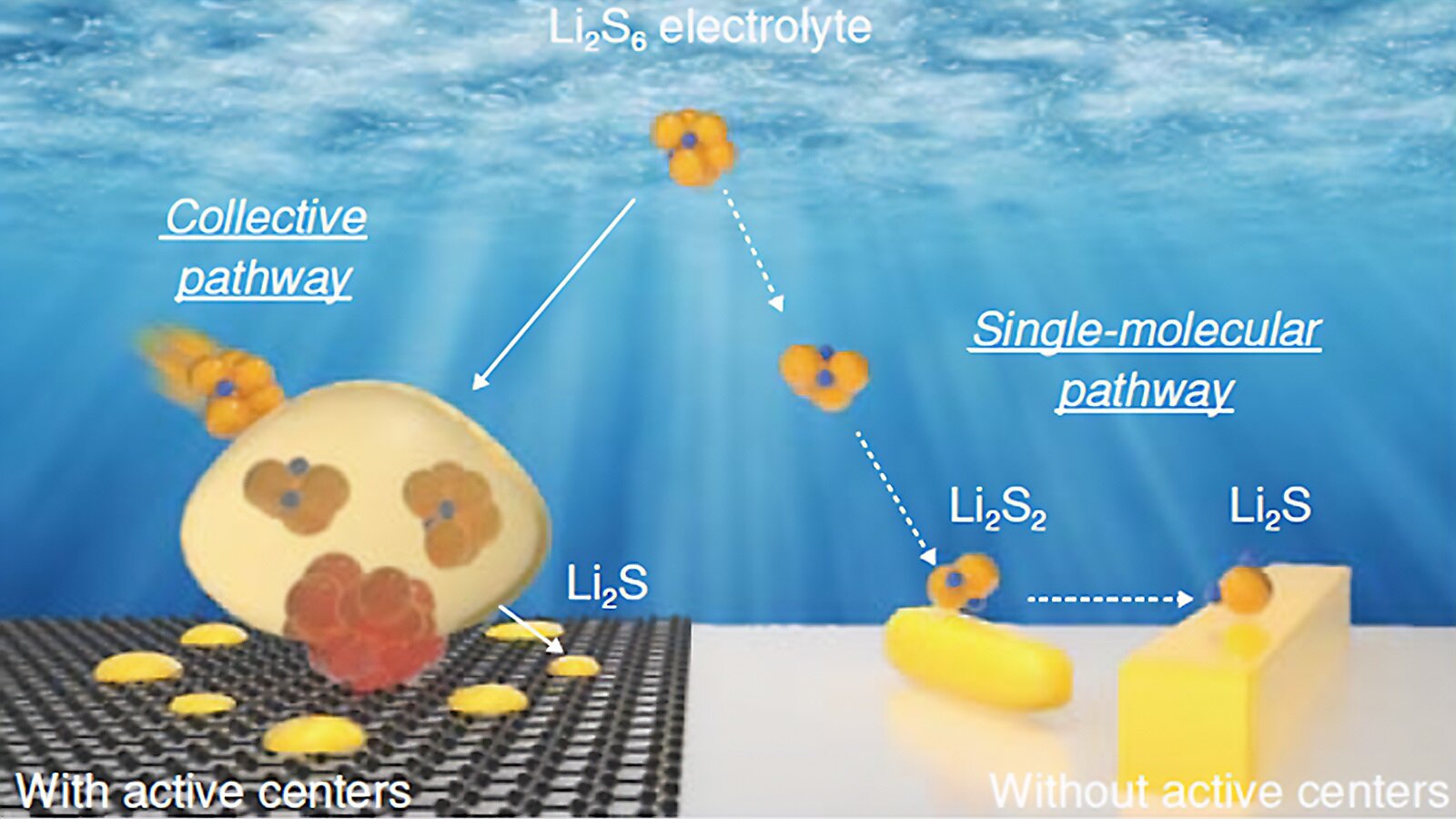
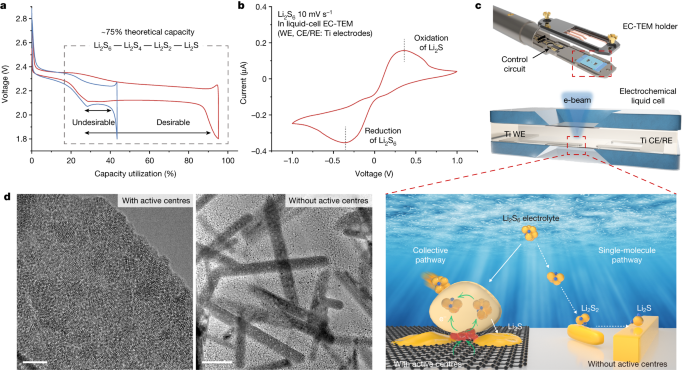
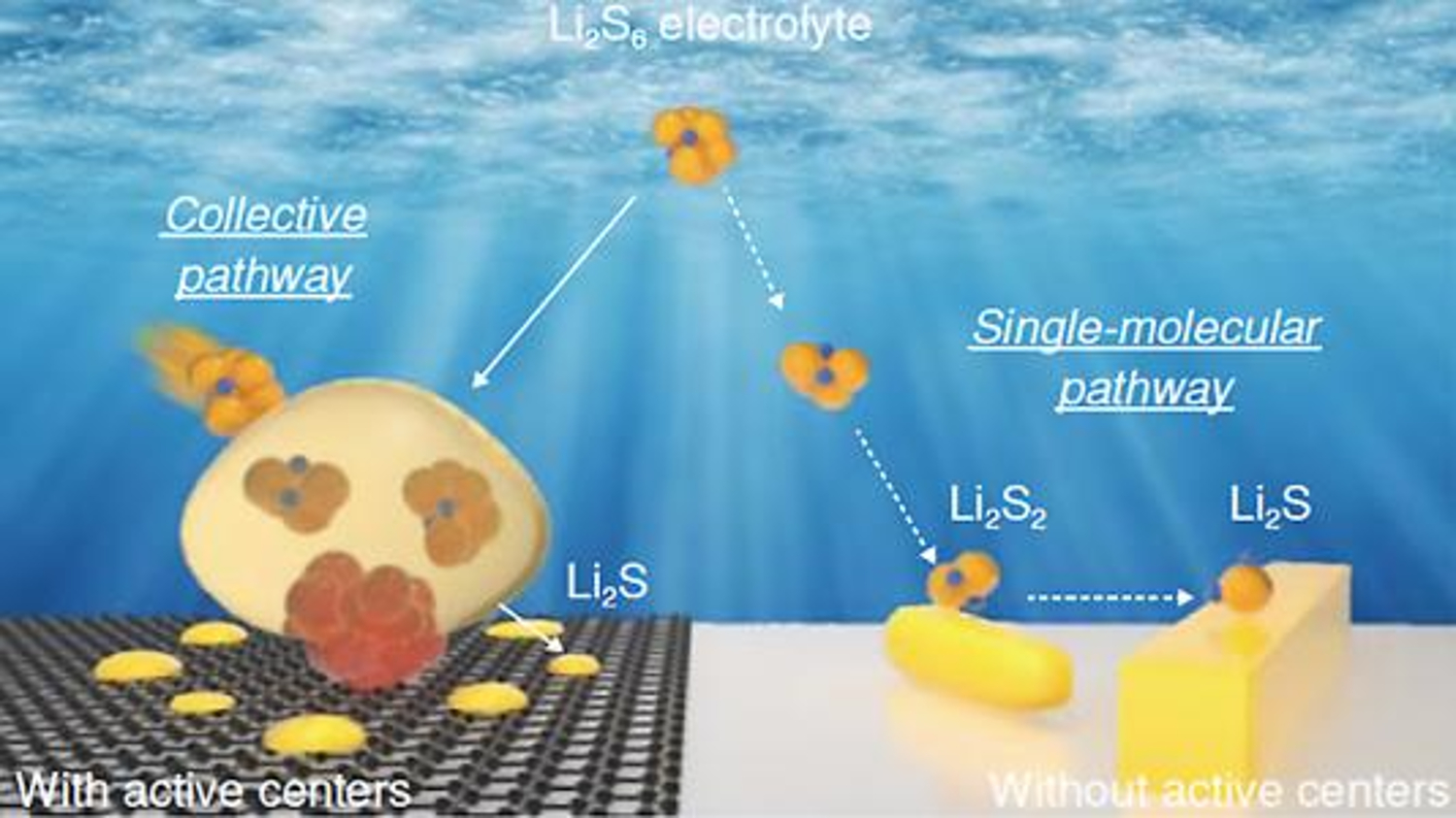
Scientists at the U.S. Department of Energy's Argonne National Laboratory have discovered a previously unknown reaction mechanism in lithium-sulfur batteries that addresses their short lifetimes. The breakthrough involves the use of a catalyst in the sulfur cathode, which prevents the dissolution of sulfur and the formation of soluble lithium polysulfides. This discovery could lead to lithium-sulfur batteries with higher energy storage capacity, lower cost, and longer lifetimes, making them a more sustainable and eco-friendly solution for the transportation industry.
Researchers have developed a method to visualize the interfacial collective reaction behavior of lithium-sulfur (Li-S) batteries, which could provide insights for improving their performance. By using advanced visualization techniques such as in situ transmission electron microscopy (TEM) and X-ray diffraction (XRD), the researchers were able to observe the nucleation and growth of lithium sulfides during the charging and discharging processes. The study revealed the dynamic interplay between the metal nanoparticles and oxide support, as well as the dislocation-induced stop-and-go kinetics of interfacial transformations. These findings could help in the design and development of more efficient and durable Li-S batteries for energy storage applications.