AMD has submitted a pull request to the Linux kernel's DRM-Next, enabling support for new GPU hardware blocks including GFX 12.1 and RDNA 3.5 series, indicating upcoming hardware updates and continued Linux support for AMD's latest graphics technologies.
Six years after its announcement, the Reiser5 file system has seen little to no development activity, with no recent updates or community interest, and it is unlikely to see a revival soon, as other file systems continue to evolve.
The article reports on benchmarks of the Linux 6.19 kernel with the X86_NATIVE_CPU optimization enabled on an AMD Ryzen Threadripper PRO 9995WX system. While some slight performance improvements were observed in I/O and micro-benchmark tests, overall real-world workload benefits were minimal, indicating limited impact of this optimization on practical performance.
Fedora Linux continued to lead upstream Linux innovations in 2025 with successful releases like Fedora 42 and 43, focusing on Wayland-only GNOME, performance improvements, and new features, while planning for Fedora 44 with enhancements like replacing kernel console with KMSCON and dropping i686 support.
The article reviews the most significant Linux kernel developments in 2025, including increased Rust integration, community decisions on file systems like Bcachefs and Btrfs, hardware support updates, and Linus Torvalds' commentary on kernel policies and architecture proposals, highlighting ongoing innovation and challenges in kernel development.
In 2025, Intel faced significant setbacks in its Linux and open-source efforts, including the shutdown of its performance-optimized Clear Linux distribution, layoffs leading to orphaned drivers and key engineers leaving, and ongoing restructuring impacting their Linux projects. Despite these challenges, some updates and benchmarks on Intel hardware and related open-source developments continued, but the overall outlook for Intel's Linux initiatives appears to be declining.
Google has developed the BPF CCX scheduler, leveraging Linux's eBPF capabilities, to improve thread placement and performance on AMD Zen CPUs, showing promising results compared to the standard Linux scheduler, with potential benefits for both server and desktop workloads.
The Linux kernel's Rust code has received its first CVE vulnerability, related to a race condition in the Android Binder rewrite that can cause system crashes in Linux 6.18 and newer, but no remote code execution or severe issues are reported.
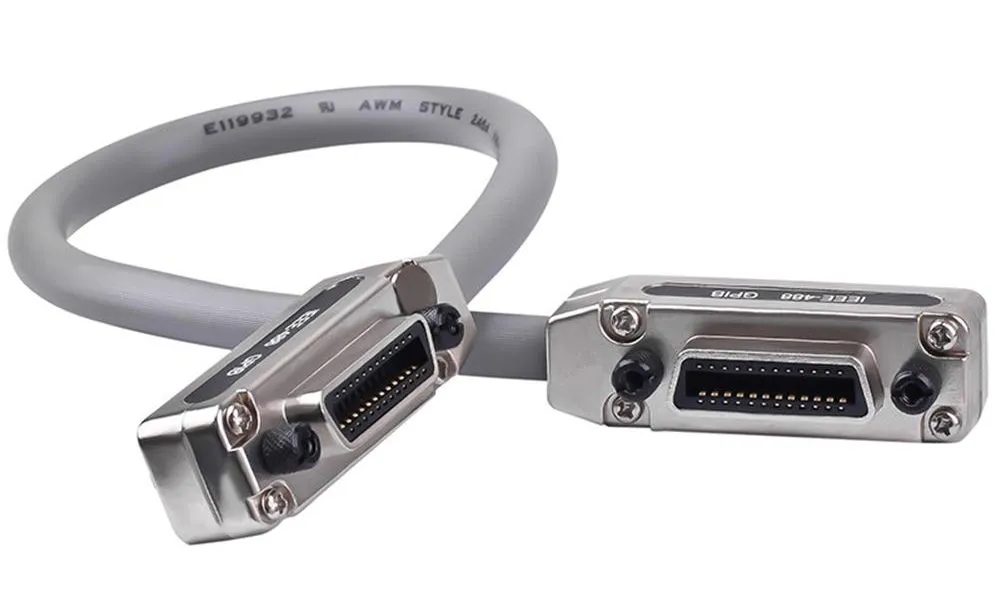
Linux kernel 6.19 now includes stable support for GPIB (IEEE 488), a long-standing interface bus used in laboratory and microcomputer equipment since the 1970s, making it easier to connect and communicate with legacy and modern devices using this protocol.
The Linux kernel is considering enabling the Microsoft C Extensions via the -fms-extensions compiler flag, which would allow for more flexible and potentially cleaner code by supporting non-standard C/C++ constructs used in Microsoft header files. Two patches are queued for the upcoming Linux 6.19 kernel, and Linus Torvalds appears to be supportive, though some debate remains about adopting this change widely.
A second version of patches for a multi-kernel architecture in Linux has been released, aiming to enable multiple independent kernels to run on a single machine for improved resource utilization and fault isolation, though its adoption remains uncertain.
A new Linux patch proposes disabling RDSEED on all AMD Zen 5 CPUs due to a bug causing silent failures, with AMD investigating a more targeted solution.
Intel has released new cache-aware load balancing patches for Linux, showing up to 44% performance gains on AMD EPYC Genoa platforms, with potential for inclusion in the mainline kernel soon.
A proposal for a multi-kernel architecture in Linux has been open-sourced, allowing multiple independent kernels to run simultaneously on a single machine, sharing hardware resources and improving fault isolation, security, and resource utilization, with potential applications in real-time and security-critical environments.
A new patch series for the Linux kernel introduces a 'Swap Table' to improve swap management, resulting in significant performance gains such as up to 20% faster throughput and improved build times, with positive results across various workloads and benchmarks. The overhaul aims to make swap management more efficient, future-proof, and easier to extend, with hopes of upstreaming into the mainline kernel.