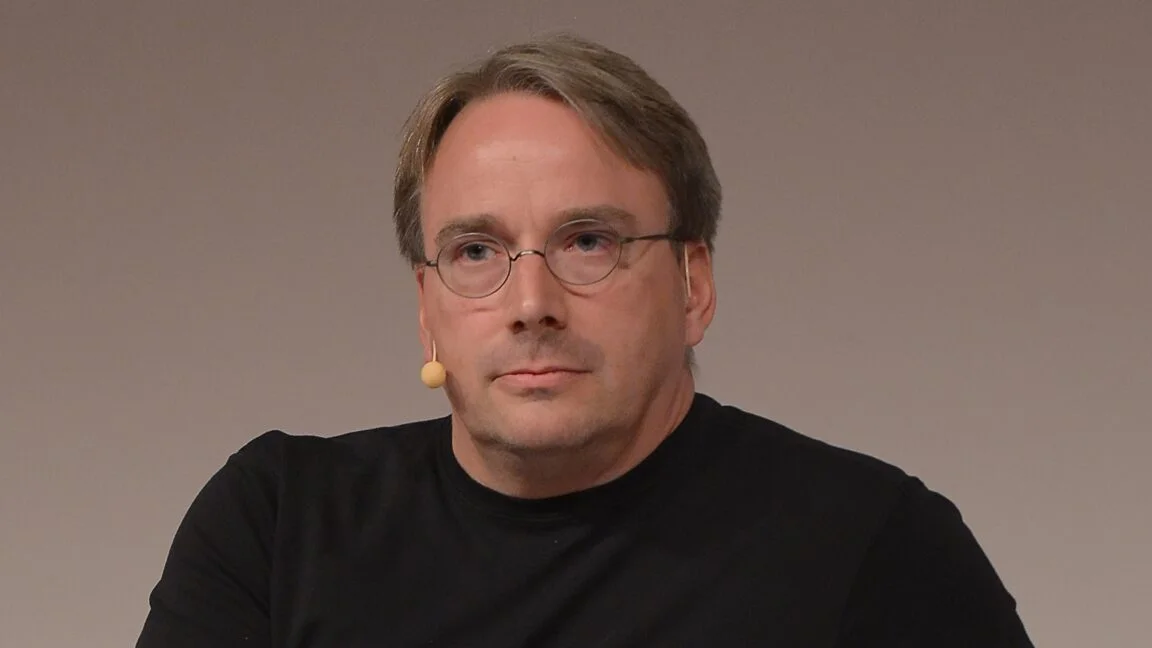
The most popular Linux news of 2025 included Valve's ongoing Linux enhancements, KDE Plasma's advancements especially around Wayland, significant Linux kernel improvements, and commentary from Linus Torvalds, highlighting a year of active development and innovation in the open-source Linux ecosystem.
The article reviews the most significant Linux kernel developments in 2025, including increased Rust integration, community decisions on file systems like Bcachefs and Btrfs, hardware support updates, and Linus Torvalds' commentary on kernel policies and architecture proposals, highlighting ongoing innovation and challenges in kernel development.
Linus Torvalds criticizes the proliferation of Linux Security Modules (LSMs), stating there are too many and advocating for standardization over creating new, overlapping security models, emphasizing the need for better guidance and collaboration within the Linux security community.
The Linux kernel is considering enabling the Microsoft C Extensions via the -fms-extensions compiler flag, which would allow for more flexible and potentially cleaner code by supporting non-standard C/C++ constructs used in Microsoft header files. Two patches are queued for the upcoming Linux 6.19 kernel, and Linus Torvalds appears to be supportive, though some debate remains about adopting this change widely.
Linus Torvalds publicly criticized a late and poor-quality RISC-V code contribution from a Google engineer, calling it 'garbage' and warning against future late submissions and low-quality code, emphasizing the importance of early and clean pull requests for the Linux kernel.
Linus Torvalds rejected the RISC-V architecture changes for Linux 6.17 due to late submission and poor code quality, calling some of the proposed code 'garbage' and emphasizing the need for early, high-quality pull requests for the next release, Linux 6.18.
A recent selfie posted by Mark Russinovich featuring Bill Gates, Linus Torvalds, and Dave Cutler highlights the interconnected history of modern computing, showcasing Gates' role in early OS development, Torvalds' creation of Linux, and Cutler's influential work on Windows NT, illustrating the overlapping generations that have shaped the tech world.
Bill Gates and Linux creator Linus Torvalds met publicly for the first time at a dinner hosted by Microsoft Azure's CTO, marking a rare encounter between two industry giants with contrasting philosophies—Gates focusing on closed-source, monetized software, and Torvalds advocating for open-source collaboration. No major decisions were made during the meeting.
Linus Torvalds reiterates his preference for tabs over spaces in the Linux kernel coding style by adding hidden tabs to a commit that attempted to replace a tab with a space. This sparked a robust rebuttal from Torvalds, emphasizing the importance of adhering to the kernel's coding style and the need for tools to properly parse tabs. The debate over tabs versus spaces continues within the context of the Linux kernel's coding standards.
Linus Torvalds intentionally made the use of indentation in Linux kernel config files more complex to challenge inferior parsers, aiming to improve the quality of tools that parse such files. This change, found in the latest release candidate for the next version of the Linux kernel, is a deliberate move to expose and weed out weaker parsing tools, without publicly criticizing anyone.
Linus Torvalds has added intentional hidden tabs to the common Kconfig file for handling page sizes in the Linux kernel to thwart Kconfig parsers that can't correctly handle them, following a patch that replaced a tab with a space character. Torvalds authored the patch to intentionally add tabs to throw off any out-of-tree/third-party parsers that can't correctly handle them, emphasizing that if a parser can't handle tabs as whitespace, it should not be parsing the kernel Kconfig files.
Linus Torvalds has released Linux 6.8-rc3, the latest weekly test candidate for the upcoming Linux 6.8 kernel, noting that it's slightly larger than expected but not concerning at this stage. The release includes driver fixes, filesystem updates, and tooling improvements, with notable changes such as initial support for Lenovo Legion Go controllers and optimizations for low-memory scenarios. Linux 6.8 is anticipated to be an important release, especially with Ubuntu 24.04 LTS considering its use.
Linux 6.6-rc6 has been released by Linus Torvalds, with plans to release the stable version in two weeks, barring any unforeseen issues. The release includes fixes for a kernel crash when unplugging Logitech USB receivers, hung systems at shutdowns or reboots on certain Lenovo, Sony, and Dell systems, and other miscellaneous fixes. The release also features support for PXN V900 racing steering wheel and addresses a Zen 4 CPU bug. The stable version is expected to debut on October 29th, followed by the start of the v6.7 kernel cycle.
Linux 6.6-rc5 has been released by Linus Torvalds, signaling that things are back to normal for this week's test release. The networking subsystem has received significant changes to compensate for the lack of updates in the previous release. Other miscellaneous driver and filesystem fixes have also been included. Linux 6.6 is expected to be this year's Long-Term Support (LTS) kernel version.
Linux 6.6-rc4, the latest test release of the Linux kernel, has been announced by Linus Torvalds. Described as fairly small, this release includes minor fixes and updates, with notable additions being support for Intel Arrow Lake NPU and AMD Zen 1 derived Hygon CPUs mitigating for Inception/SRSO. Linux 6.6 is expected to be formally released at the end of October or early November.