Anthropic quietly released a legal plug-in inside its Cowork collaboration environment; the significance lies less in the feature and more in its placement, signaling a shift in how legal work gets done and how SaaS-driven legal software may reshape the profession.
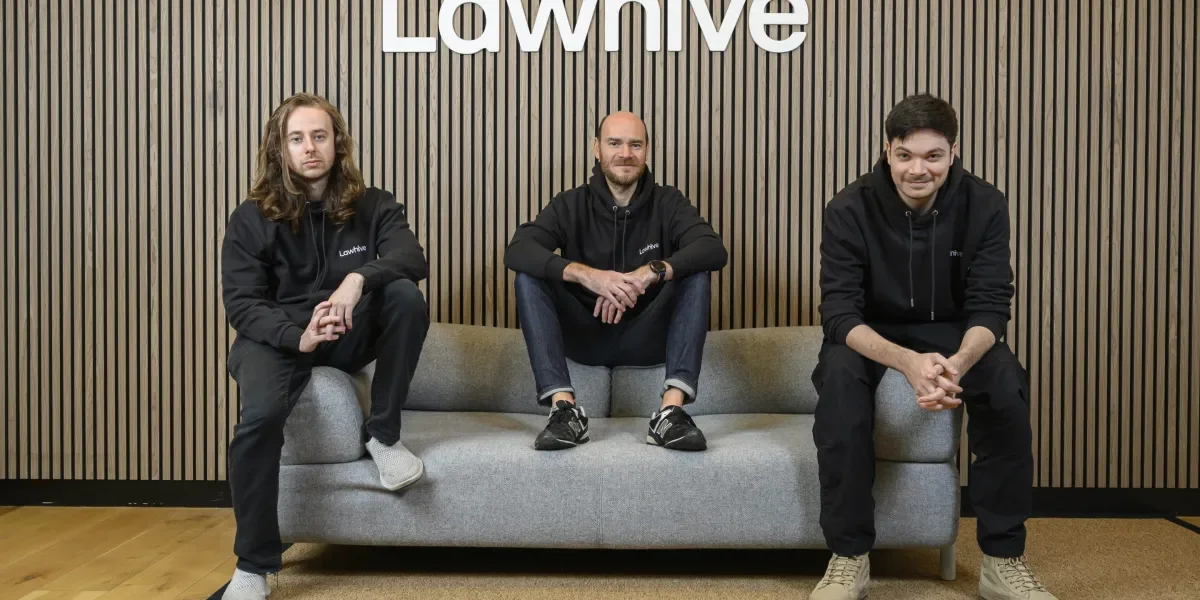
British startup Lawhive, which operates as an AI-enabled law firm handling routine consumer legal matters via a network of about 500 lawyers across three regulated firms, closed a $60 million Series B led by Mitch Rales of Danaher with GV, Balderton, TQ Ventures and Jigsaw participating. The funding will fuel U.S. expansion (now active in 35 states with offices in Austin and a new New York HQ) after revenue exceeded $35 million as the company grows quickly. Lawhive’s platform automates drafting, research, case management and client onboarding, with human lawyers reviewing work, a model the company says reduces costs and expands access to legal services, aiming to grow five- to sevenfold this year.
Anthropic released a new AI tool for automating legal work (Claude Cowork’s ‘Legal’ plug‑in) that sparked a broad stock-market selloff over AI disruption fears: the S&P 500 software/services index fell about 9% over five days and is down more than 20% from its October peak, the Nasdaq 100 dropped ~2.6%, and Thomson Reuters sank over 20%. Analysts caution the rally around AI may be overblown, noting MIT findings that AI integration hasn’t boosted revenue, while experts warn that tools in law still require licensed-attorney review and face regulatory/security hurdles; the market remains jumpy about AI’s near-term impact on enterprise software.
Anthropic unveiled a Claude legal plugin to automate legal tasks like document review and NDA triage, signaling a shift toward owning application layers and workflows. The news triggered a slide in stocks of major legal and data companies (e.g., Pearson, Relx, Thomson Reuters, Wolters Kluwer, Sage), highlighting investor concerns about AI’s impact on the legal-tech landscape and the broader market implications.
The estate of George Carlin has settled a lawsuit with podcasters who used AI to impersonate the late comedian's voice and style for an unauthorized special. The settlement marks the first resolution to a lawsuit over the misappropriation of a celebrity's voice using AI tools and comes amid growing concerns in Hollywood over the exploitation of personal brands without consent. The settlement includes an injunction barring further use of the video and serves as a blueprint for resolving similar disputes in the future. The legal battle stemmed from an hourlong special released on the podcast's YouTube channel, where an AI-generated George Carlin narrated commentary over images created by AI. The settlement comes as lawmakers are introducing legislation to prohibit the publication and distribution of unauthorized digital replicas, including deepfakes and voice clones.
A US judge ruled in favor of Sony in a lawsuit filed by Genuine Enabling Technology (GET), stating that Sony did not infringe on GET's patented technology related to how PlayStation consoles and controllers communicate. The judge granted Sony's request for summary judgment of non-infringement, closing the case. GET had claimed that Sony's PlayStation hardware infringed on its '730 Patent, but the judge found that GET failed to raise a dispute of fact.
Sony emerges victorious in a $500 million patent infringement lawsuit filed by Genuine Enabling Technology (GET), with the court ruling in favor of the PlayStation maker, stating that GET failed to provide sufficient evidence to prove infringement. The lawsuit, which alleged infringement of a 2001 patent related to controller communication, has been closed, marking a legal win for Sony.
A US District Court judge has ruled in favor of Sony in a $500 million patent infringement lawsuit filed by Genuine Enabling Technology, stating that Sony did not infringe on the company's patented technology with its PlayStation consoles and controllers. The lawsuit claimed that the tech allowing PlayStation devices to communicate infringed on GET's rights, but the judge found that GET failed to provide enough evidence to prove infringement, granting Sony's request for a summary judgement of non-infringement and closing the case.
The Department of Justice has filed an antitrust suit against Apple, accusing the tech giant of monopolizing the smartphone market. Apple has hired Kirkland & Ellis, the top firm in the Am Law 100, to defend itself, with litigation partners Craig Primis, Devora Allon, Winn Allen, and antitrust partner Matt Reilly leading the case. Apple claims the suit is "wrong on the facts and the law," and Kirkland & Ellis will represent the company in this high-stakes legal battle.
Epic Games accuses Apple of violating an injunction related to the App Store, alleging that Apple's compliance is a "sham" and seeking a contempt order. The dispute stems from Apple's App Store policies, including its 30% commission on in-app purchases. Epic claims that Apple's new rules and fees make the injunction's provisions "commercially unusable." Apple has until April 3 to respond, and the ongoing legal battle reflects the broader antitrust issues surrounding app store practices.
The creator of the popular Nintendo Switch emulator Yuzu, Tropic Haze, has settled a lawsuit with Nintendo and agreed to pay $2.4 million in damages. The settlement includes a permanent injunction preventing Tropic Haze from offering or marketing Yuzu or any of its source code in the future, as well as surrendering all related website domains and information. Nintendo had claimed that the emulator facilitated piracy on a large scale, with one of its biggest releases being pirated over a million times in the week before its official release.
Women and some men have come forward on social media to share stories of sexual harassment and assault during the glitzy Legalweek conference in New York City, with incidents occurring at both conference and non-conference events. The industry, which revolves around legal technology, has been rocked by reports of inappropriate behavior, prompting calls for change and a reevaluation of the industry's tolerance of predatory behavior. The flood of allegations has sparked a #MeToo moment within the legal tech community, shedding light on the prevalence of sexual misconduct and harassment in the industry.
Nintendo of America has filed a lawsuit against Rhode Island-based company Tropic Haze, LLC for creating software called Yuzu, which allegedly enables piracy of Nintendo Switch games. The 41-page complaint filed in U.S. District Court accuses Tropic Haze of circumventing protections against illegal game downloads and playing. Nintendo is seeking a court order to stop the marketing and manufacturing of the software, as well as financial damages. Tropic Haze has not responded to the lawsuit.
A New York City-based law firm, Cuddy Law, used ChatGPT to calculate lawyers' fees at an "excessive" $600 per hour for a case involving special needs education. However, a federal district judge rebuked the firm for relying on the AI tool, citing its lack of reliability and the potential for fabricated information. The judge ultimately cut the firm's requested fees in half, to $53,050, and advised against using ChatGPT in future fee applications. This incident highlights the challenges and risks associated with using generative AI tools in the legal space.
After a decade-long legal battle, the Supreme Court has sided with Apple by denying a bid from VirnetX to revive a $503 million patent case. This decision ends the prolonged dispute over FaceTime, VPN, and iMessage patents, with the Federal Circuit ruling in favor of Apple. President Biden's representatives from the Patent Office also supported Apple, urging the justices to reject the case, while VirnetX complained about the former patent office interim director's decisions.