Prime Minister Mark Carney's push for rapid nation-building projects in Canada faces significant opposition from Indigenous groups who demand a say in developments on their ancestral lands, leading to protests and legal debates over land rights and environmental concerns.
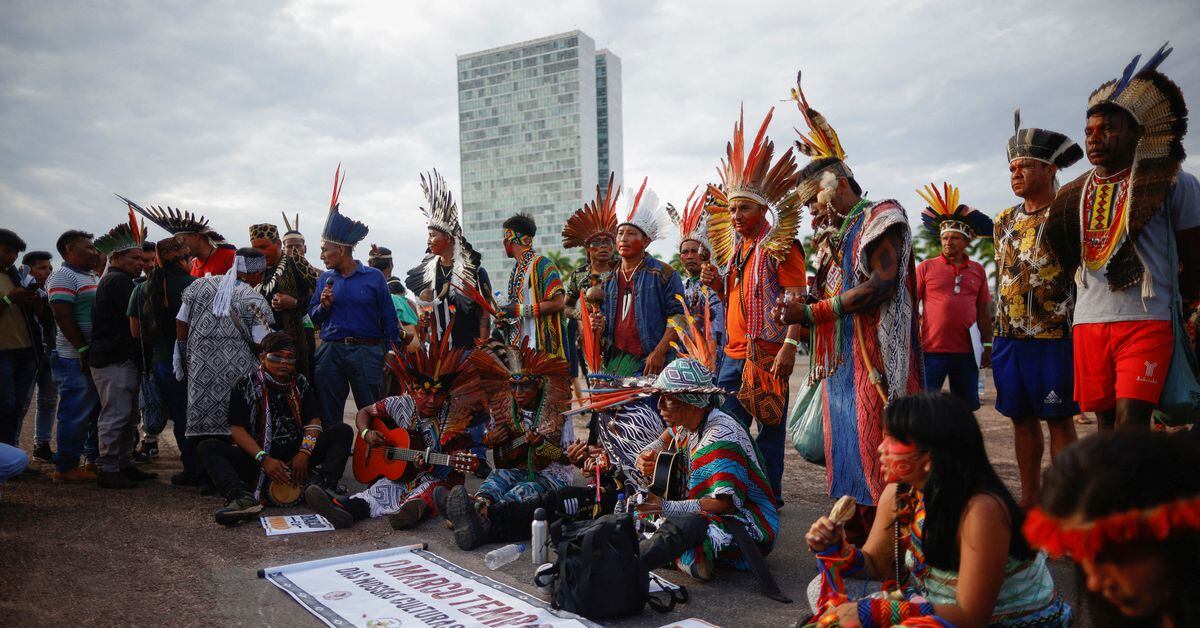
Brazil's Supreme Court has ruled in favor of Indigenous rights by striking down the "marco temporal" argument, which would have required Indigenous groups to prove their presence on ancestral lands in 1988. The decision is seen as a victory for Indigenous peoples and human rights organizations, who argued that the policy could lead to the theft of Indigenous lands. The ruling will have significant implications as Brazil's Senate considers legislation to limit new Indigenous reservations, with support from the agriculture lobby.
Brazil's Supreme Court is expected to reject a proposal by the country's farm lobby to limit land claims by Indigenous peoples to areas they occupied before 1988. Lawyers and Indigenous rights advocates believe a majority of the court will vote against the date restriction, deeming it unconstitutional. The vote count is currently 4-2 against the proposal, with at least two more justices expected to vote against it. The case before the court arose from a dispute in Santa Catarina state, where the government rejected a land claim by the Xokleng people. Indigenous leaders argue that the decision is crucial for resolving pending land recognition claims and protecting their communities from land-grabbers and illegal activities.