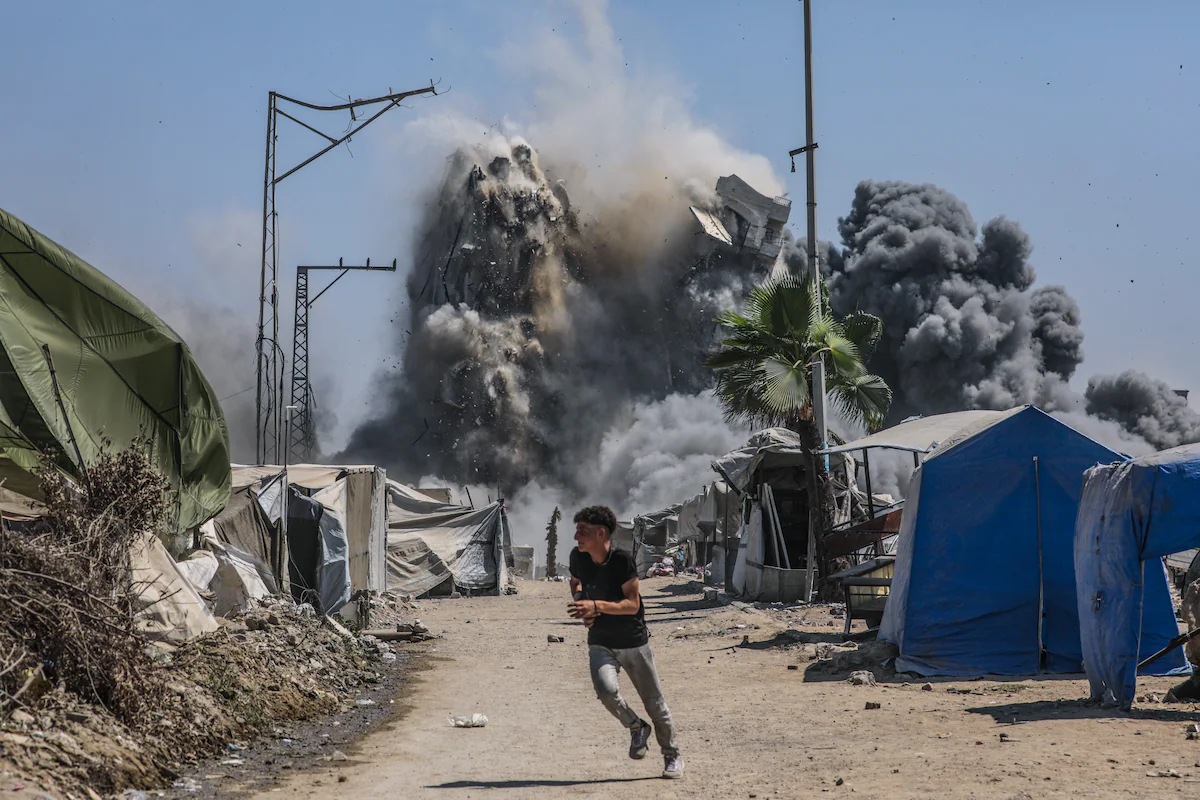
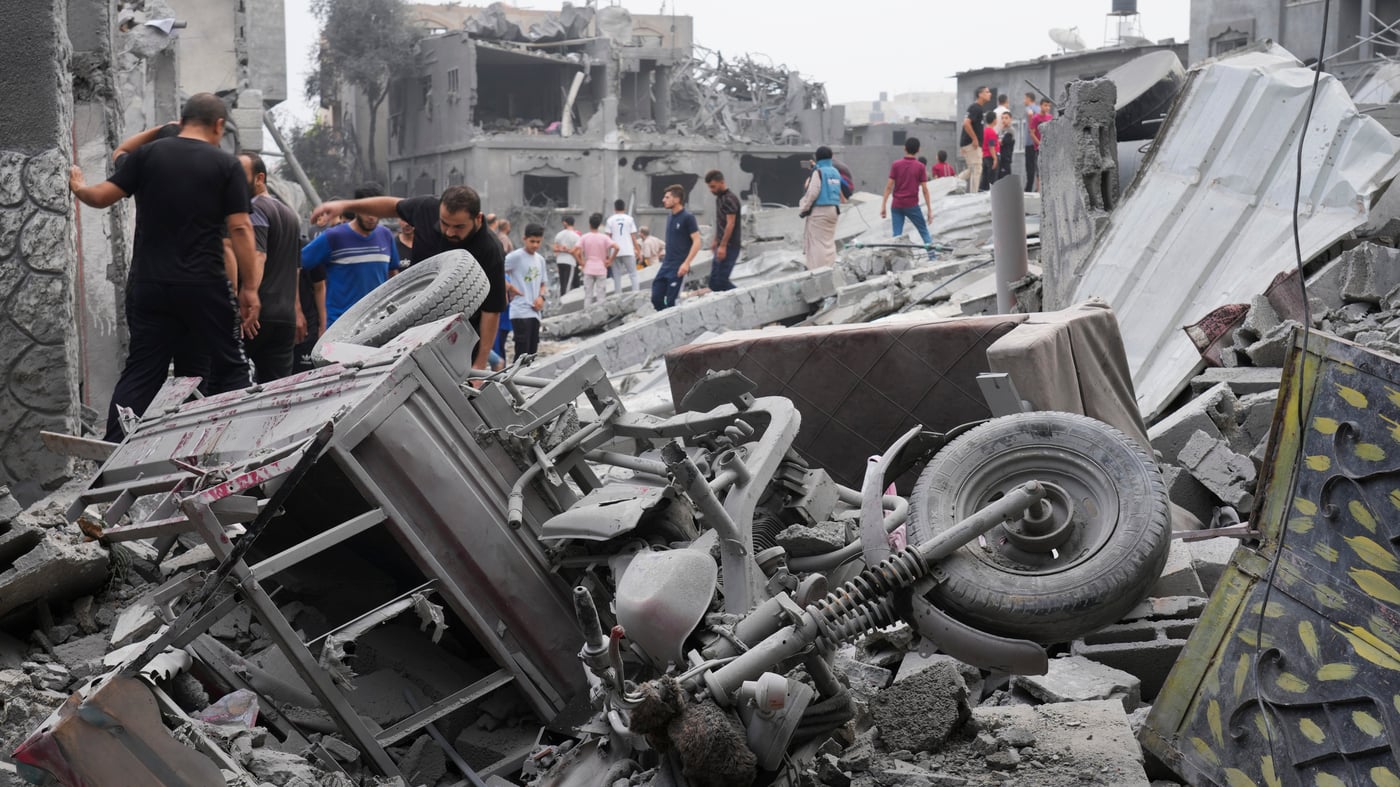
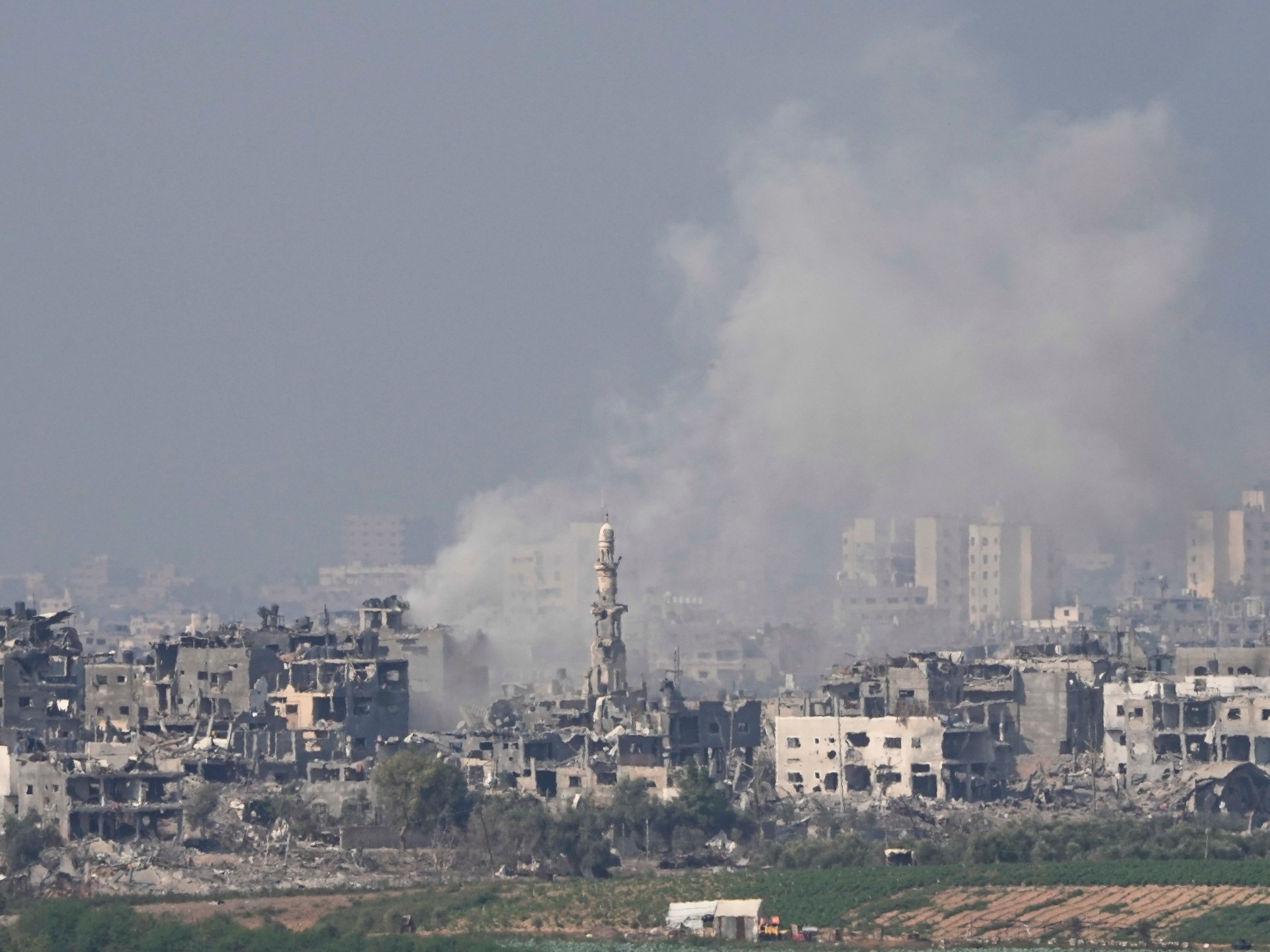
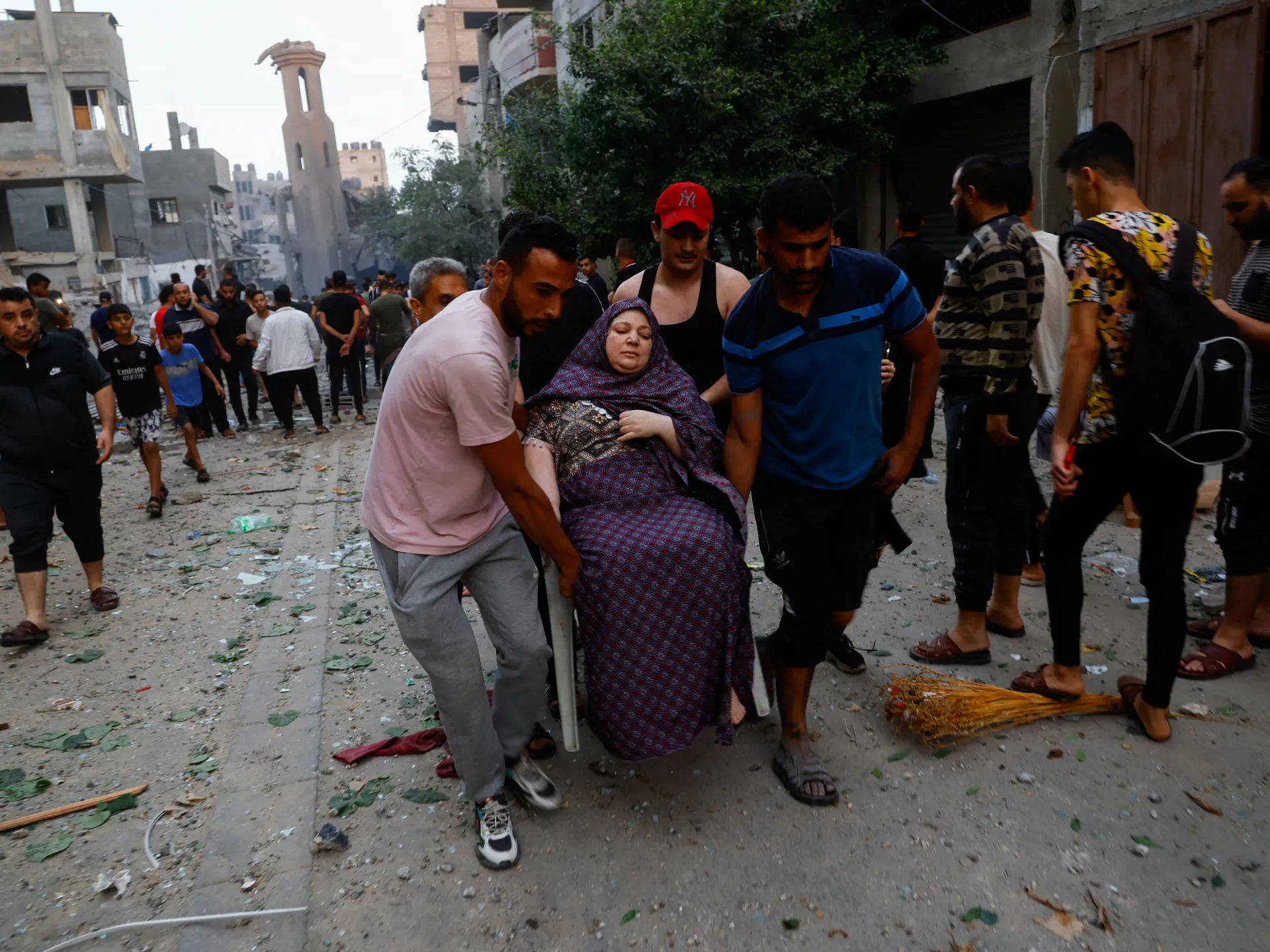
Gaza City has been heavily damaged by Israeli bombardments targeting high-rise buildings, which Israel claims were military sites used by Hamas, leading to significant destruction and displacement amid ongoing conflict.
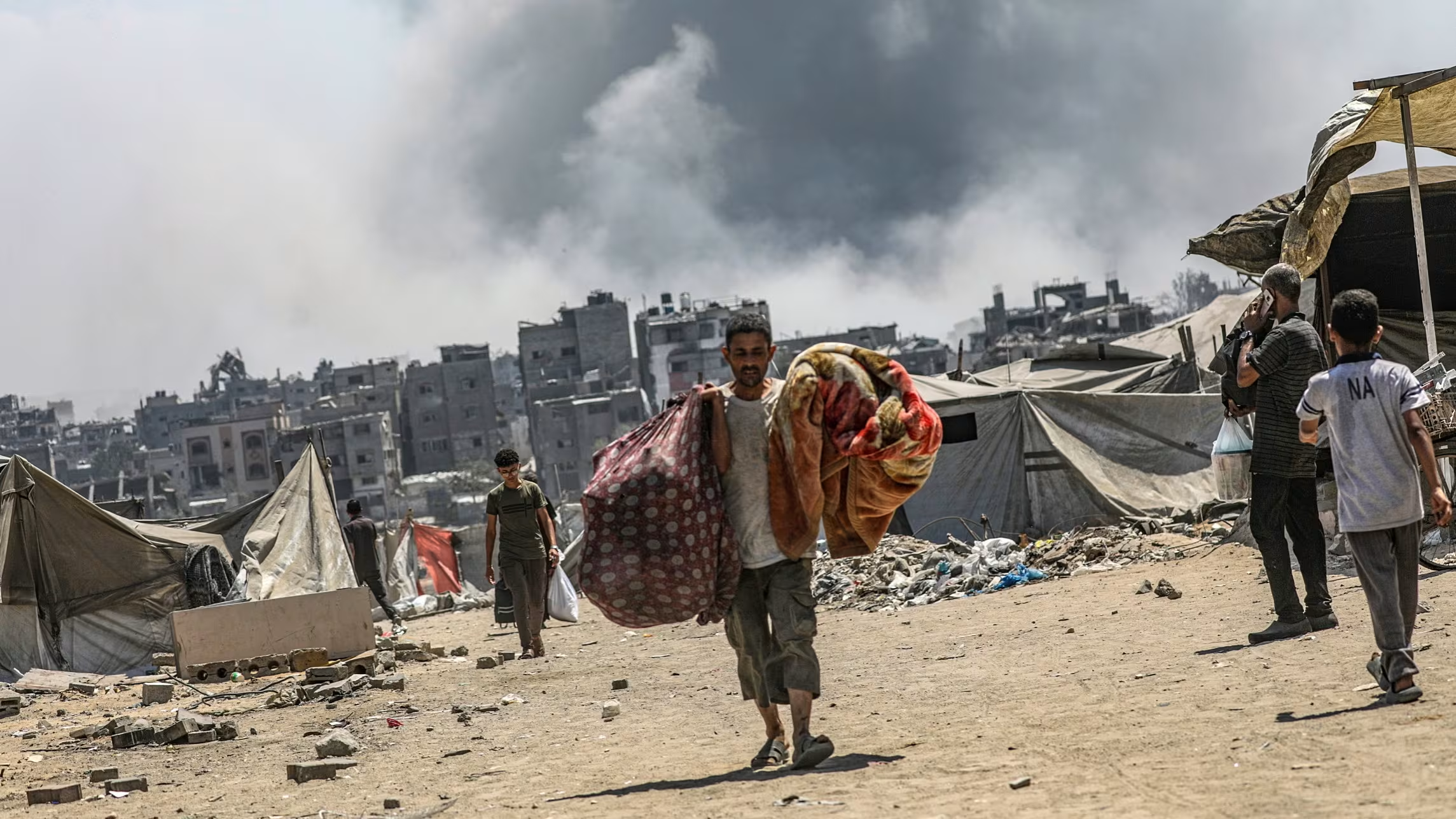
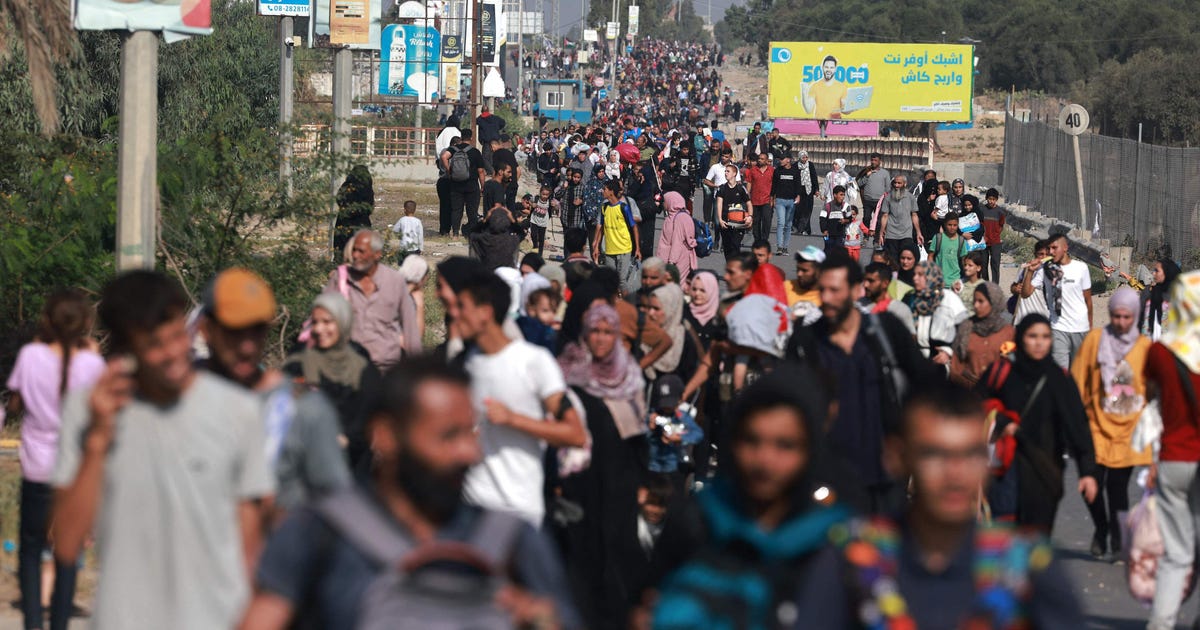
Palestinians are fleeing Gaza City amid Israeli bombardments that have resulted in dozens of deaths, highlighting the ongoing conflict and humanitarian crisis in the region.
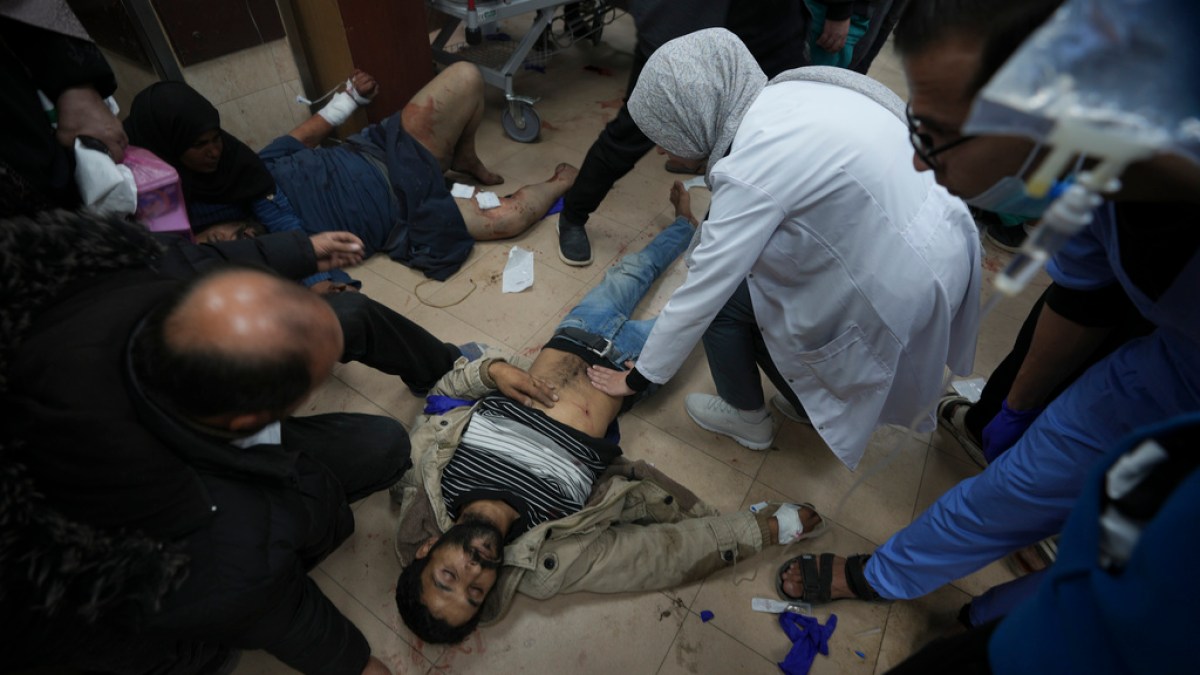
Doctors Without Borders has reported that Nasser Hospital, the largest remaining medical facility in Gaza, is unable to provide critical care due to Israeli bombardment and the encirclement of Khan Younis by the Israeli army. The hospital, which was also sheltering thousands of displaced Palestinians, is now facing dire conditions with almost 350 patients stuck inside. Doctors Without Borders has called for an end to the attacks on healthcare facilities, emphasizing the urgent need for medical care for the wounded.
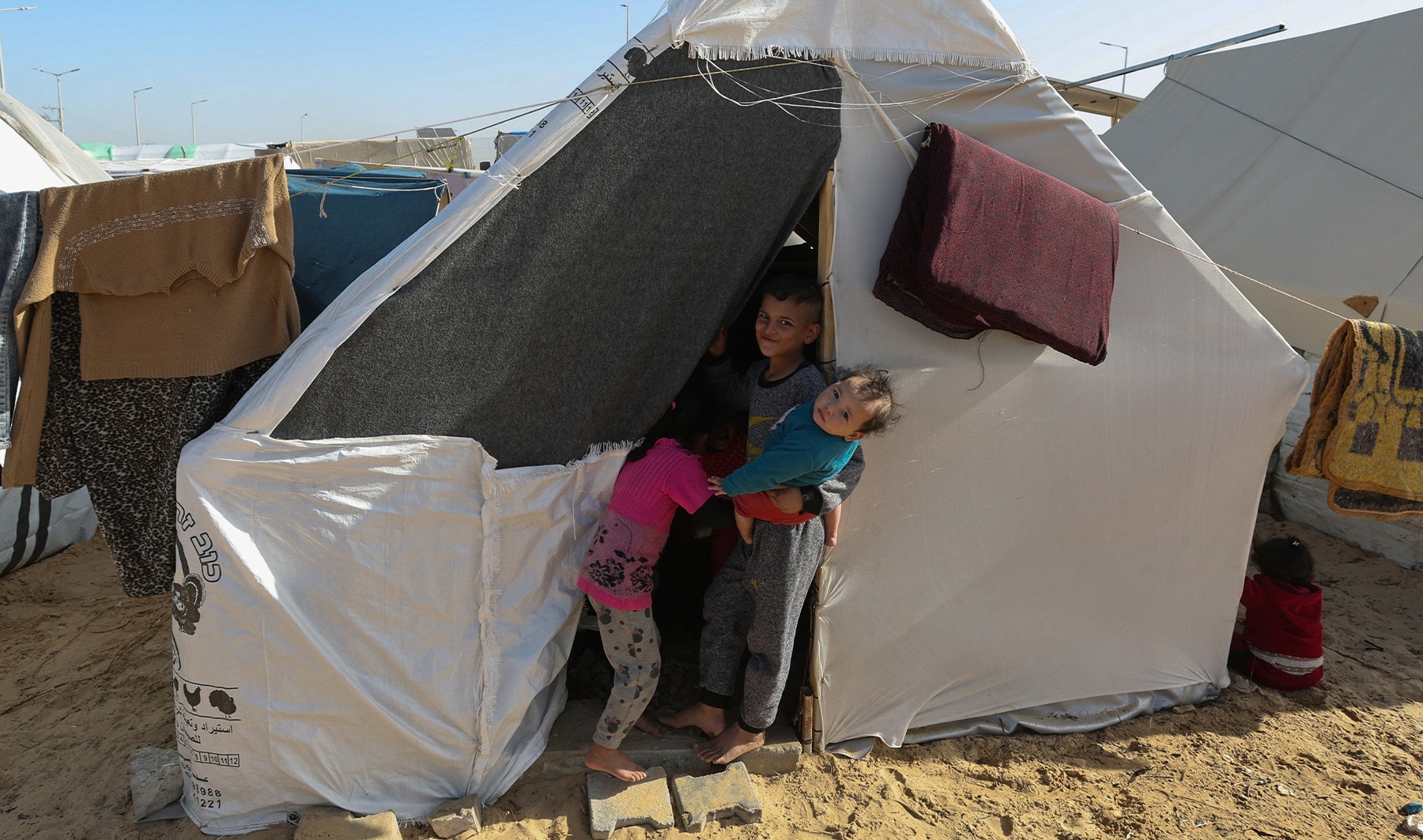
Palestinian families in Gaza, displaced from the north, are finding little shelter in tents as Israeli bombardment continues, with one father tragically losing three children in an attack on their tent in central Gaza.
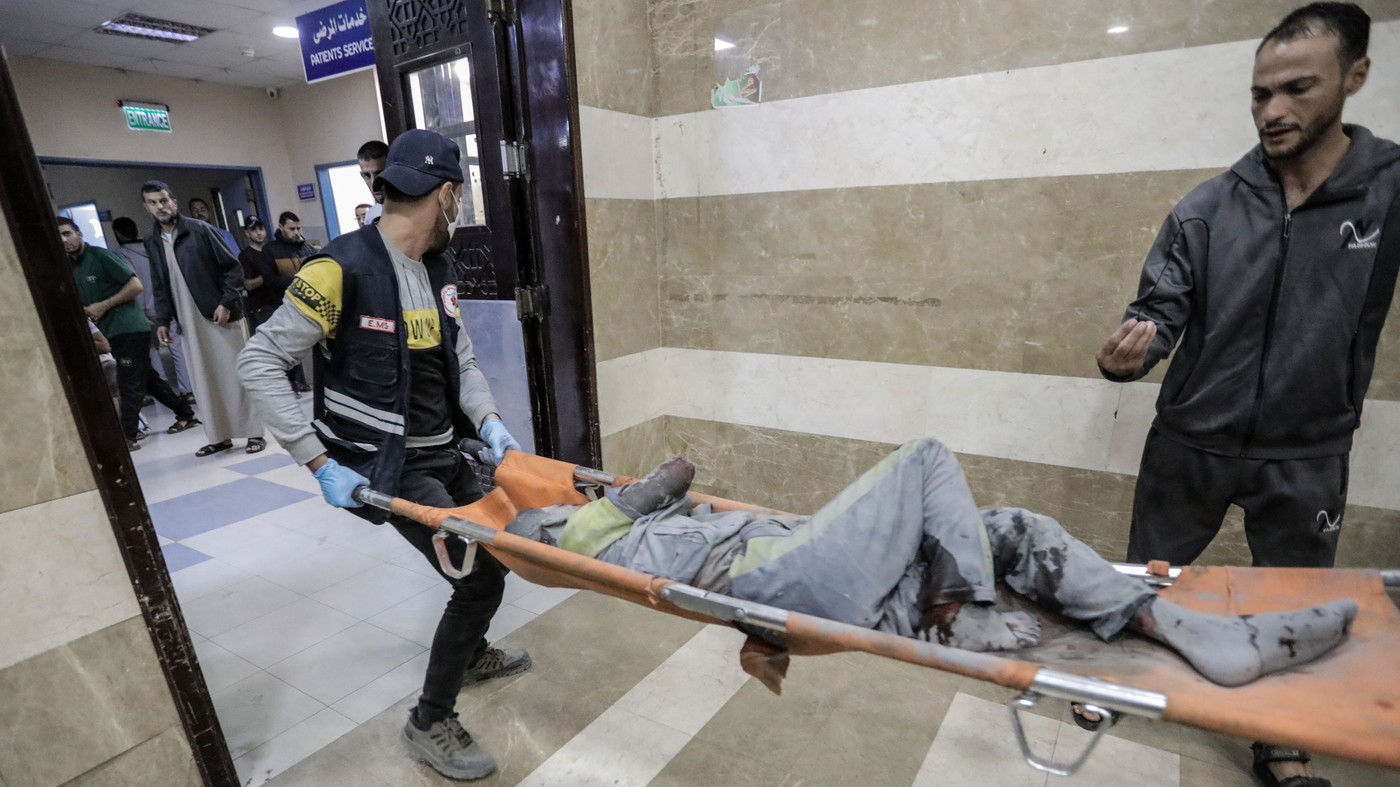
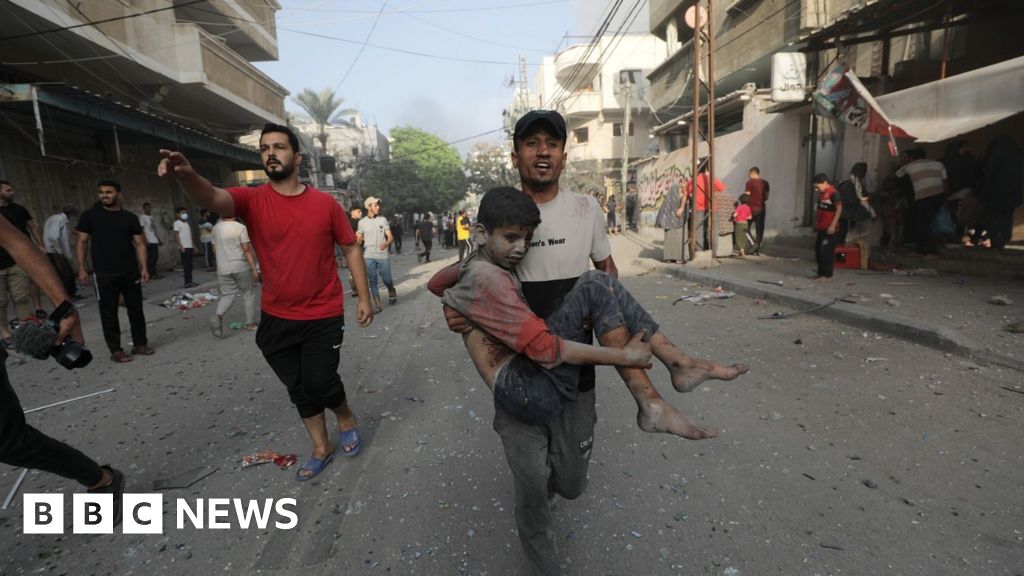
Hundreds of patients and staff are missing from Gaza's Al-Aqsa Martyrs Hospital amid intense Israeli air strikes, with chaotic scenes as the remaining staff struggle to cope with an influx of injured people. WHO and UN officials report that the hospital is operating with only 30 percent of its staff, and urgent protection for medical centers is needed. WHO Director-General Tedros Adhanom Ghebreyesus has called for the hospital to remain functional and protected, emphasizing the urgent need for humanitarian aid and safe access to the region.
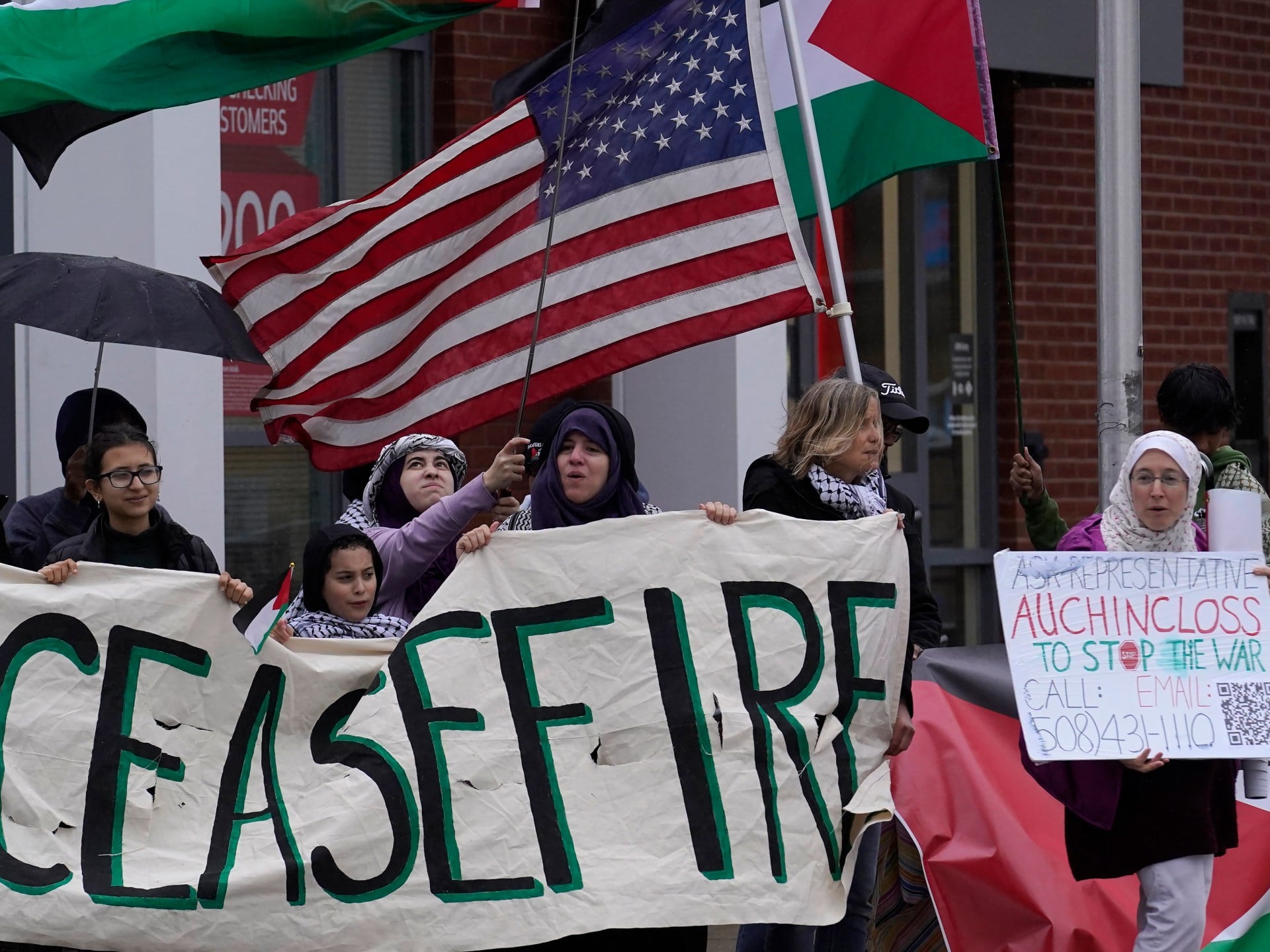
Palestinian organizations and grassroots activists have called for a global strike demanding an immediate ceasefire in Gaza, which has been devastated by Israeli bombardment. The strike involves skipping school and work, refraining from going out to restaurants, banks, and stores, and not making online transactions or shopping online. The strike was announced by a coalition of major Palestinian factions and has garnered global support. Its significance lies in protesting the US veto on a recent UN Security Council resolution calling for a ceasefire and putting pressure on countries supporting Israel to rethink their support.
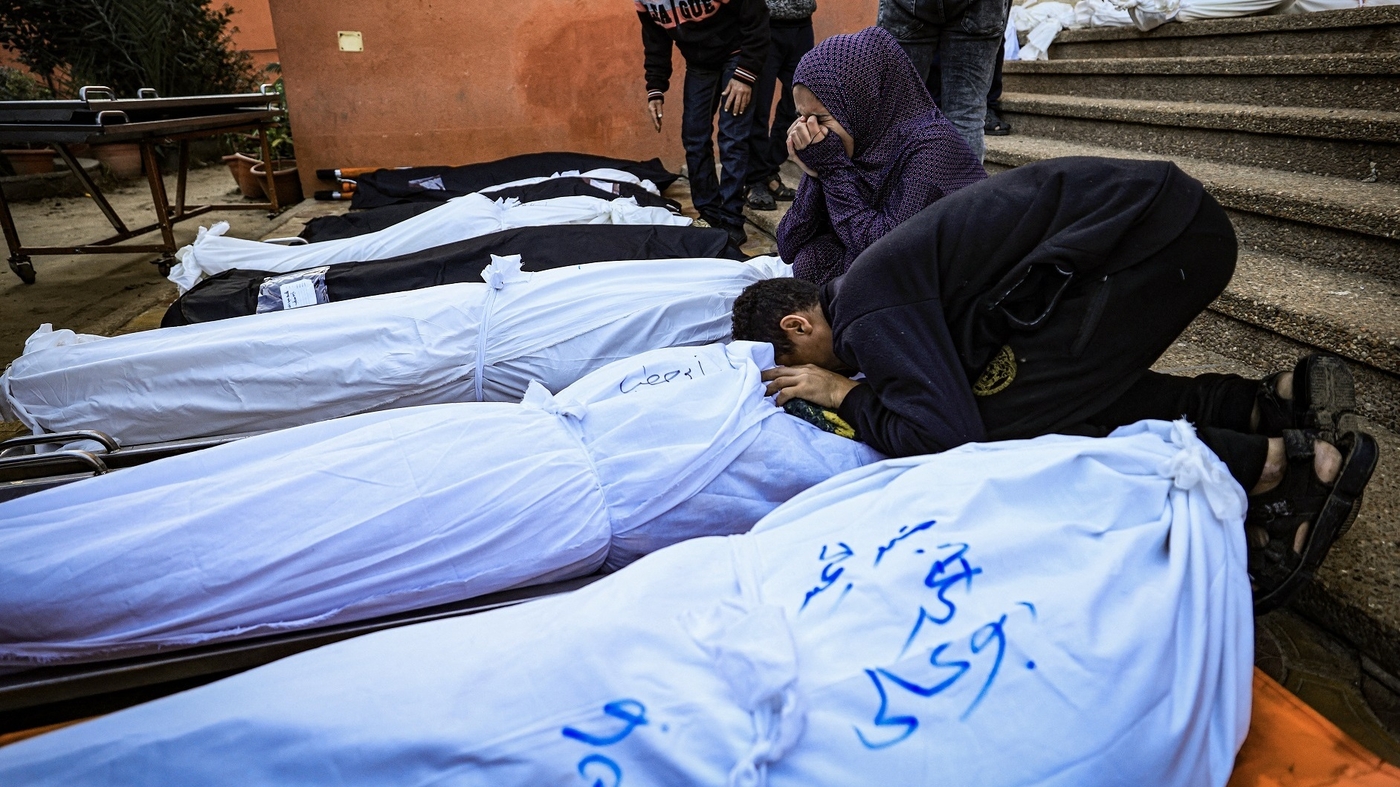
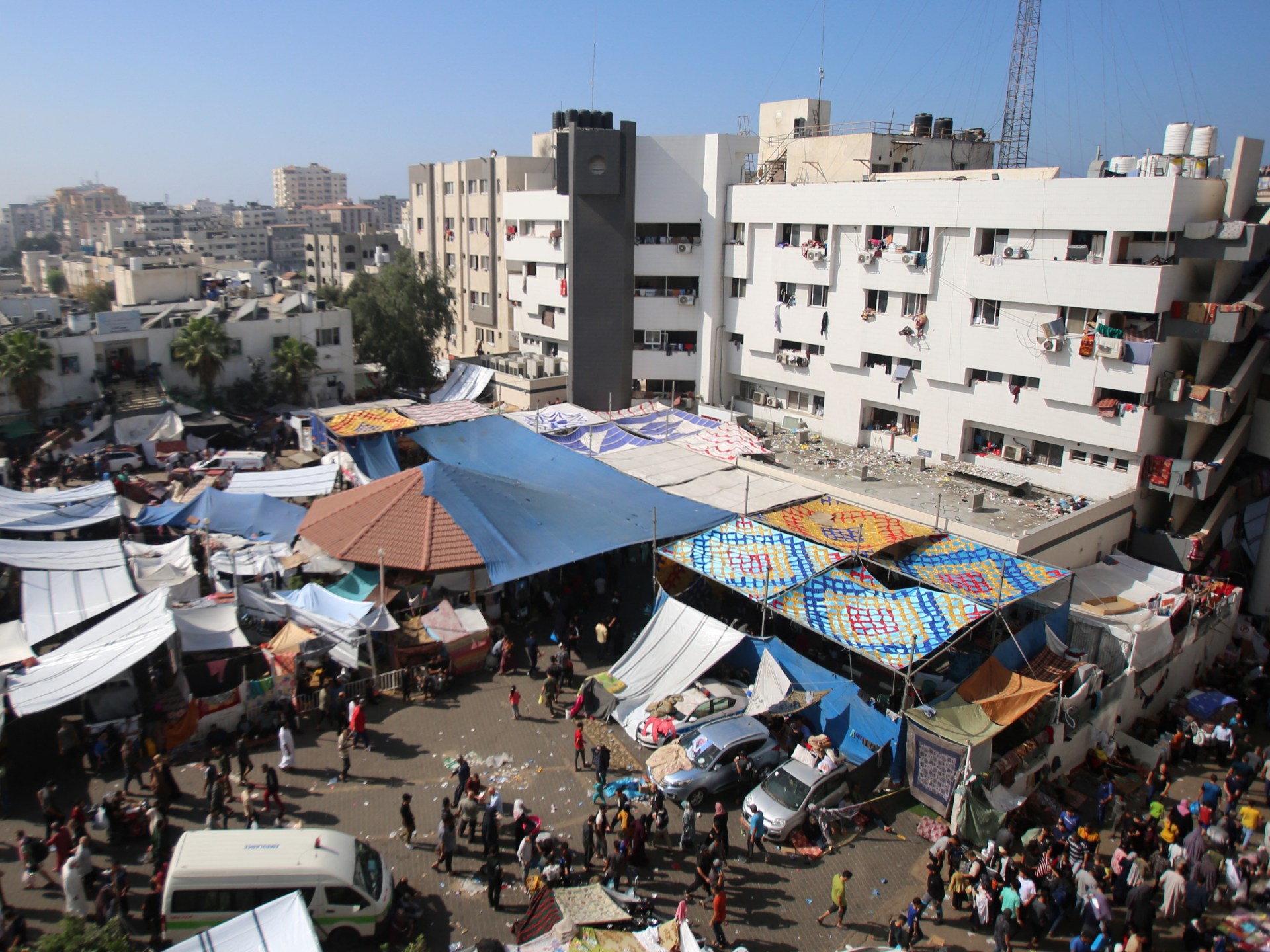
Gaza's largest hospital, Al-Shifa, has resorted to burying over 100 bodies in a mass grave due to the ongoing Israeli bombardment, with bodies decomposing in the courtyard and babies dying in incubators without power. Hospitals in Gaza are facing unimaginable conditions, lacking electricity and fuel for generators, rendering them non-functional. The United Nations reports that all but one of the hospitals in Gaza are no longer operational. The death toll in Gaza has risen to over 11,200, while hospitals struggle to provide care for the injured and displaced Palestinians. Israel claims it has targeted hospitals due to alleged Hamas military operations underneath them, a claim Hamas denies.
Gaza's two largest hospitals, Al-Shifa and Al-Quds, have suspended operations due to Israeli bombardment and shortages of medicine and fuel, leading to rising deaths among patients and medical staff. The World Health Organisation (WHO) has called for an immediate ceasefire to prevent further loss of life. The situation at Al-Shifa Hospital is described as dire and perilous, with no electricity, water, or safe passage. Three nurses have been killed, and critical infrastructure has been damaged. Over half of Gaza's hospitals are no longer operational, and the death toll from Israel's campaign to eliminate Hamas stands at least 11,078 Palestinians.
As more civilians flee the northern Gaza Strip, reports of Israeli attacks in the "safe zone" in the south increase, while congestion and unsanitary conditions in displaced persons camps pose additional challenges. Gazans are faced with the difficult choice between Israeli bombardment and the risk of disease.
Thousands of Gaza residents broke into United Nations warehouses for supplies as Israeli airstrikes continued, signaling a breakdown in civil order after weeks of war and a tight siege. The Israeli Defense Forces (IDF) intensified raids on the Gaza Strip, striking over 450 terror targets and expanding ground activities. The death toll in Gaza rose to 8,005, including 3,342 children. The Palestinian Red Crescent received warnings to evacuate al-Quds hospital, while Israel plans to increase aid to Gaza and establish a "humanitarian" zone. Phone and internet services are gradually being restored after a blackout, and Israeli President Benjamin Netanyahu deleted a tweet blaming security chiefs for a lack of warning about an attack.
Internet and phone services are gradually being restored in Gaza after a communications blackout caused by Israeli air attacks. Paltel Group, the main communications provider in Gaza, stated that their technical teams are working to address the damage to the network infrastructure. The blackout had raised concerns among humanitarian groups about the potential for war crimes to go undocumented. Elon Musk offered his Starlink satellite internet service to aid organizations in Gaza, prompting protests from Israel.
Palestinians in Gaza experienced the heaviest night of Israeli bombardment since the start of the war with Hamas, with hundreds of buildings destroyed and at least 377 people killed. Israel's military targeted underground infrastructure and deployed tanks and troops into the Strip. Communication networks were cut off, making it difficult to get accurate reports. The UN warned of a humanitarian catastrophe unfolding, with hospitals overwhelmed and displaced civilians seeking refuge in healthcare facilities. UN Secretary General expressed surprise at the intensity of Israel's strikes, while Israel cut off electricity, water, and imports of essential goods in retaliation for Hamas's attack.
An Al Jazeera journalist in Gaza reflects on the start of Israeli air strikes, describing the fear and chaos that ensues during nighttime attacks. The journalist, a mother of two, evacuated her family to a safer area and went to work at the Al Jazeera office. The night was filled with tension and fear as explosions echoed throughout the city. Returning home for dinner, the family's meal was interrupted by the start of the Israeli bombardment, marking the beginning of a long and terrifying night.