Scientists at the University of Michigan have discovered quantum oscillations within the bulk of an insulator, YbB12, challenging traditional views and suggesting a new duality where materials can behave as both conductors and insulators, although the phenomenon currently requires extremely high magnetic fields and its practical applications remain uncertain.
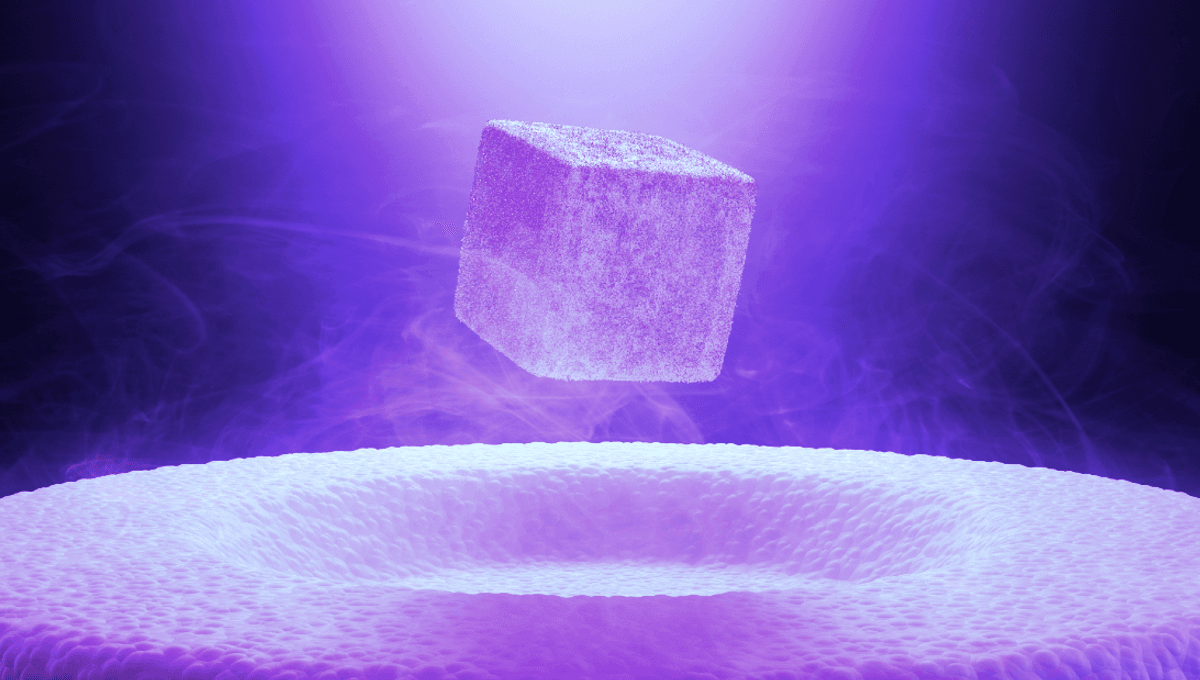
Purple bronze, a material composed of lithium molybdenum, has the unique ability to switch between being a superconductor and an insulator based on small changes in physical conditions. At near absolute zero temperatures, purple bronze acts as a superconductor, offering no resistance to the flow of electricity. However, with a slight increase in temperature or exposure to light, it transforms into a regular conductor. This remarkable behavior makes purple bronze a promising candidate for quantum switching devices, which are crucial for the development of quantum computing. Researchers have also discovered that purple bronze exhibits emergent symmetry, a rare phenomenon in metals, further adding to its potential applications.
Scientists have discovered a rare phenomenon within purple bronze, a one-dimensional metal, that could lead to the development of a "perfect switch" for quantum devices. This switch can transition between being an insulator and a superconductor with unlimited conductivity, triggered by small changes in the material. The phenomenon, known as "emergent symmetry," offers potential for future quantum technology advancements. The research, led by the University of Bristol, provides insights into the complex behavior of purple bronze and its potential applications in quantum circuits.
Recent studies have confirmed that LK-99, a material previously claimed to be a room-temperature superconductor, is actually an insulator. The initial excitement surrounding the substance was due to impurities in the samples. The preprint paper published by a team in South Korea, which claimed to have created a superconductor-like material using common ingredients, lacked peer review and raised doubts from the start.