As the end of the year approaches, it's important to maximize your employee benefits before they expire or reset. Take advantage of flexible spending accounts (FSAs) by using any remaining funds for eligible expenses. Consider maximizing contributions to health savings accounts (HSAs) before the year ends, as unused funds roll over. Use any remaining flex time, work-from-home days, or paid time off. Review your retirement savings and adjust contributions if necessary. Lastly, explore other employee perks and discounts that you may have overlooked. Being proactive now can lead to significant savings and optimized benefits for the new year.

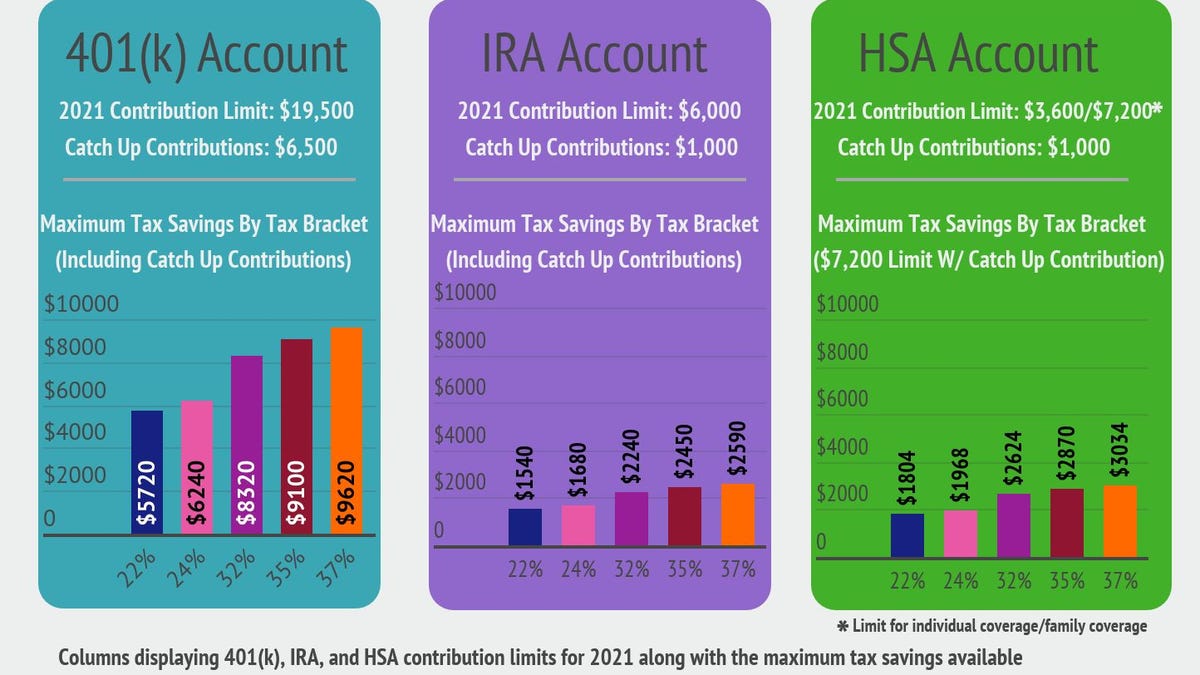
Funding a Health Savings Account (HSA) before a traditional IRA or 401(k) can be advantageous due to the additional tax benefits and flexibility it offers. While traditional retirement accounts provide tax breaks and tax-deferred gains, HSAs provide tax-free contributions, gains, and withdrawals for qualified healthcare expenses. Unlike traditional retirement accounts, HSAs allow penalty-free withdrawals for medical expenses at any age. Additionally, at age 65, HSA withdrawals for non-medical purposes are no longer subject to penalties, effectively converting the HSA into a traditional retirement account. Prioritizing HSA contributions can provide savers with the best of both worlds, but eligibility is contingent on having a compatible health insurance plan.
Health savings accounts (HSAs) can be used as an effective retirement savings vehicle, especially when used for qualified medical expenses. The Internal Revenue Service has announced the largest-ever increase to HSA contributions, meaning Americans will be able to stash away even more money than ever in 2024. HSAs are tax-advantaged savings accounts designed to help users put money aside for routine medical costs and possible health care emergencies down the road. If you’re strategic about how you use your HSA, it can also act as an extra money pot in your golden years.
The IRS is increasing the maximum contribution limits for health savings accounts (HSAs) in 2024 to $8,300 for families and $4,150 for individuals, up from $7,750 and $3,850, respectively. Participants age 55 and older can contribute an extra $1,000, allowing older married couples to save up to $10,300 a year. HSAs are tax-advantaged accounts that can be used to save for medical expenses, and contributions are immediately tax-deductible. Contributions can also be invested and grow tax-free, and distributions for qualified medical expenses are tax-free. However, most people use their HSAs to pay for current expenses and contribute little, and relatively few invest.
The IRS has announced that the annual contribution limits for health savings accounts (HSAs) will increase significantly in 2024, with the limit for self-only coverage rising to $4,150 and for family coverage to $8,300. The high-deductible health plan (HDHP) deductible will also increase to $1,600 for self-only coverage and $3,200 for family coverage. The maximum amount that employers may contribute to an excepted-benefit health reimbursement arrangement (HRA) will also increase to $2,100. The increases are due to inflation and are expected to encourage more Americans to use HSAs as a powerful tool for healthcare spending and long-term savings, especially for retirement.