Google Messages is rolling out new features and redesigns, including enhanced group chat mentions, MLS encryption support, a redesigned read receipt system, camera and link preview updates, and new options for leaving unknown group chats, with features gradually expanding to users.

Google Messages is rolling out a UI update that shortens the camera viewfinder and increases the visible gallery area, allowing users to see more images at once, with the update now available in the stable channel.
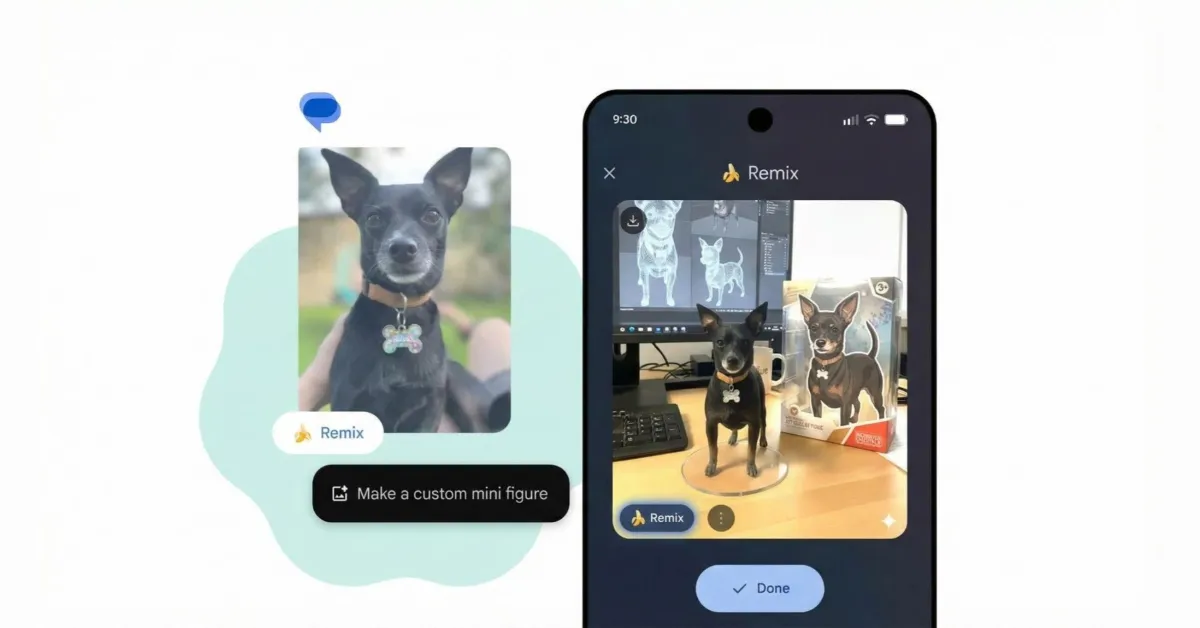
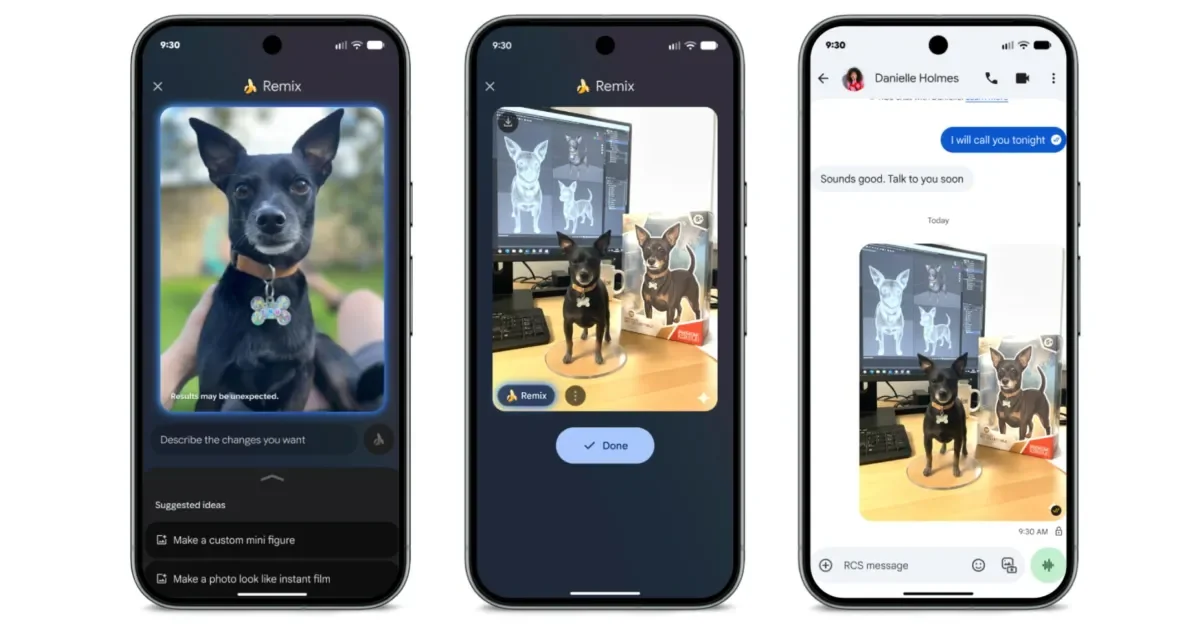
Google has scaled back the Nano Banana Remix feature in Google Messages, reducing its size, removing the banana emoji, and repositioning the Remix button for a less distracting user experience, as part of ongoing refinements based on user feedback.
Google Messages is adding a new 'Remix' photo editing feature powered by Nano Banana, allowing users to modify images with prompts, available on all Android devices and initially launching in select countries for RCS users.
Google is introducing a new 'Remix' feature in Google Messages, powered by its Nano Banana image editing model, allowing users to generate and remix images from prompts within chats, with some usage limits expected upon rollout.
Google Messages is rolling out several new features and redesigns, including enhanced RCS encryption support, a revamped image viewer, redesigned read receipts, a new account menu, spam link detection, and a Key Verifier tool to combat impersonation scams. Many features are still in beta or gradually being released, with updates to the app's interface and functionality aimed at improving user experience and security.
Google Messages has received a redesign of its account menu, now opening as a fullscreen page with organized options, aligning with other Google apps' Material 3 design, and this update is widely rolling out.
Google is introducing new security features for Google Accounts and Messages, including Trusted Contacts for account recovery, safer links to warn users about potential spam, and Key Verifier for verifying trusted contacts and ensuring message privacy, enhancing user protection and privacy.
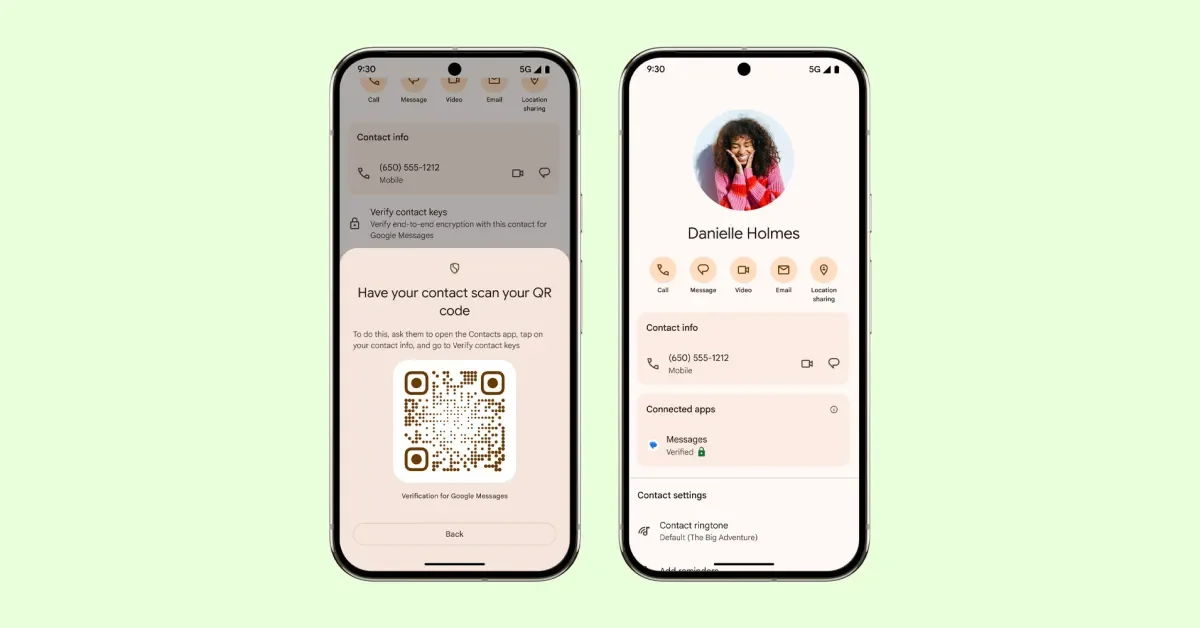
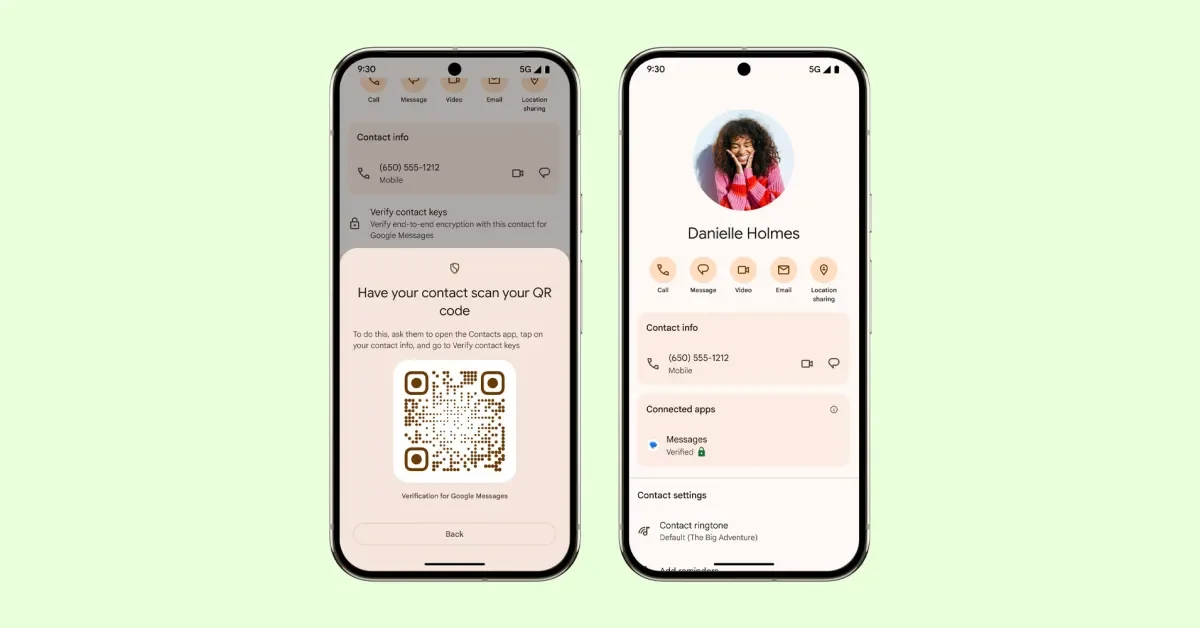
Google Messages has introduced two new safety features: Android Key Verifier, which uses QR codes to verify end-to-end encrypted messages and prevent impersonation, and spam link detection that blocks potentially harmful websites in spam texts, enhancing user security globally.
Google Messages has begun rolling out a Material 3 Expressive redesign to its chat screen, featuring curved containers, a simplified media picker with pill-shaped buttons, and a more spacious layout, completing a broader update to the app's interface.
Google Messages is testing a new feature to verify the identity of contacts during chats, aiming to enhance security and trust in messaging conversations.
Google Messages is rolling out QR code-based key verification in its beta, allowing users to scan QR codes to verify contact encryption keys, enhancing message security. The feature is not yet on the stable channel and is part of Google's broader efforts to improve privacy and security in messaging apps, with plans to extend this system to third-party apps in 2025.
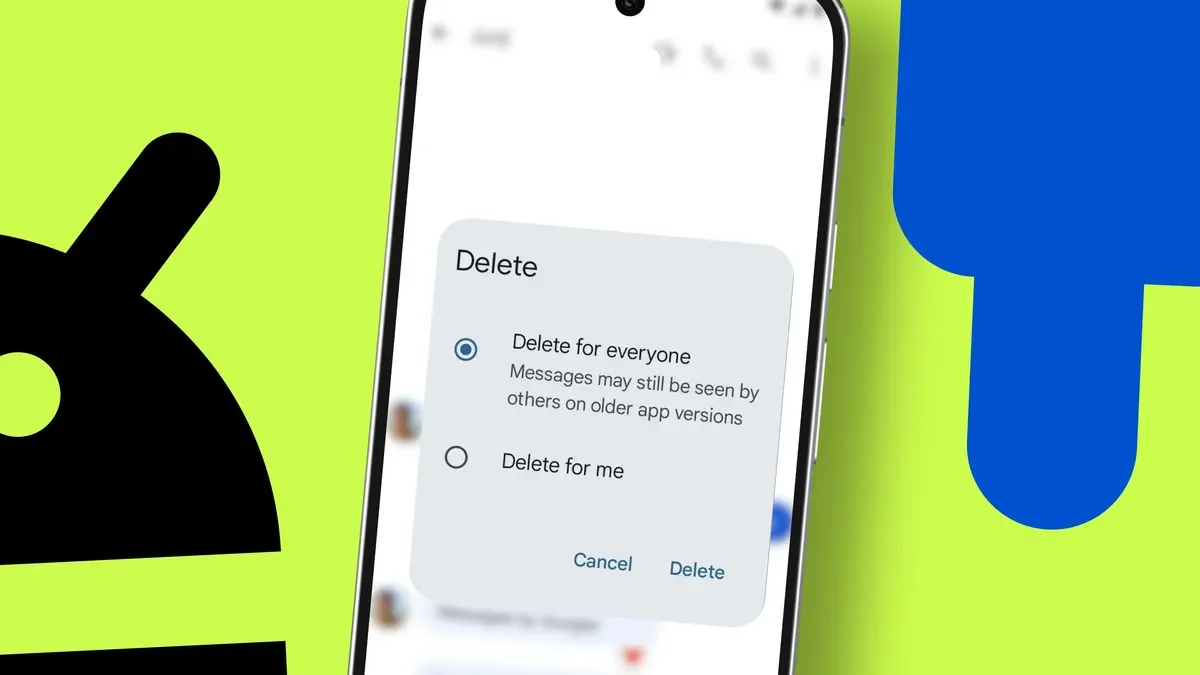
Google Messages on Android now allows users to delete sent messages for everyone involved, provided both parties use RCS messaging. The feature, which is rolling out widely, enables users to remove messages within a certain timeframe, enhancing control over their conversations. Deleted messages disappear instantly for the recipient, with a notification indicating a message was deleted.
Google Messages now automatically blurs NSFW photos and warns users before opening explicit media, with all processing done locally on the device to protect privacy. The feature also warns senders about the risks of sharing nude images. It is enabled via SafetyCore and is default for most users, with options for teens and adults to manage settings. This enhancement aims to prevent accidental exposure and promote safer messaging practices.
Google Messages for Android has introduced Sensitive Content Warnings that blur nude images and alert users about the risks, with on-device processing to protect privacy. The feature can be managed or disabled based on user age and settings, and it also warns senders before forwarding or sending nude images.