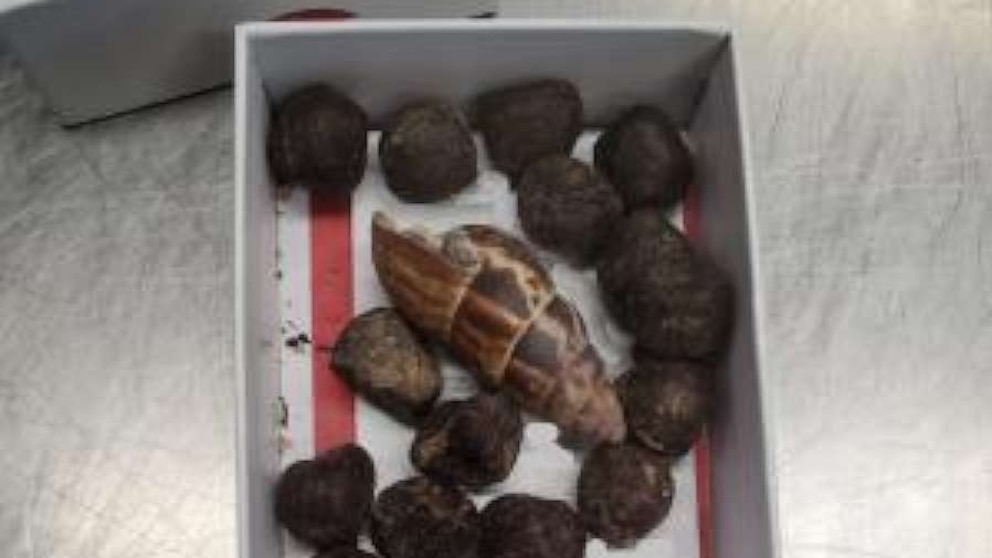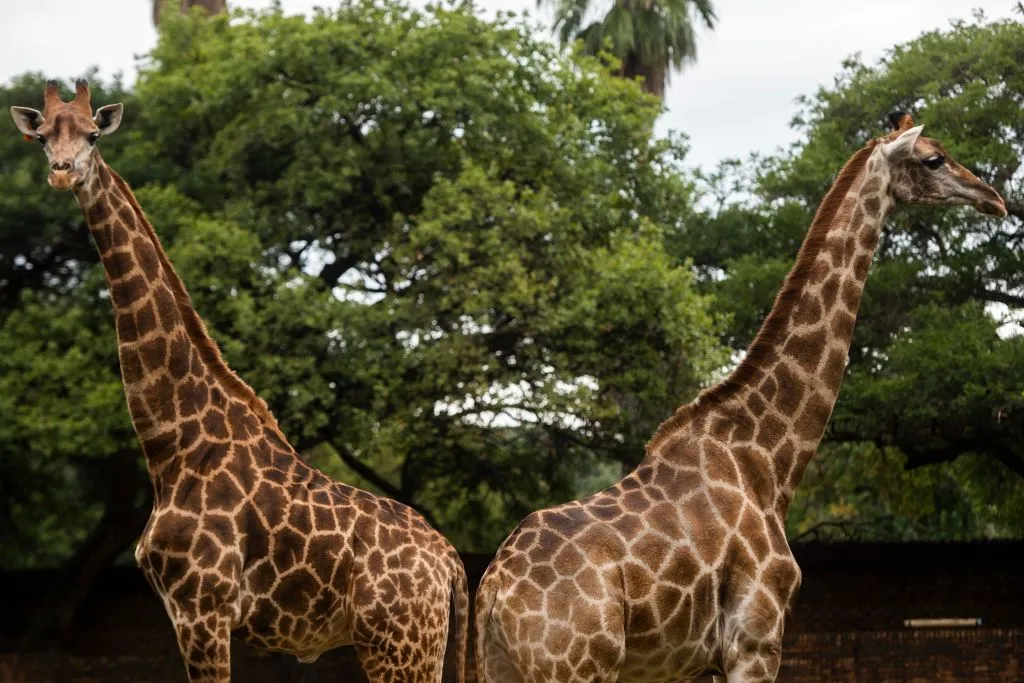
U.S. Customs and Border Protection seized a box of giraffe feces from a woman returning from Kenya who intended to make a necklace with the dung, similar to her previous creations with moose feces. The agency destroyed the smuggled feces, sparking questions about the government's suppression of alternative art. The woman's vision for the necklace included a brown-and-white shell, possibly from a giant African land snail. The process of turning feces into jewelry involves dehydration and a "dip station with secret ingredients." However, hope remains as a moose has been spotted in Iowa, potentially providing the artist with a new source of material.
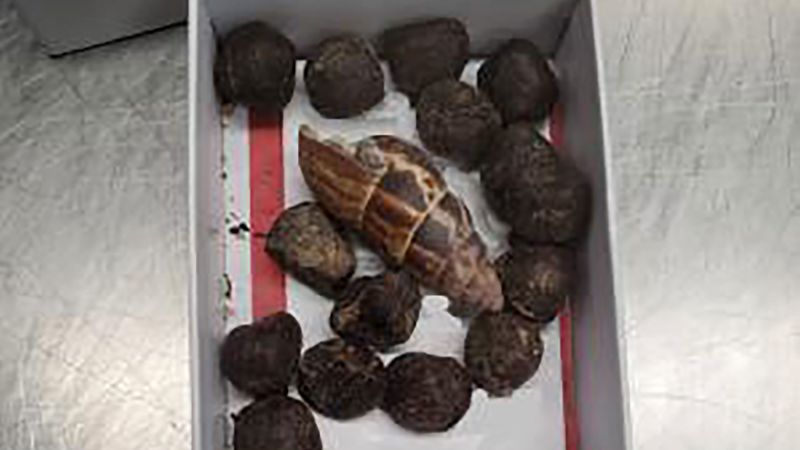
US Customs and Border Protection seized a box of giraffe feces from a passenger arriving at Minneapolis-Saint Paul International Airport from Kenya. The traveler had declared the feces, stating she planned to make jewelry out of it. The agency's agriculture specialists destroyed the excrement due to the risk of disease transmission. Bringing ruminant animal feces into the US requires a veterinary services permit, and Kenya experiences several diseases that could pose a threat. Disease has also contributed to the decline of giraffe populations in Kenya.
U.S. Customs and Border Protection confiscated and destroyed a box of giraffe feces that a woman had brought back from Kenya with the intention of making necklaces. The woman had declared the feces but will not face charges as she readily abandoned it. Bringing animal feces into the U.S. requires a permit, and there is a risk of disease transmission. CBP agriculture specialists ensure the prevention of non-native pests, diseases, and contaminants entering the country.