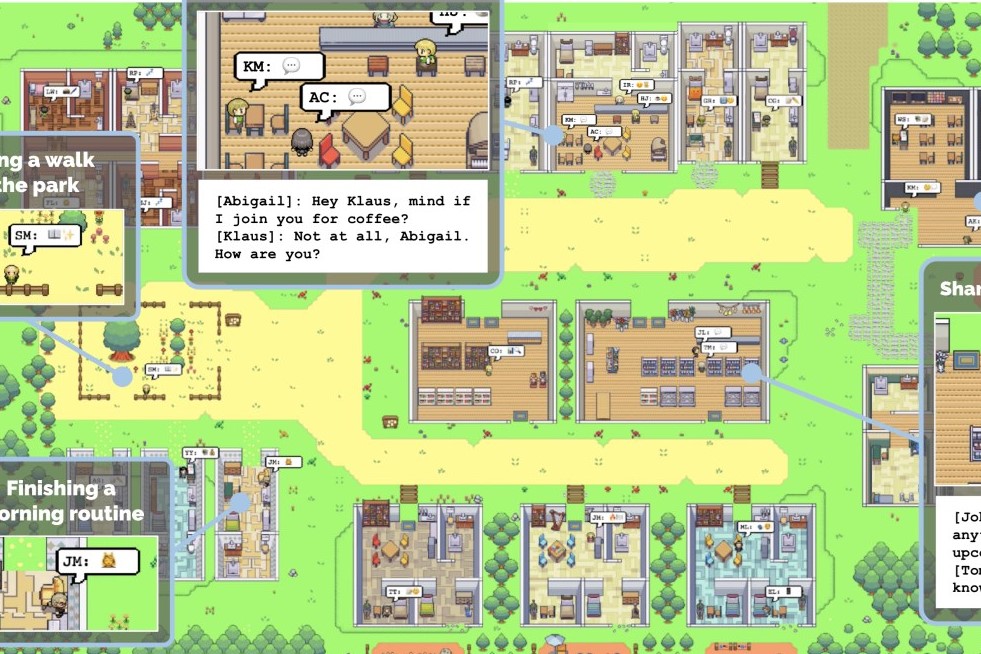
Researchers from Stanford University and Google have created a virtual sandbox called Smallville, populated by 25 generative AI "agents" with their own identities, goals, and roles to play. The experiment aimed to examine how the agents interacted with each other and their environment, resulting in a functioning village with "believable individual and emergent social behaviors." The agents drew on generative models to simulate human behavior and interacted with each other in real language, making high-level inferences from information they learned. The experiment raises ethical concerns, but also has vast potential applications beyond the sandbox demonstration.
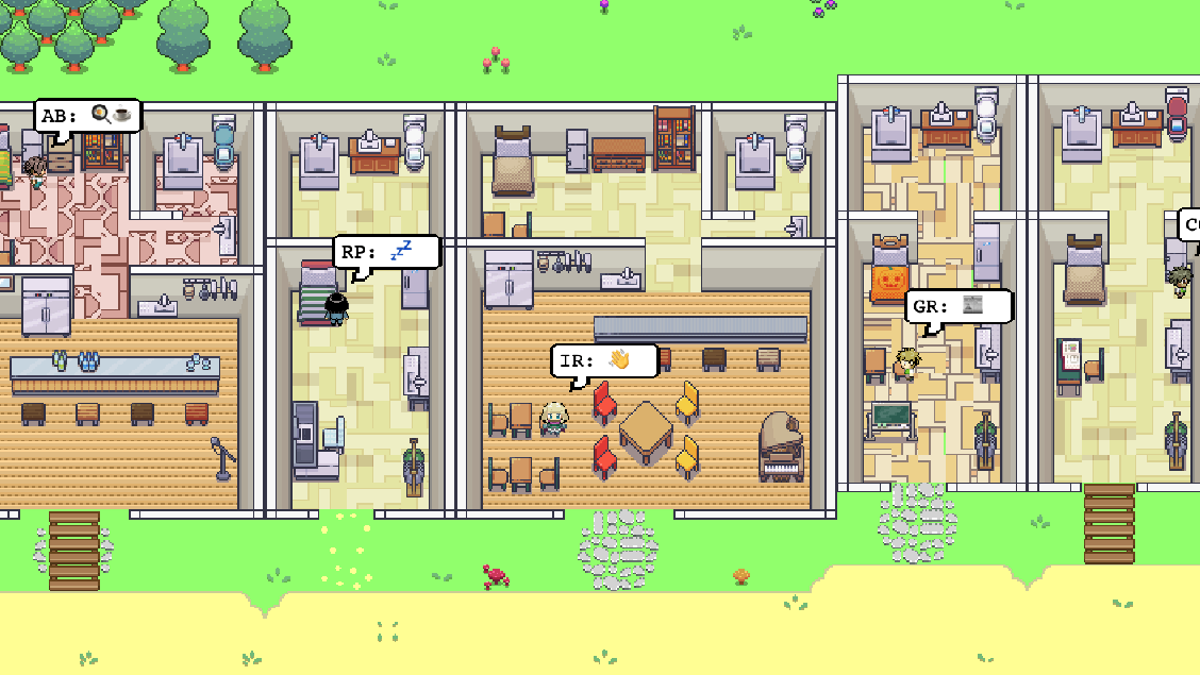
Researchers from Stanford University and Google have created a pixel-art game to test whether AIs can simulate human behavior. The simulation, inspired by The Sims, uses ChatGPT to create "generative agents" with memories and individual goals that interact with each other as they go about their daily business. The study demonstrates a model that could be more useful in real-world applications, but also shows an unnerving level of autonomy.
Researchers from Google and Stanford University created a virtual town called "Smallville" and populated it with 25 AI bots trained with ChatGPT. The bots were observed engaging in human-like behaviors such as waking up, cooking breakfast, going to work, having lunch with friends, and even throwing a party. The study aimed to create an interactive society of AI bots inspired by life-simulation games such as The Sims. The researchers concluded that the generative agents produce "believable" human behaviors. However, some agents chose less typical locations for their actions due to retrieval issues. The researchers plan to expand on the expressivity and performance of the AI bots through the more advanced GPT-4.