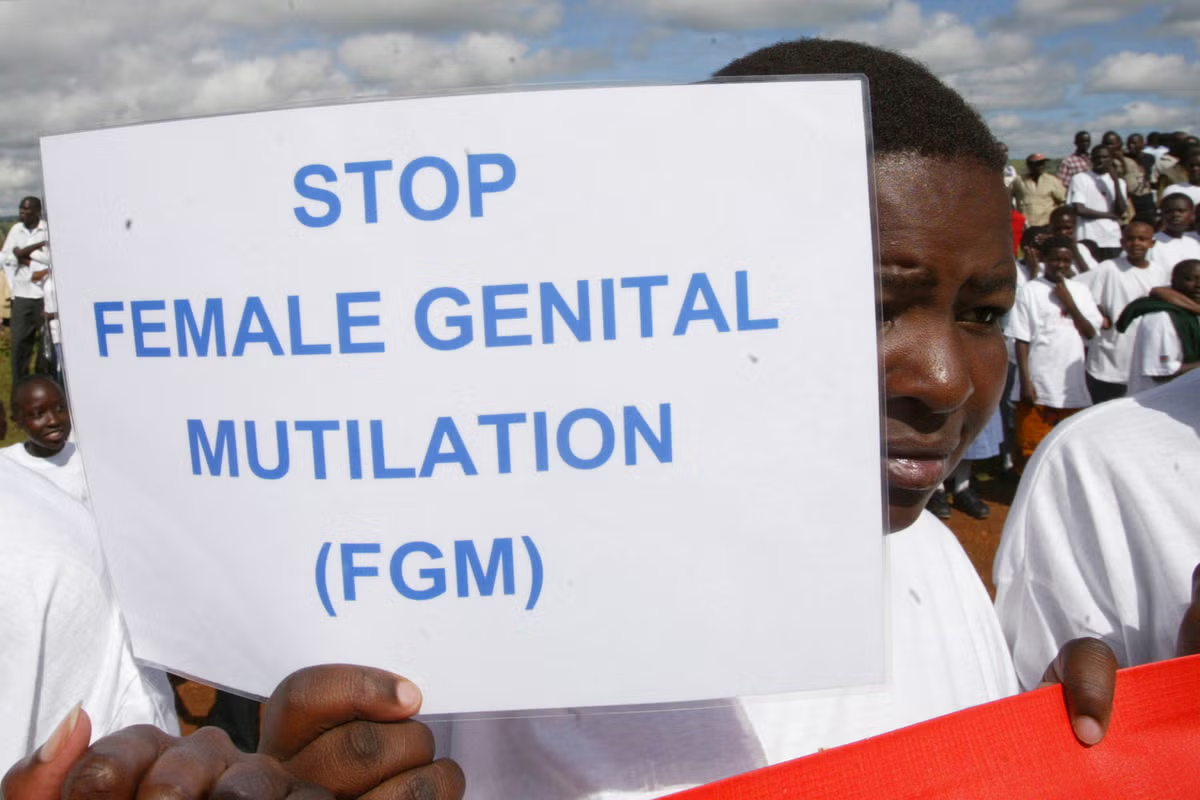
Three women in Gambia have been charged following the death of a one-month-old girl who underwent female genital mutilation, highlighting ongoing debates and enforcement challenges despite the country's ban on the practice since 2015. The incident has sparked calls for stricter law enforcement and renewed discussions about cultural traditions versus women's rights.
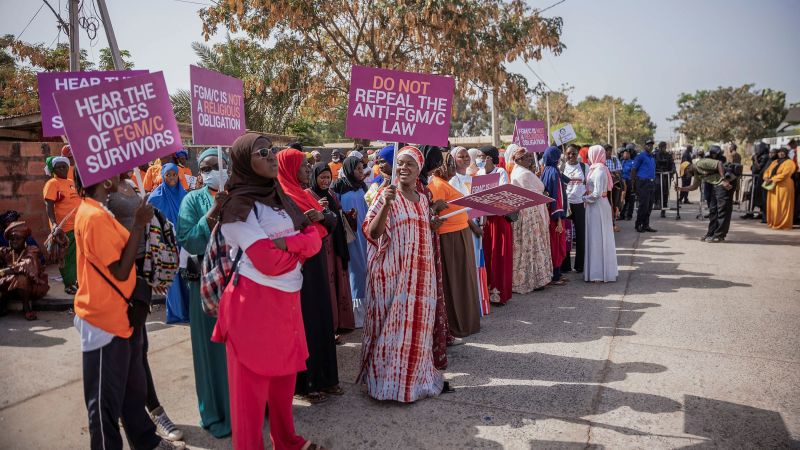
Gambia's parliament debated a bill seeking to repeal the landmark law banning female genital mutilation (FGM), sparking protests as religious groups pushed for the law to be overturned. The motion was referred to a parliamentary committee for further review, with the deputy speaker expressing support for the FGM ban. The law, enacted in 2015, imposed fines and prison sentences for engaging in the practice, but pro-Islamic groups and lawmakers have campaigned for its repeal. Human rights organizations and activists have strongly opposed the move, emphasizing the importance of protecting women's rights and condemning any attempt to roll back the progress made in prohibiting FGM.
Lawmakers in Gambia are set to vote on a bill that seeks to repeal the ban on female genital mutilation (FGM), potentially making the country the first to reverse such a prohibition. The practice, which involves the partial or full removal of external genitalia, is widely performed on young girls in parts of Africa and is incorrectly believed to control women's sexuality. The bill is backed by religious conservatives and aims to uphold religious purity and cultural norms, but activists fear it could lead to the erosion of other laws safeguarding women's rights. The United States has supported activists opposing the practice, and the bill has sparked protests outside Gambia's parliament. If passed, the bill is expected to be signed into law by President Adama Barrow.