Rumors claim Samsung’s 2nm GAA process could be used to develop a custom-tuned Snapdragon 8 Elite Gen 6 Pro for the Galaxy S27, a move meant to attract Qualcomm while potentially limiting Exynos adoption. chatter about a dual-foundry approach suggests the Gen 6 Pro could run on Samsung’s 2nm while the standard Gen 6 remains with a competitor; analysts urge caution and treat the rumors as unconfirmed until official details emerge.
Samsung's upcoming Exynos 2700 has appeared in Geekbench 6 with a distinctive 4+1+4+1 deca-core cluster on an ERD device, reportedly mixing next-gen and older cores to test scheduler and architecture, with an OpenCL score below the Exynos 2600 as development continues toward 2nm GAA fabrication and competing with Snapdragon 8 Gen 6 Pro.
Samsung's Galaxy S26 series is expected to be unveiled in late January with a commercial release in mid-February, featuring the Ultra model with a Qualcomm Snapdragon chip and the S26 and S26 Plus with Exynos processors. The Ultra is anticipated to be a high-performance device, potentially more successful despite a rumored price hike, while the smaller models may face challenges due to processor perceptions.
Rumors suggest that Samsung may significantly incorporate its Exynos chipset in the Galaxy S26 series, potentially using its new 2nm process. This move could see Exynos chips used in various global markets, while Qualcomm remains the choice for the U.S. market. The shift to in-house chips might help Samsung manage costs amid reports of a price increase for the Galaxy S25 series due to rising Qualcomm tech costs. The Exynos 2600 SoC, codenamed "Thetis," is expected to offer performance and efficiency improvements.
Samsung's upcoming Galaxy Z Flip models may feature in-house Exynos processors, marking a shift from the current use of Qualcomm's Snapdragon chips. Leaks suggest the Galaxy Z Flip FE will use the Exynos 2400e, while the premium Z Flip 7 might debut the Exynos 2500, a new chip with advanced cores and GPU. This move could position Samsung's foldables as a flagship line, potentially saving the Snapdragon 8 Elite for other models. The Exynos 2400e aims to keep costs low for the budget-friendly Z Flip FE.
Samsung's upcoming Galaxy S25 series is expected to feature the Snapdragon 8 Elite chipset across all models, moving away from the previous split between Snapdragon and Exynos chipsets. This decision promises consistent performance globally, addressing past concerns over the Exynos's lower power. Despite earlier tests with the Exynos 250, industry leaks suggest a unified Snapdragon approach. The Galaxy S25 may also adopt a slimmer design, potentially aligning with Samsung's foldable models. The official reveal is anticipated at the Galaxy Unpacked event in January 2024.
Speculation surrounds Samsung's upcoming Galaxy S25 series, with rumors suggesting it may feature the Snapdragon 8 Elite chip exclusively worldwide, abandoning the Exynos chip. While leakers like Ice Universe support this claim, official confirmation is awaited, likely in January. A Snapdragon-only lineup could enhance the S25's appeal, despite potential drawbacks for Samsung's Exynos division.
Samsung has reportedly started developing its 2nm chip technology, codenamed 'Thetis,' with plans to use it in future Exynos releases. This follows the anticipated mass production of its 3nm GAA Exynos 2500 chipset later this year. Despite challenges with yield rates, Samsung aims to reduce its reliance on Qualcomm and enhance its foundry business, potentially surpassing TSMC's 2nm process.
Rumors suggest that Samsung's upcoming Exynos 2500 chip, expected to power the Galaxy S25 lineup, may feature a Google TPU for enhanced AI and machine learning capabilities, potentially replacing the in-house NPU. Additionally, there are rumors of two variants of the Exynos 2500, with one aimed at future Galaxy phones and the other for Galaxy Tab and Galaxy Book devices. While these potential changes could mark an interesting shift for the Exynos chip line, their accuracy remains unconfirmed.
Samsung's upcoming Galaxy S25 series will continue to use a mix of Exynos and Snapdragon chips, rather than introducing its own "unique" chip as previously anticipated. This decision follows a pattern of alternating between using its own Exynos chips and Snapdragon chips from Qualcomm in previous flagship models. Despite earlier plans to develop a proprietary chip for Galaxy devices, the S25 series will maintain the current chip strategy, with different models and regions using either Exynos or Snapdragon chipsets.
Samsung, facing rising costs for Qualcomm chipsets, plans to increase the use of its own Exynos chips in Galaxy devices to save money. The company spent nearly $9 billion on mobile chipsets last year, and a recent report showed a decline in the use of Exynos chips in Galaxy devices. Samsung aims to address this by investing in improving the competitiveness of its Exynos chipsets and may go Exynos-only for the Galaxy S25 series, while also replacing MediaTek chipsets in its low-range lineup with its own chipset.
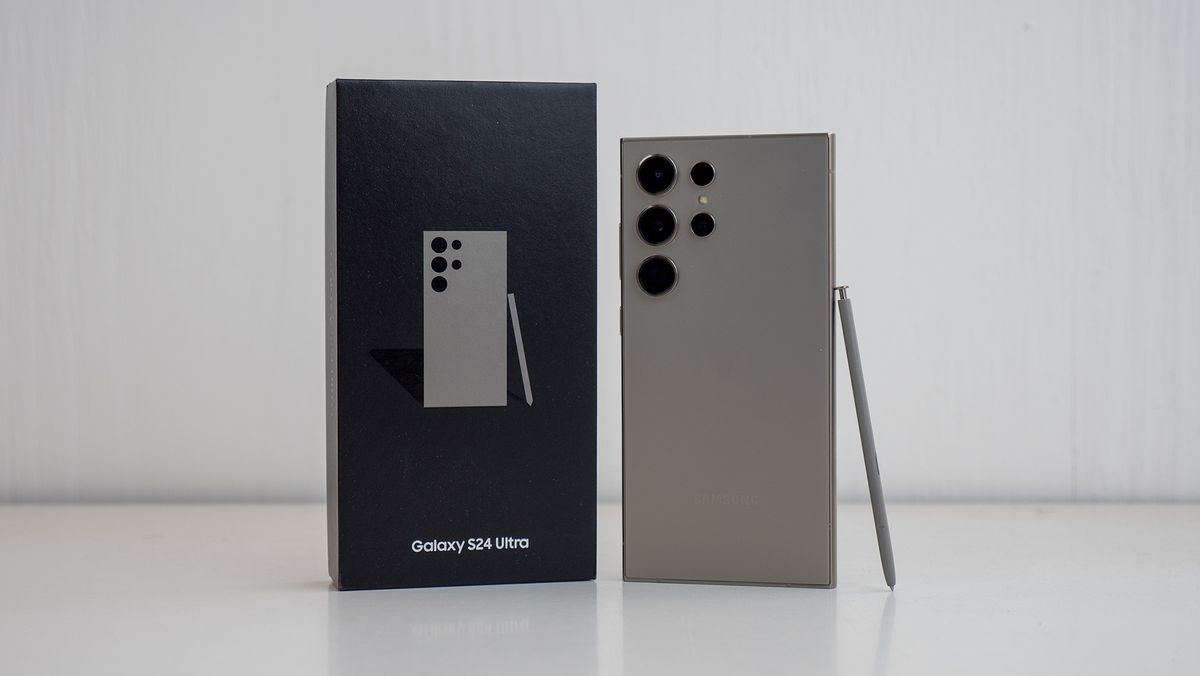
Samsung's Galaxy S24 series offers different chipsets depending on the region, with the Snapdragon 8 Gen 3 for Galaxy and Exynos 2400 for Galaxy being the key hardware differences. In performance tests, the Snapdragon model outperforms the Exynos in CPU and graphics, especially in gaming, while the Exynos excels in battery life. The regional trade-off results in marginally higher gaming performance for Snapdragon users and better battery life for Exynos users, making it a matter of preference.
A new report confirms that the Galaxy S24 and S24+ in European countries will feature the Exynos processor, while the Galaxy S24 Ultra will use the 'Snapdragon 8 Gen 3 For Galaxy' processor with a higher-clocked prime CPU core. The Exynos 2400 chip features slightly lower CPU core frequencies compared to the stock version of the Snapdragon 8 Gen 3. Rumors about the Snapdragon version of the Galaxy S24+ launching in India and other markets are baseless, as there is no proof of its existence.
Samsung's upcoming Galaxy S24 and S24+ smartphones will be offered with either Samsung's Exynos chipset or Qualcomm's customised "Snapdragon 8 Gen 3 For Samsung," with the latter expected to offer better performance. Early benchmarks showed the Snapdragon handsets outperforming the Exynos ones, leading to a mixed chipset approach that has sparked debate within the community. While the Galaxy S24 Ultra is guaranteed to ship with the Snapdragon chipset, the decision on which territories will receive which chipset has yet to be confirmed, potentially leaving some users disappointed.
New leaks reveal that Samsung's upcoming Galaxy S24 smartphone will feature a mix of Samsung's Exynos and Qualcomm's Snapdragon chips, with a focus on delivering improved performance and AI capabilities. Samsung will rely on its recently announced Samsung Gauss AI software, which will offer features such as photo editing tools, generative wallpaper, text creation, and real-time translation. The company has also partnered with the Korean Institute of Communications and Information Sciences to access 20,000 academic papers for training its AI model. In terms of the camera, the Galaxy S24 Ultra is expected to have a 200-megapixel main lens, a 12-megapixel ultrawide lens, a 10-megapixel telephoto lens with x3 optical zoom, and a 50-megapixel telephoto lens with x5 optical zoom. The Exynos 2400 chip is set to offer improved performance and heat dissipation, surpassing the capabilities of the iPhone 15 Pro's A17 Pro chipset. The Galaxy S24 family is expected to launch in early 2024.