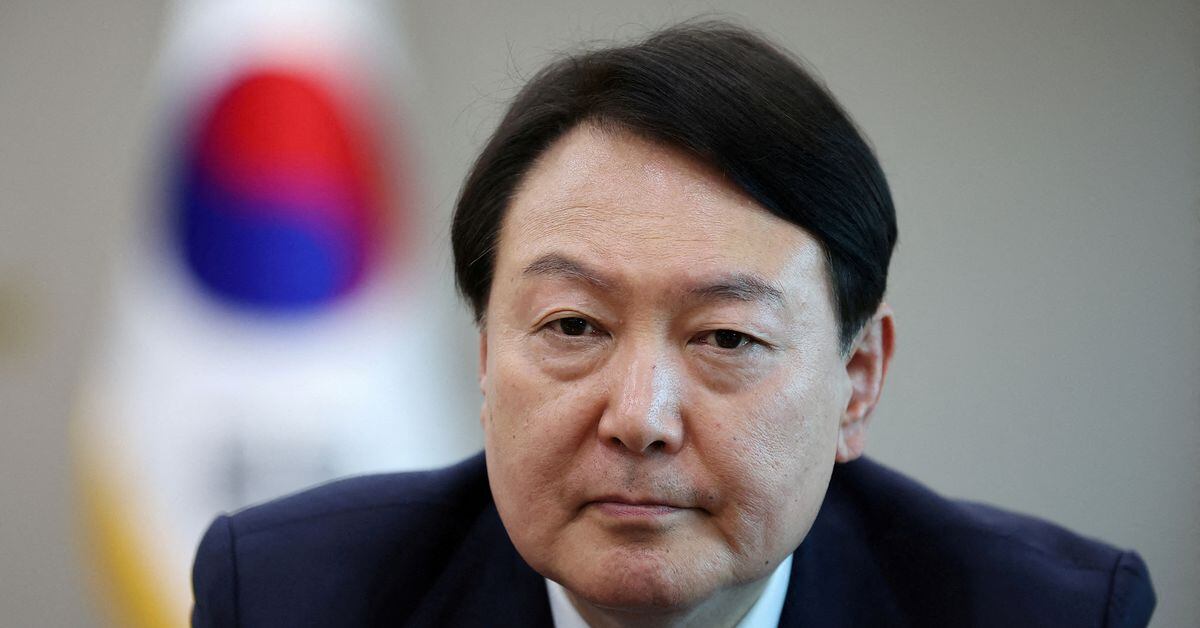
The US and South Korea have committed to developing an ever-stronger mutual defense relationship and affirming their commitment to the combined defense posture under the US-ROK Mutual Defense Treaty. The two countries have established a new Nuclear Consultative Group to strengthen extended deterrence, discuss nuclear and strategic planning, and manage the threat to the nonproliferation regime posed by North Korea. The US has reaffirmed its commitment to extend deterrence to South Korea, including nuclear, and will enhance the regular visibility of strategic assets to the Korean Peninsula. Both countries remain steadfast in their pursuit of dialogue and diplomacy with North Korea, without preconditions, as a means to achieve the complete denuclearization of the Korean Peninsula.
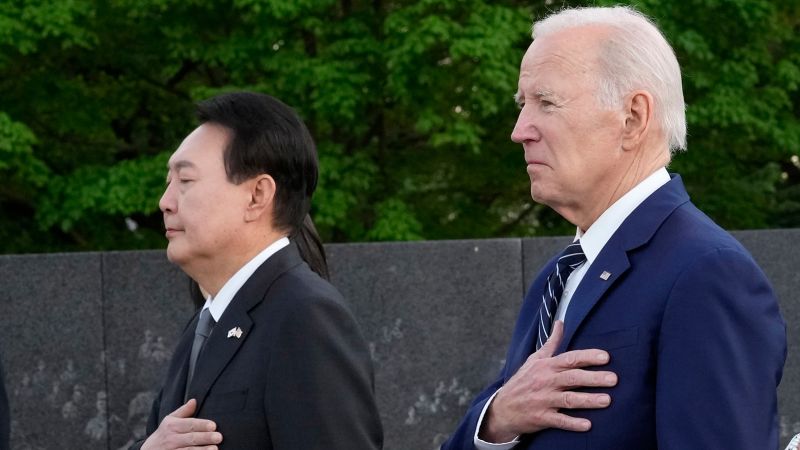
South Korean President Yoon Suk Yeol is on a state visit to the US, where he and President Joe Biden will announce a new agreement strengthening extended deterrence against North Korea's nuclear threats. The visit signals the importance of the US's relationships with allies in the Indo-Pacific region, and the leaders will unveil the "Washington Declaration," which includes new steps to boost US-South Korean cooperation on military training, information sharing, and strategic asset movements. The visit also includes discussions on cyber cooperation, climate change, and a new student exchange program focused on STEM.
South Korean President Yoon Suk Yeol is set to meet with President Joe Biden in the United States to discuss the alliance between the two countries, which has guaranteed South Korea's security for decades. However, as North Korea continues to develop nuclear weapons and missiles, there are growing doubts in South Korea about relying on the American nuclear umbrella. A recent poll showed that more than 64% of respondents supported South Korea developing its own nuclear weapons. Yoon has been pushing to boost South Korea's say in operating the U.S. extended deterrence, but exactly what that might entail has not been spelt out.