Options expiry significantly influences Bitcoin and Ether prices by increasing volatility and market activity, driven by large derivative contracts nearing expiration. Traders use tools like put-call ratios and max pain theory to gauge sentiment and potential price movements, with strategies such as hedging and diversification recommended to manage risks during these periods.

Cryptocurrencies experienced a $300 billion decline this week due to a wave of leveraged bets unwinding, with Bitcoin and Ether suffering significant drops amid broader market sentiment weakening and reduced corporate buying, marking the sector's most severe selloff in months.
A $1.5 billion crypto market selloff highlights ongoing fragility and increased volatility, with traders bracing for further swings amid large options expiries and high leverage, especially in Ether, while Bitcoin remains relatively more stable.
Ether's price dropped 6% after hitting a record over the weekend, erasing gains from a rally driven by Federal Reserve rate cut hints and increased institutional interest, while Bitcoin also declined, with both cryptocurrencies experiencing significant ETF outflows.
Ether experienced a 25% rise in August, but historical trends suggest a potential decline in September, especially given past post-halving patterns. However, recent developments like increased spot Ether ETF inflows and treasury holdings could influence this seasonal pattern, making this year’s outcome uncertain.
Cryptocurrency prices, including Bitcoin, Ether, and XRP, declined from recent highs due to concerns over Federal Reserve policies and macroeconomic indicators, with Bitcoin dropping 2.5% to around $115,401 amid broader market volatility and changing interest rate expectations.
Ether is experiencing a historic short squeeze, with a potential 10% price increase to $4,000 that could liquidate an additional $1 billion in shorts, reinforcing its bullish momentum and marking a significant event in crypto history.
Ether, the second-largest cryptocurrency, is poised to benefit significantly from a potential Trump 2.0 scenario, despite facing investor abandonment earlier this year. The article explores the reasons behind this potential resurgence, highlighting market dynamics and investor sentiment shifts that could favor Ether in the evolving political and economic landscape.
Bitcoin prices surged to $64,000 amid speculation of a Trump presidency in 2024, which traders believe could lead to friendlier crypto regulations. The SEC's potential approval of Ether ETFs also boosted market optimism. Bitcoin's rise overcame concerns from Mt Gox distributions, and altcoins followed suit with gains.
Ether surged 27% in May following the SEC's approval of spot ether ETFs, signaling a significant regulatory milestone. Ripple CEO Brad Garlinghouse and Kraken's Chief Legal Officer Marco Santori discussed the implications of crypto regulation at Consensus 2024.
JPMorgan predicts that spot ether ETFs will see significantly lower demand compared to bitcoin ETFs, with potential inflows of up to $3 billion this year, possibly rising to $6 billion if staking is allowed. Bitcoin's first mover advantage and broader appeal, along with the upcoming bitcoin reward halving, contribute to its higher demand. The SEC has approved key regulatory filings for ether ETFs, but they are not yet cleared to trade. The initial market reaction to ether ETFs is expected to be negative, with potential outflows from the Grayscale Ethereum Trust.
The bitcoin and ether ETF markets are projected to grow to $450 billion, with expected inflows of over $100 billion in the next two years, according to Bernstein. The approval of an ether spot ETF by the U.S. SEC has positive implications for other tokens like solana. Bernstein predicts a bitcoin cycle high of $150,000 in 2025 and a year-end price target of $90,000. Ether's classification as a commodity and its approval as a spot ETF set a precedent for other blockchain tokens.
The U.S. Securities and Exchange Commission has approved exchange-traded funds (ETFs) tied to the cryptocurrency Ether, marking a significant milestone for the crypto industry. This approval follows similar products for Bitcoin and could simplify crypto investments, potentially boosting prices and adoption. Major financial firms like BlackRock are among those seeking to issue these ETFs, though further approvals are needed. While the crypto industry celebrates, critics warn of increased risks in a volatile market.
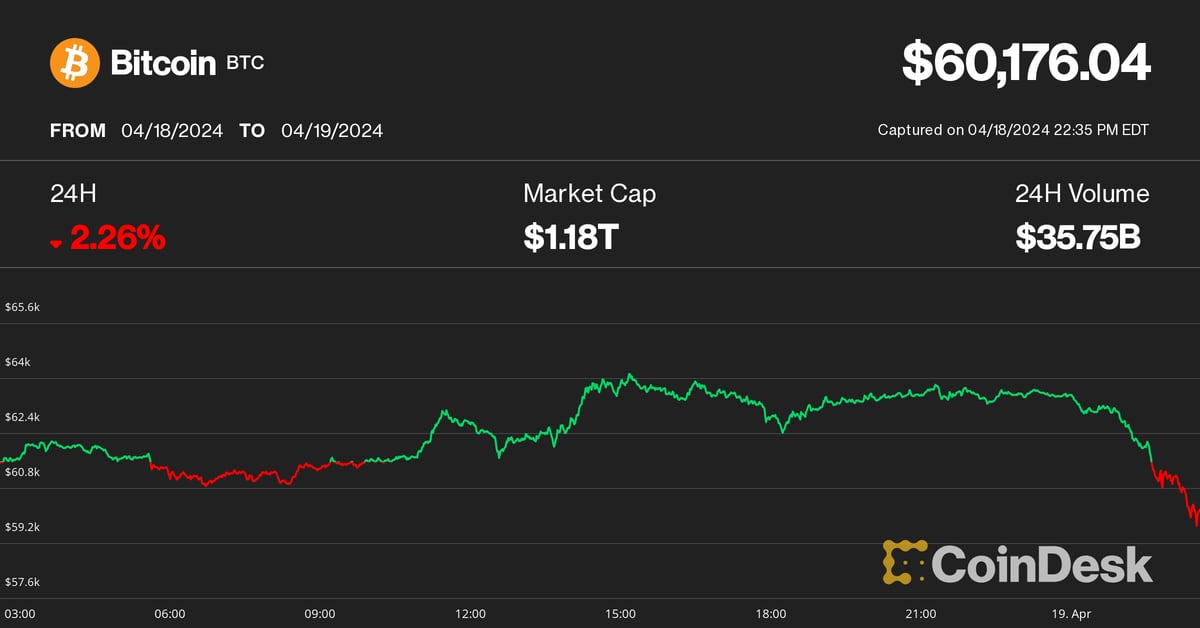
Bitcoin briefly fell below $60,000 after Israel launched a retaliatory strike against Iran, following a missile attack last week, causing market turmoil and impacting other cryptocurrencies like Ether. PAXG, a tokenized gold asset, saw a 3% increase. Analysts suggest that if bitcoin drops to $55,000 due to war-related news, it could present a buying opportunity. The conflict also led to major stock indices in Asia dropping, with disruptions in air travel reported in Iran.