
Transient HDAC inhibition imprints lasting gene and genome architecture memory in stem cells
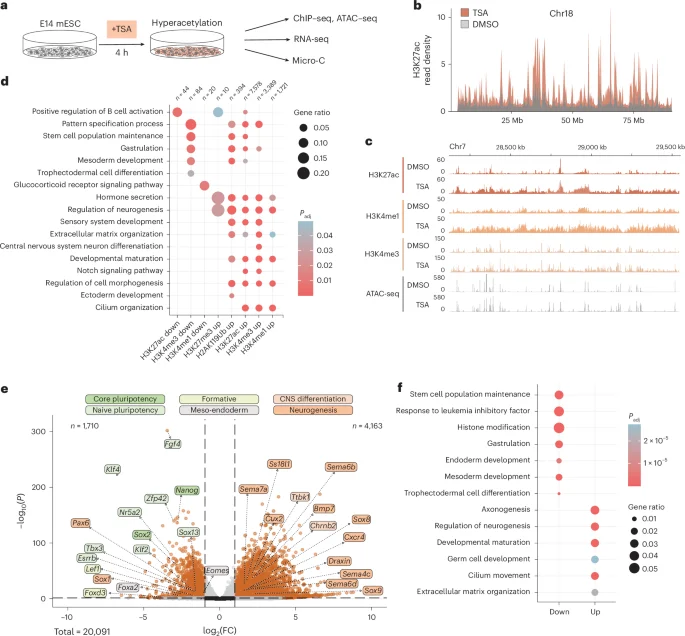
A four-hour pulse of the HDAC inhibitor TSA in mouse embryonic stem cells transiently boosts H3K27ac and shifts transcription from pluripotency toward development; genome folding also rewires with more interchromosomal contacts and weaker A-compartment interactions. Most changes reverse after washout, but a subset of genes remains misregulated and the 3D genome stays perturbed, constituting a memory that is strengthened by a second TSA pulse and linked to Polycomb-mediated looping. Disrupting canonical PRC1 (PCGF2/PCGF4) reduces this memory, indicating Polycomb topology contributes to transcriptional memory.