Tag

Eclipseviewing

All articles tagged with #eclipseviewing

"Tech Essentials for Safely Viewing the April Solar Eclipse"

Originally Published 2 years ago — by WDSU New Orleans

Featured image for "Tech Essentials for Safely Viewing the April Solar Eclipse"
Source: WDSU New Orleans

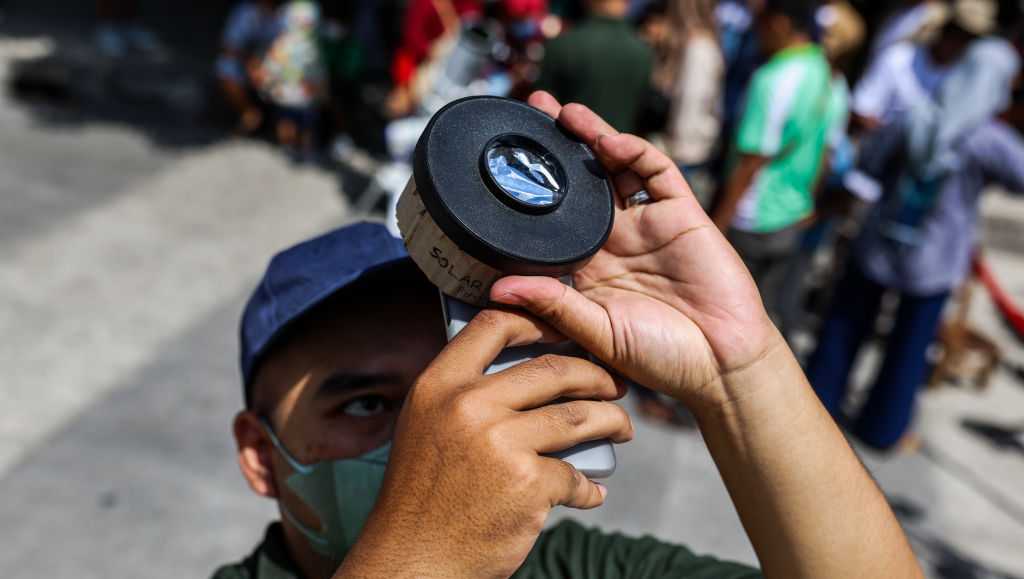
To safely view the Great American Eclipse of 2024 with devices like phones, cameras, binoculars, or telescopes, it's essential to use solar filters. The American Astronomical Society lists reputable sources for these filters, which are necessary to prevent eye damage. Products like Celestron's filtered telescopes and binoculars, Solar Snap for smartphones, and B&H Photo & Video's camera filters are recommended. These filters allow for the safe observation and photography of the eclipse, enhancing the viewing experience without the need for expensive, specialized equipment.
"Tech Essentials for Safely Viewing the April Solar Eclipse"

Originally Published 2 years ago — by WBAL TV Baltimore

Featured image for "Tech Essentials for Safely Viewing the April Solar Eclipse"
Source: WBAL TV Baltimore

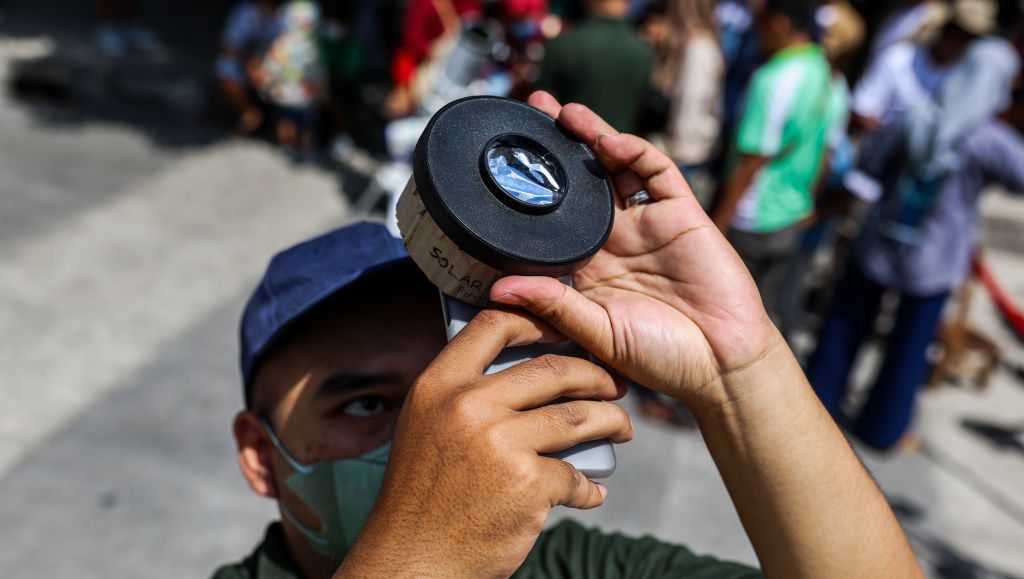
To safely view the Great American Eclipse of 2024 with devices like phones, cameras, binoculars, or telescopes, it's essential to use solar filters. The American Astronomical Society lists reputable sources for these filters, which are necessary to prevent eye damage. Products like Celestron's filtered telescopes and binoculars, Solar Snap for smartphones, and B&H Photo & Video's camera filters are recommended. These filters allow for the safe observation and photography of the eclipse, enhancing the viewing experience without the need for expensive specialized equipment.

"Top Cities and Essential Tips for Viewing the 2024 Total Solar Eclipse"

Originally Published 2 years ago — by National Geographic

Featured image for "Top Cities and Essential Tips for Viewing the 2024 Total Solar Eclipse"
Source: National Geographic

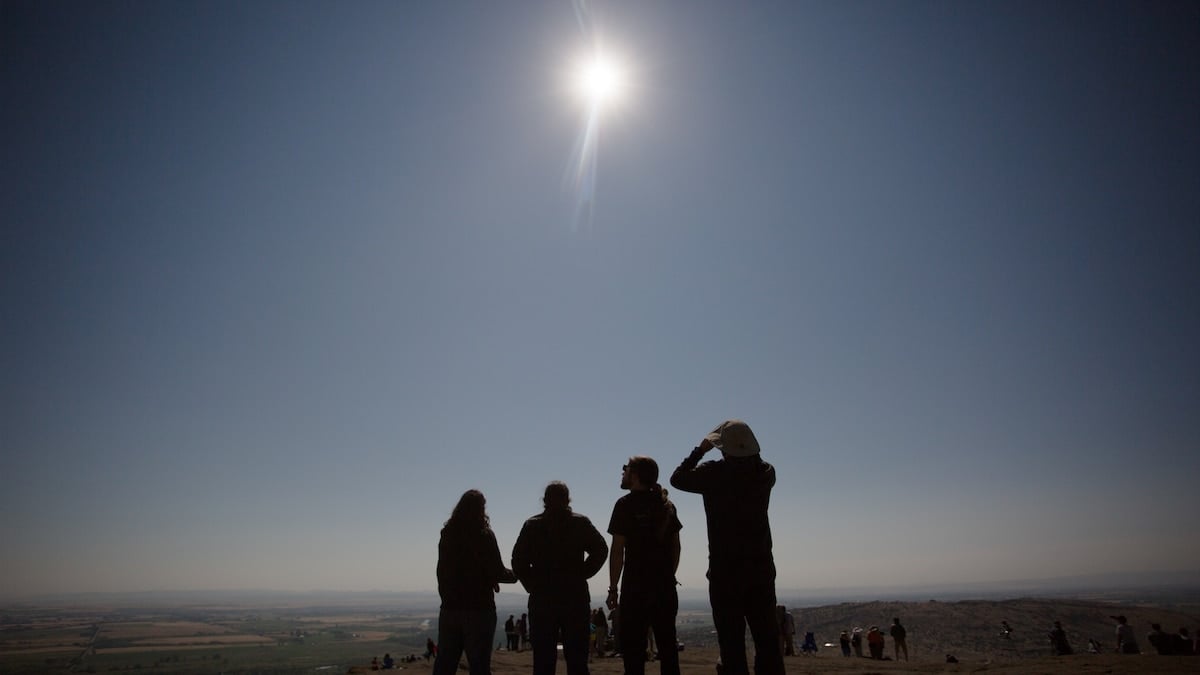
The total solar eclipse on April 8, 2024, offers a rare spectacle across North America, with the path of totality passing through Mexico, the U.S., and Canada. Key viewing tips include choosing a location directly in the path of totality, considering weather prospects for clear skies, and planning accommodations and transportation well in advance. Texas cities like San Antonio, Dallas, and Austin are prepared for the influx of visitors with numerous hotel rooms and events. Other notable locations include Russellville, Arkansas for eclipse-themed weddings, Booneville and Paris, Arkansas for camping, Indianapolis for NASA expert access, Ohio for family-friendly activities, and Rochester, New York for museum experiences. Safety is paramount, with eclipse glasses required during the partial phases, and experts recommend soaking in the experience visually rather than focusing solely on capturing it through photography.

"2024's Celestial Spectacle: Cities, Eclipses, and Meteor Showers to Watch"

Originally Published 2 years ago — by Space.com

Featured image for "2024's Celestial Spectacle: Cities, Eclipses, and Meteor Showers to Watch"
Source: Space.com

The total solar eclipse on April 8, 2024, will pass through several major North American cities, offering millions of urban residents a chance to witness the event. Dallas, Texas, will be the largest city in the path of totality. Other significant cities include Montreal, San Antonio, Indianapolis, and Austin, as well as Mexican cities like Mazatlán and Torreón. Local events are being planned in these cities to celebrate the eclipse, with considerations for historical cloud cover statistics to ensure optimal viewing experiences.

"Top Astronomy Spectacles of 2024: Eclipses, Meteor Showers, and Star-Gazing Highlights"

Originally Published 2 years ago — by Space.com

Featured image for "Top Astronomy Spectacles of 2024: Eclipses, Meteor Showers, and Star-Gazing Highlights"
Source: Space.com

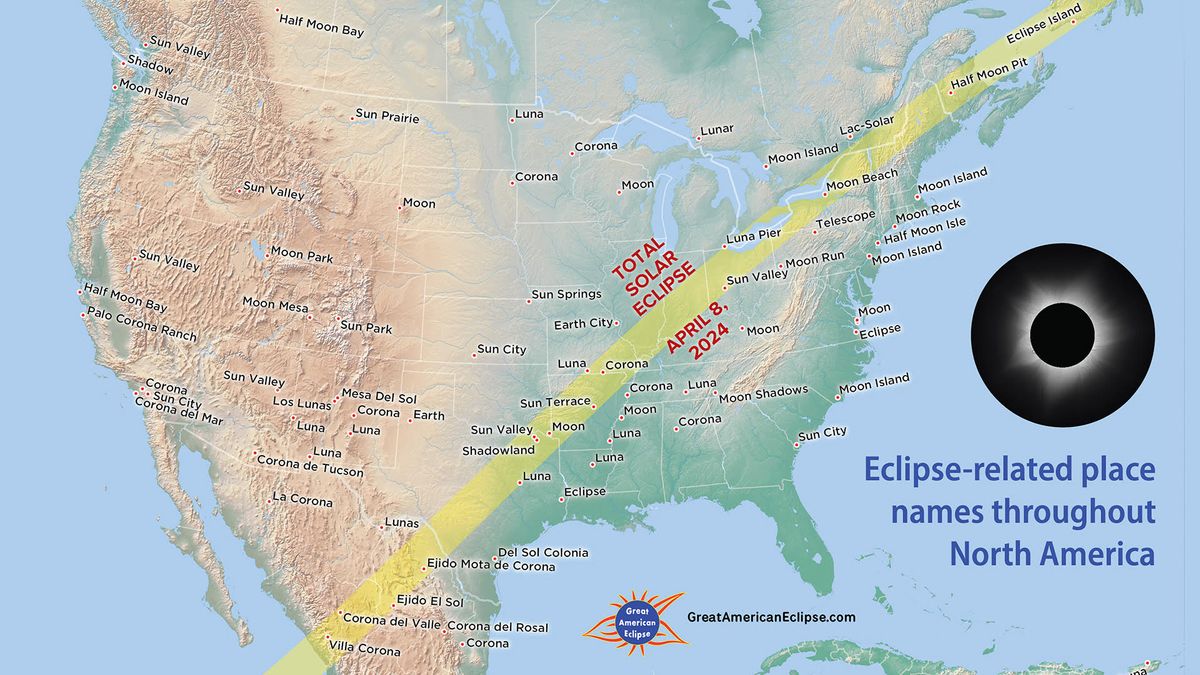
On April 8, 2024, a total solar eclipse will be visible across North America, with the path of totality passing through several eclipse-themed locations such as Shadowland, Texas, and Moon Beach, New York. Observers within the 115-mile-wide path can experience daytime darkness and view the sun's corona directly, but only during the brief period of totality. Outside of totality, viewers must use proper solar filters to safely watch the eclipse. The path will stretch from Mexico to Newfoundland, Canada, with various durations of totality depending on the location.