AI has significantly advanced earthquake detection by automating the identification of small earthquakes, especially in noisy environments, using machine learning models like Earthquake Transformer, which outperform traditional methods in speed and sensitivity, though predicting earthquakes remains a challenge.
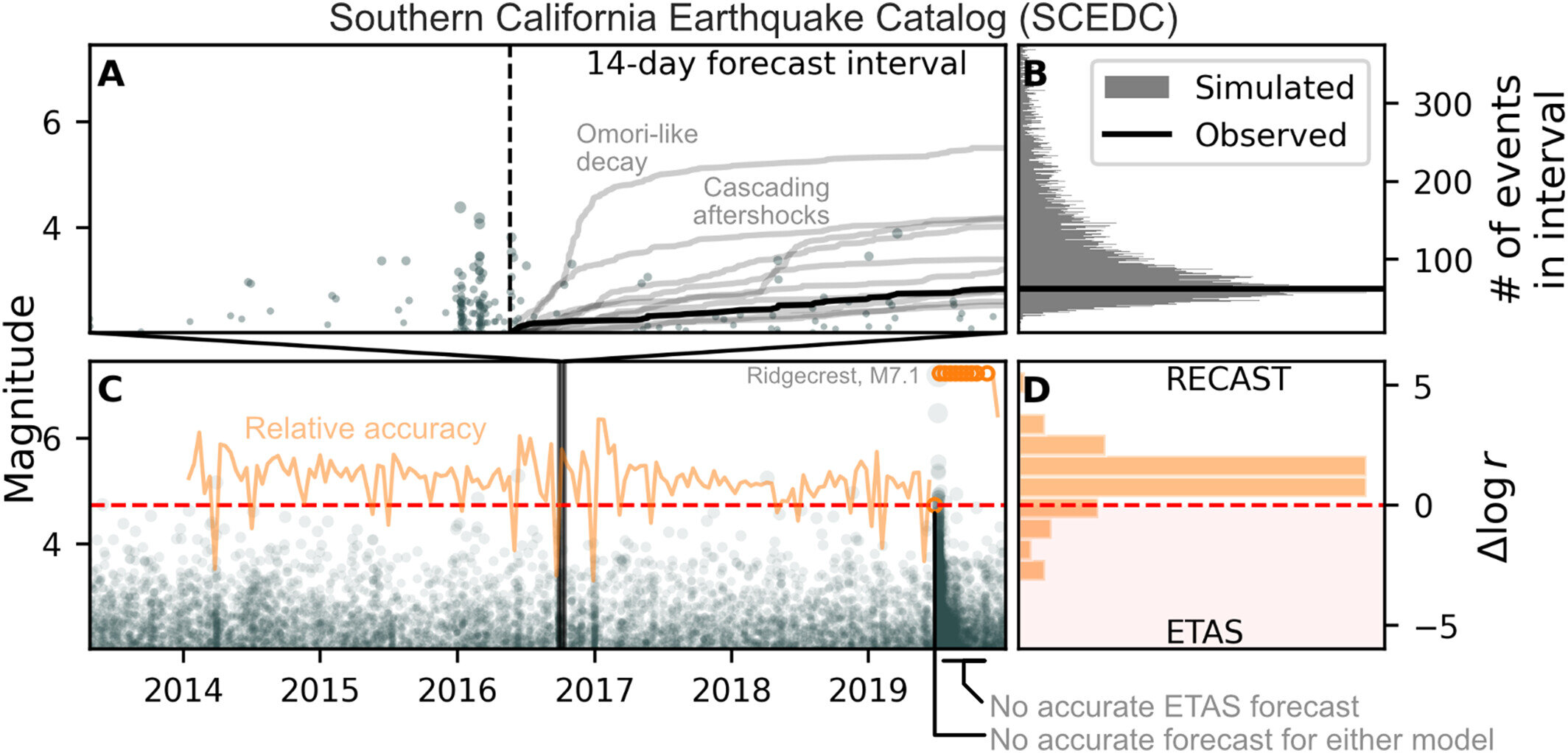
Seismologists at the University of California, Santa Cruz and the Technical University of Munich have developed a new deep learning model called RECAST (Recurrent Earthquake foreCAST) to forecast aftershocks. The model outperformed the current Epidemic Type Aftershock Sequence (ETAS) model for earthquake catalogs with over 10,000 events. The RECAST model is more flexible and scalable, making it suitable for the larger and more detailed earthquake catalogs available today. The researchers hope that deep learning models like RECAST will enable better earthquake forecasting in poorly studied areas and allow for the incorporation of various types of data beyond traditional seismic measurements.