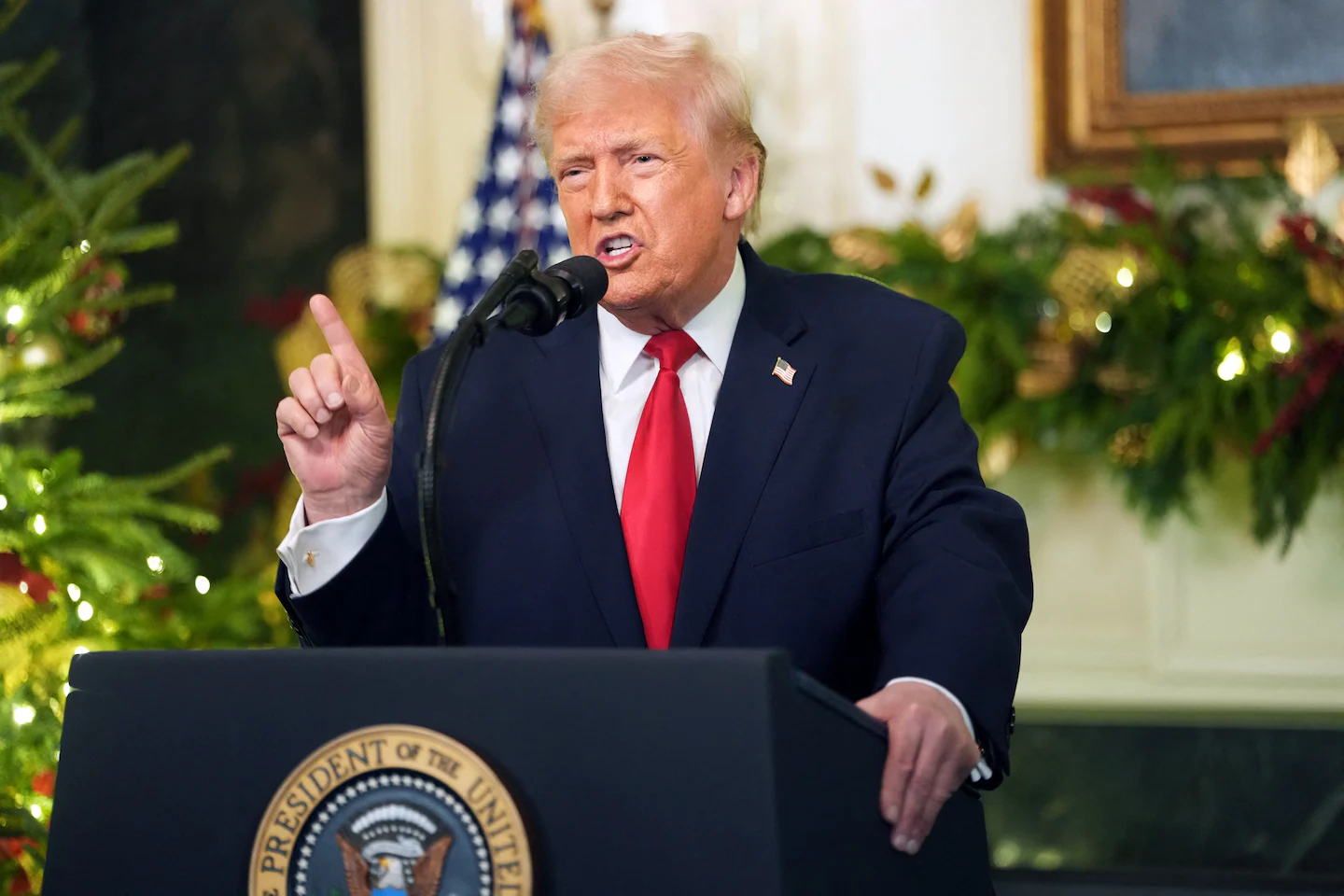
President Donald Trump delivered a rapid 18-minute address from the White House, highlighting his policy achievements, criticizing his predecessor, and aiming to improve his declining approval ratings amid economic concerns, while avoiding major international conflicts.
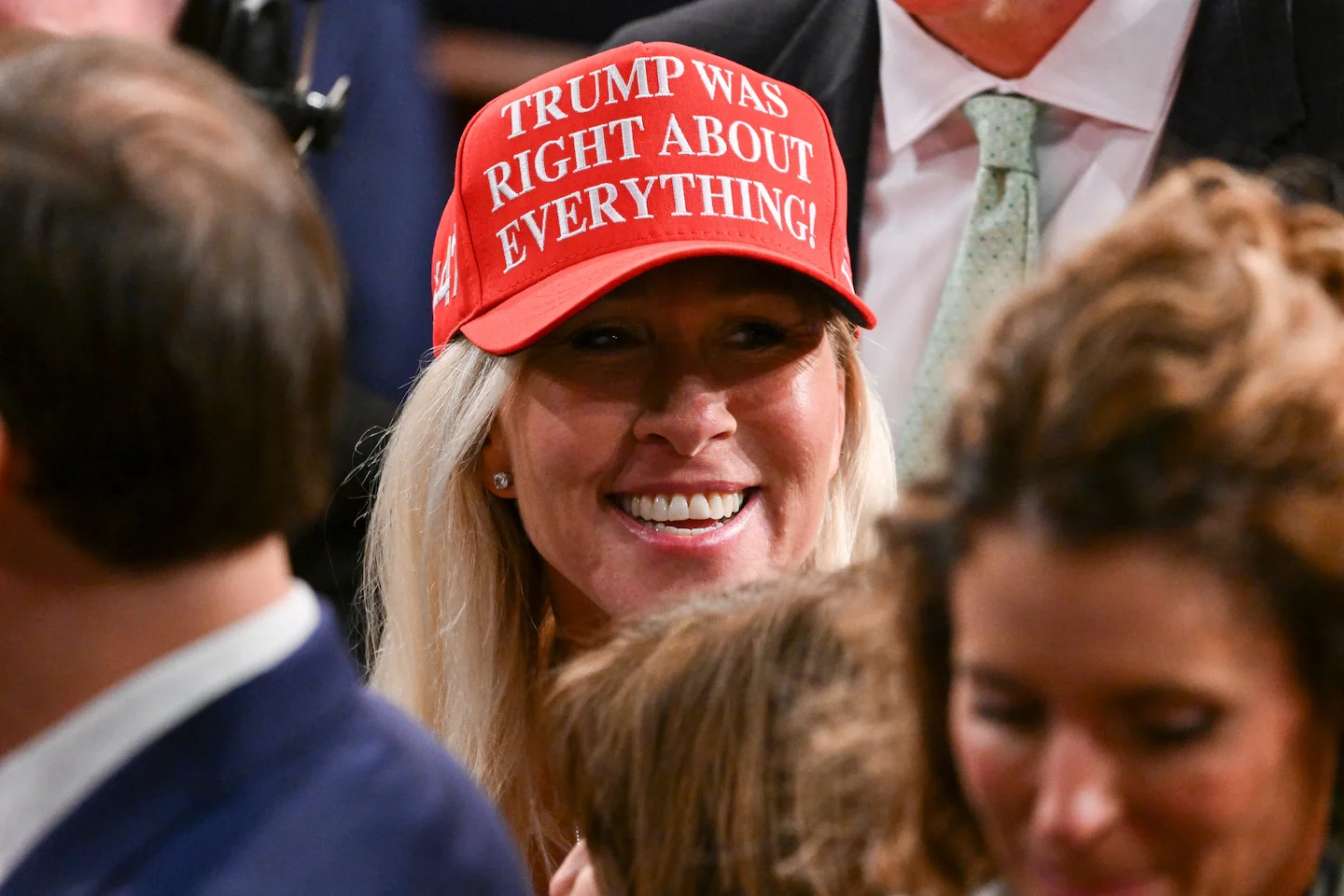
Donald Trump criticized Congresswoman Marjorie Taylor Greene, suggesting she has 'lost her way' amid her recent critiques of GOP leaders and her focus on foreign affairs instead of domestic issues.
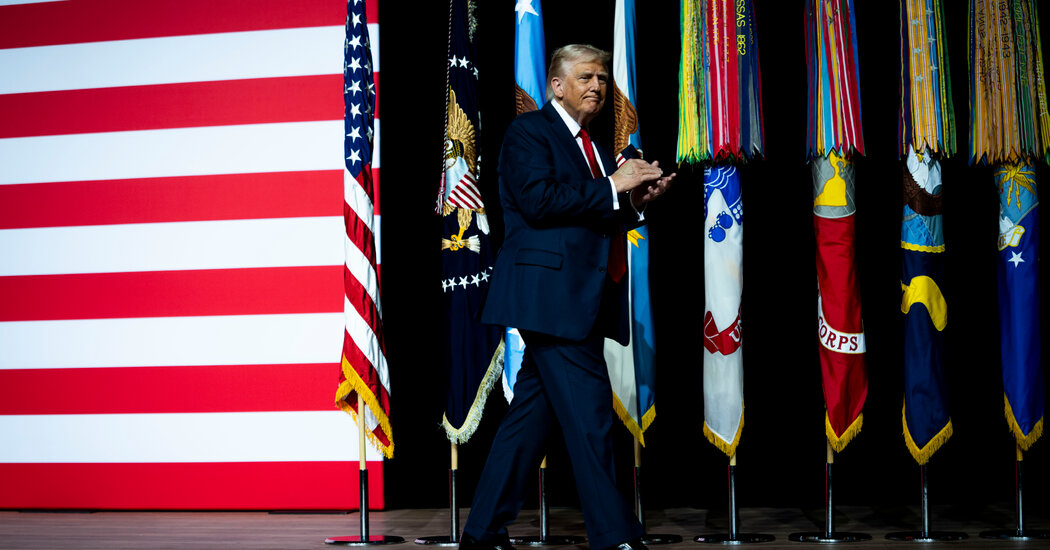
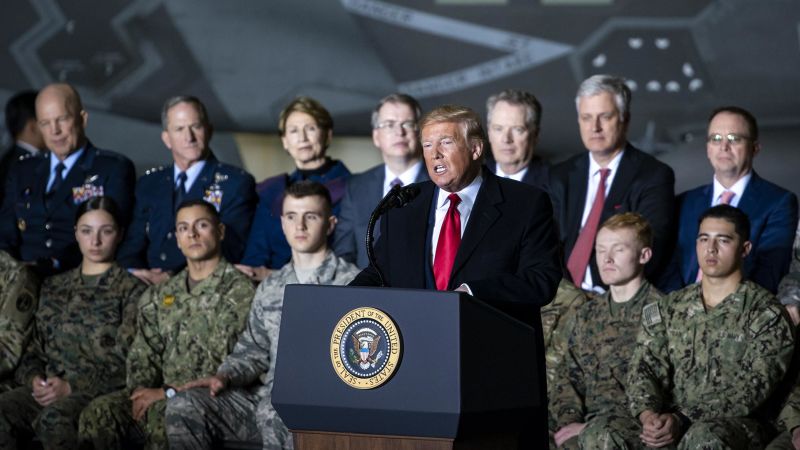
President Trump addressed top military leaders at a rare gathering, using the platform to promote his domestic and foreign policy positions, including issues like the National Guard deployment, relations with Russia, and nuclear weapons, in a speech that blended military topics with campaign-style rhetoric.
President Donald Trump announced plans to send troops to Portland, Oregon, and immigration detention centers nationwide, escalating the use of the military within the U.S. amidst a controversial campaign.
The article discusses Donald Trump's recent use of military and National Guard forces to enforce law and order, including controversial executive orders to create police units and a rapid deployment force, raising concerns about the potential for internal conflict, constitutional violations, and increased political polarization in the U.S.
The Trump administration is considering a plan to establish a rapid-response military 'reaction force' of 600 National Guard troops to be deployed quickly into U.S. cities facing protests or unrest, raising legal, logistical, and societal concerns about the use of military force domestically.
Senate Republicans released an updated text of their sweeping domestic policy bill, aiming to secure votes for a vote as soon as Saturday, amid ongoing negotiations and procedural challenges, including rulings by the Senate parliamentarian that have led to the removal of certain provisions. The bill includes updates on tax, Medicaid, immigration, and AI regulation, with efforts to address concerns from GOP senators and external groups, while facing potential delays and modifications before possible passage.
The article discusses the potential consequences of a war with Iran under Trump, highlighting concerns about increased authoritarianism, domestic repression, and the expansion of executive powers, while also criticizing the justification and aftermath of military actions.
President Trump promoted a new policy at the White House to establish $1,000 investment accounts for all US newborns between 2025 and 2029, aiming to support families and future financial stability, with backing from major corporations.
Pentagon officials are informally discussing potential responses to controversial orders from Donald Trump, should he be re-elected, including deploying active-duty troops domestically and firing non-political staff. Concerns arise over Trump's past strained relations with military leaders and his intentions to use military power for domestic law enforcement and mass deportations. The Pentagon is also preparing for possible reinstatement of Schedule F, which could make federal employees more easily dismissible. Officials emphasize the importance of obeying only lawful orders and maintaining political neutrality.
Former President Donald Trump's return to the White House could see significant changes in military use and policy. Trump has expressed intentions to use the military for domestic purposes, including mass deportations and targeting political rivals, while also aiming to eliminate 'woke' policies in the military. His administration is expected to be filled with loyalists, potentially removing previous barriers to his plans. Additionally, Trump may reduce support for Ukraine and increase defense spending, while reversing policies on diversity and inclusion within the military.
Comparing a potential Nikki Haley presidency to a Donald Trump presidency, the focus is on their differences in governing style. While Trump poses a greater threat to democracy and the rule of law, Haley is seen as a more "normal" Republican. In foreign policy, Haley is portrayed as a traditional Republican hawk, while Trump's erraticism and "America First" instincts present risks to global stability. On domestic policy, both are similar, but Haley has shown support for Medicare and Social Security reform. The article also discusses their differing approaches to executive power, with Trump's aggressive plans for immigration, trade, and the federal government contrasting with Haley's more vague proposals.
President Biden continues to focus on economic issues and his domestic policy agenda, even as he manages the conflict between Israel and Hamas. While the international crisis unfolds, Biden's strategists believe that voters in key states will prioritize pocketbook concerns over global events. Biden announced new actions to protect consumers from hidden charges imposed by airlines, banks, and retailers, aiming to address economic pain felt by Americans. Despite his extensive experience in international affairs, Biden's team recognizes the importance of maintaining a strong focus on domestic issues for his presidency's success.
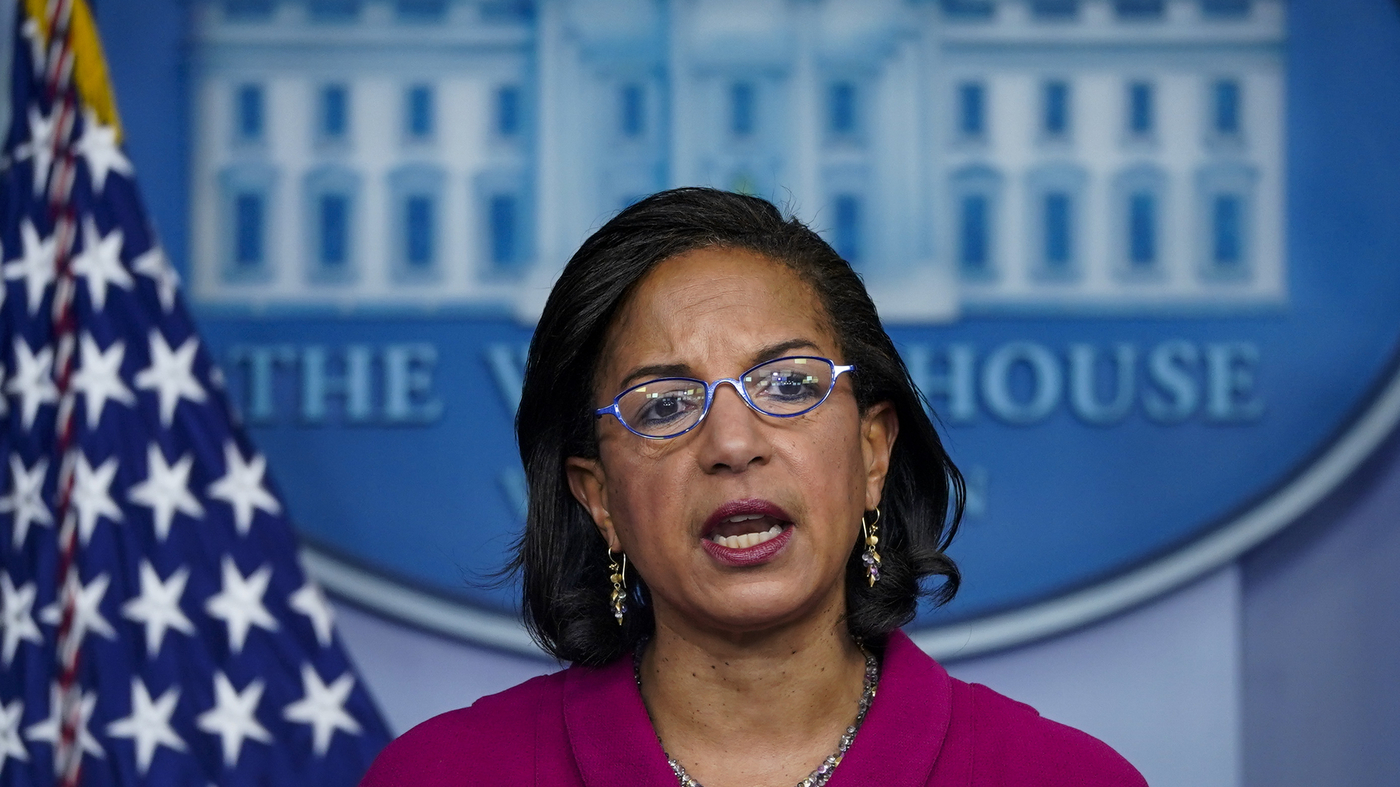
Susan Rice, President Biden's chief domestic policy adviser, is stepping down from her post. Rice discusses the challenges faced by the administration on divisive issues such as gun control and immigration. She argues that the best hope has often been to take the least bad option. The administration has made progress on specific policy changes, such as expanding postpartum Medicaid coverage and launching the 988 Suicide & Crisis Lifeline. However, more dramatic measures such as a renewed assault-weapons ban appear politically out of reach. Rice acknowledges that the least bad option may not always be enough, but it counts among the instances during her tenure in which it was good enough.
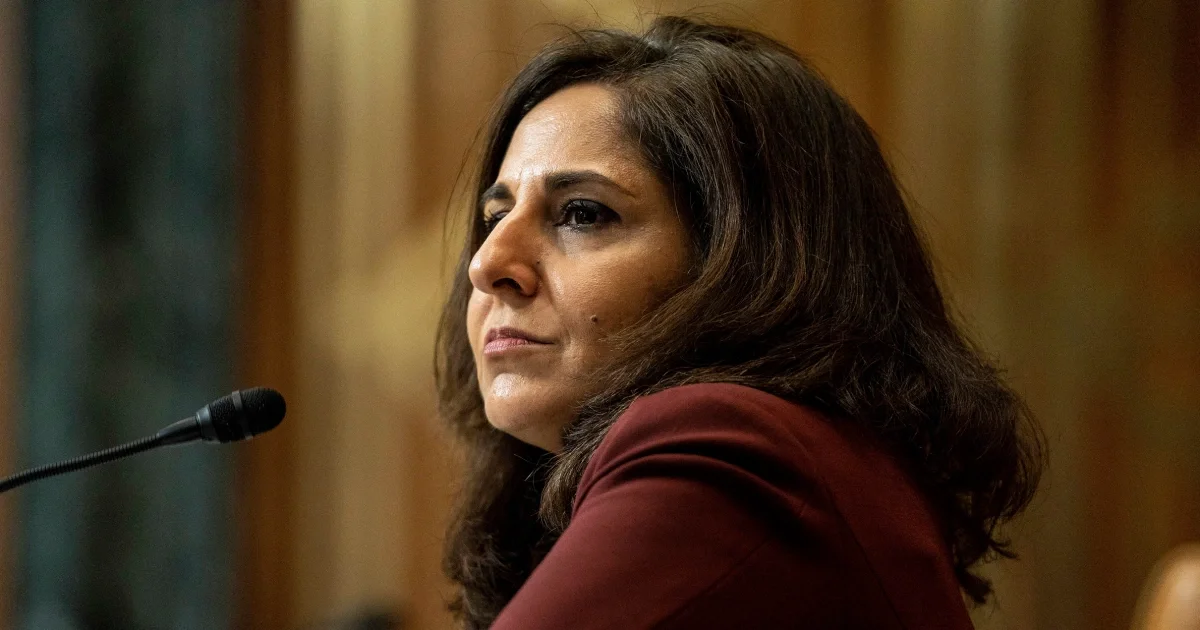
President Joe Biden has appointed Neera Tanden, a senior aide, as his domestic policy adviser, replacing Susan Rice. Tanden, who has served in two prior presidential administrations, will cover most areas outside of national security and the economy. She was previously Biden's staff secretary and played a major role in controlling the schedules, briefing books, and other paperwork that reached the president's desk. Tanden's appointment comes after she was forced to withdraw her nomination to be budget chief amid fierce opposition from Republicans and Senator Joe Manchin.