
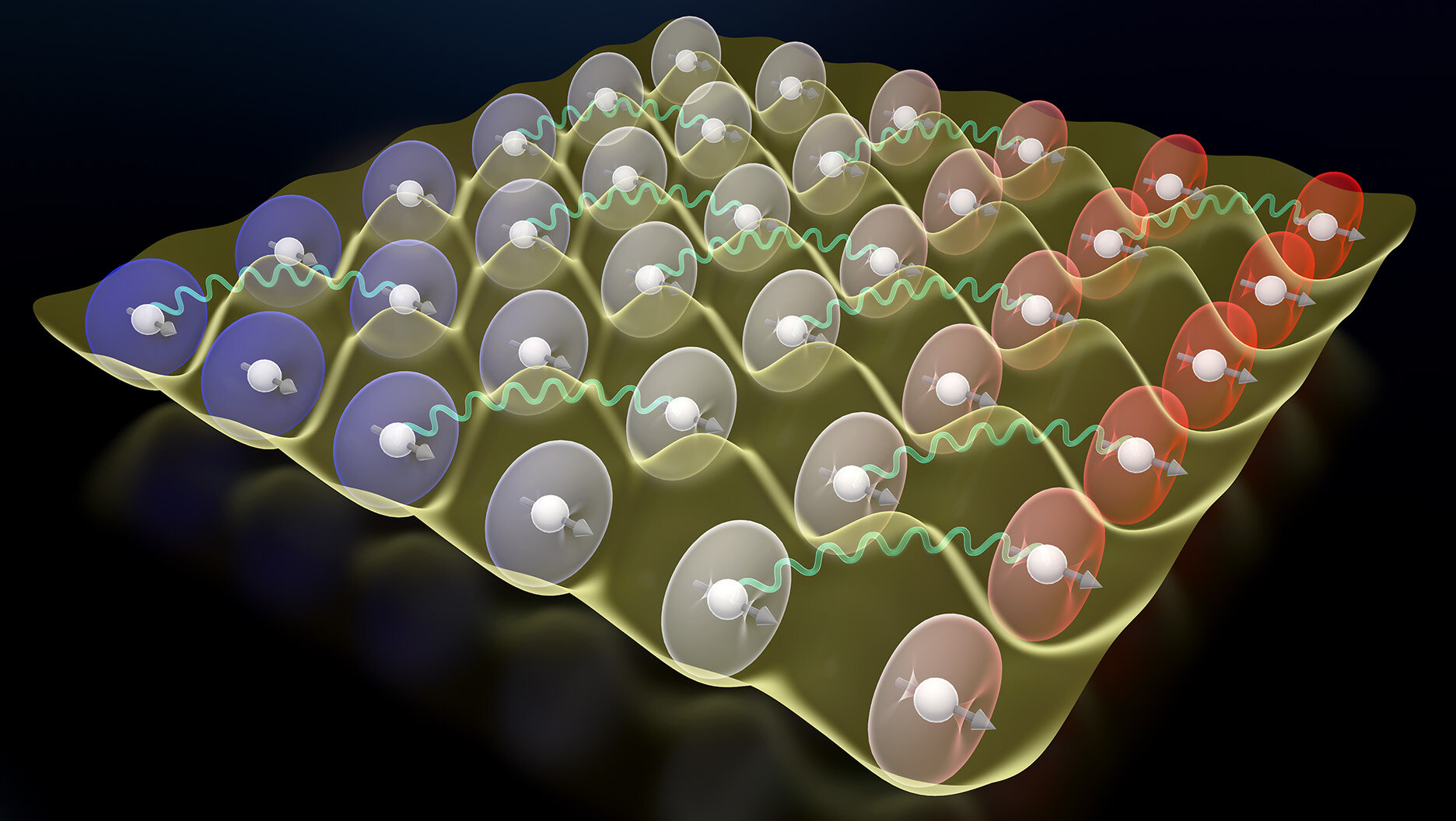
"Clock Systematic Shift Due to Dipole-Dipole Interactions"
Researchers at JILA and NIST have observed millihertz-level cooperative Lamb shifts in an optical atomic clock, shedding light on the intricate interactions within atomic clocks and their potential impact on clock accuracy. By using a cubic lattice to measure specific energy shifts within an array of strontium-87 atoms, the team demonstrated the influence of dipole-dipole interactions on clock performance and the importance of understanding and controlling these interactions at high density. The study's findings could lead to improved timekeeping precision and further exploration of quantum physics in clock systems.