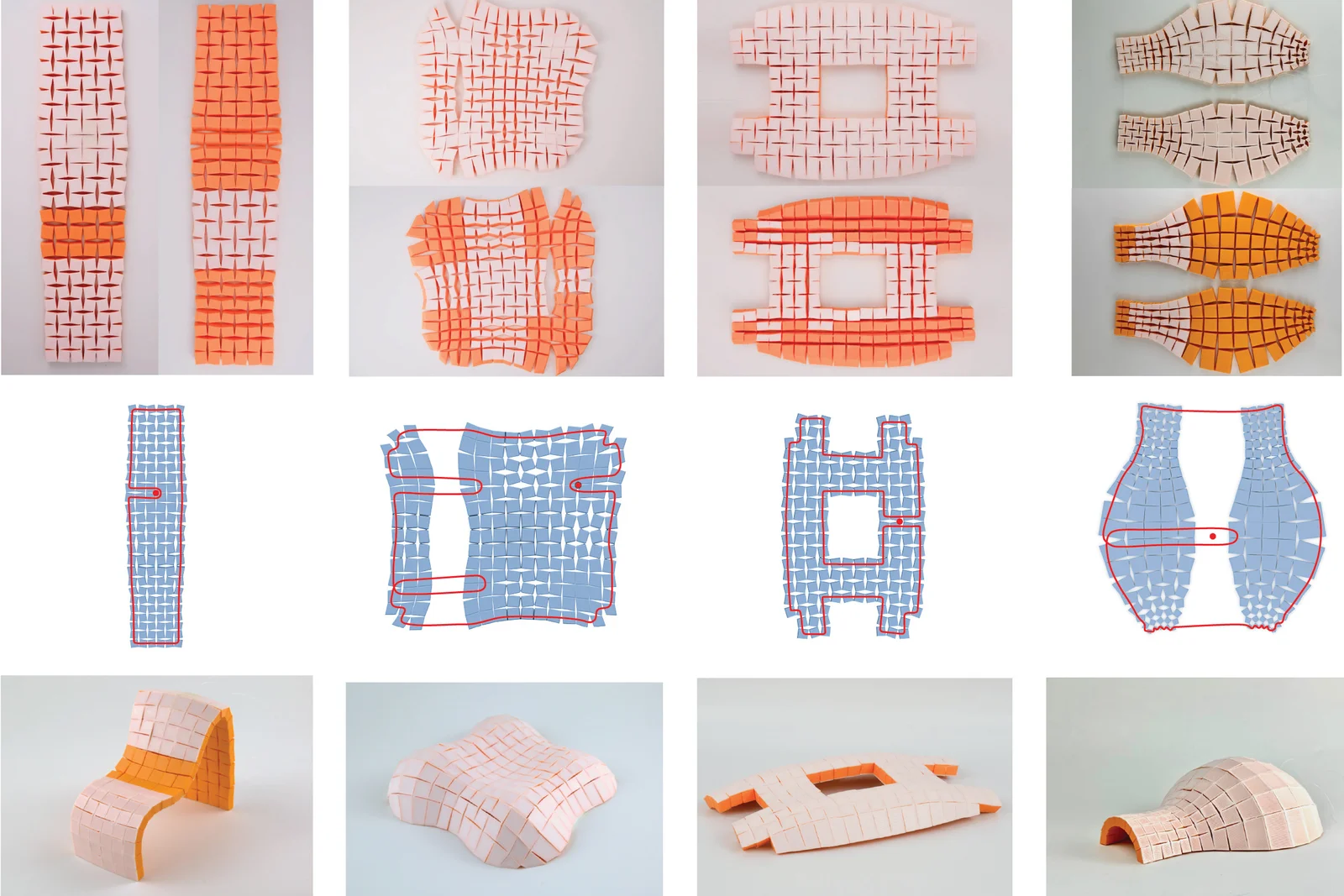
MIT researchers have developed a method to transform flat, interconnected tiles into complex 3D structures with a single pull of a string, enabling rapid deployment of structures like emergency shelters, medical devices, or space habitats, with potential for scalable and reversible applications.
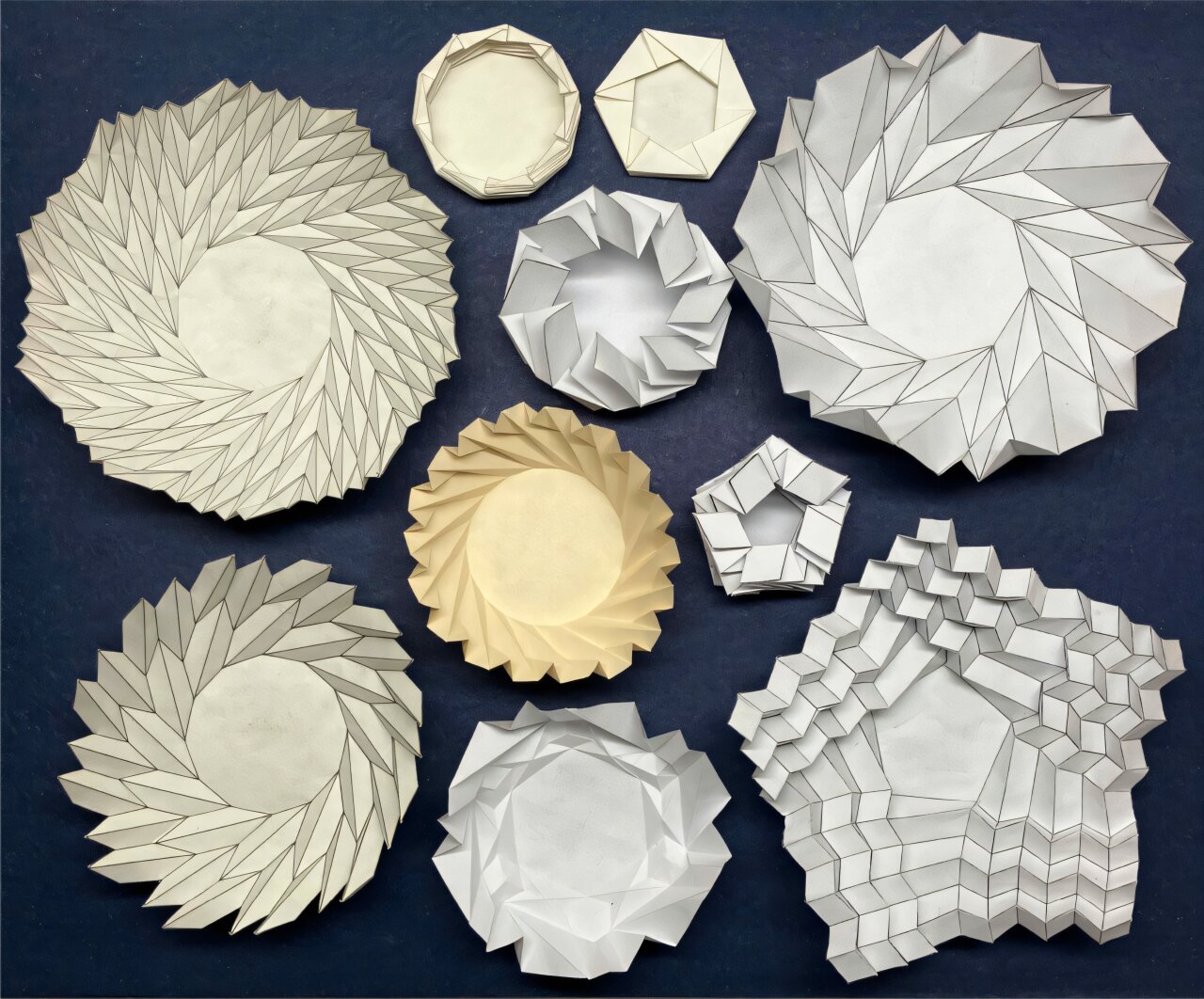
Researchers at Brigham Young University have developed new origami-inspired bloom patterns that can fold flat and unfold like flower petals, offering promising applications for compact, reliable space structures such as antennas, telescopes, and solar arrays, while also having potential uses on Earth for portable and expandable structures.
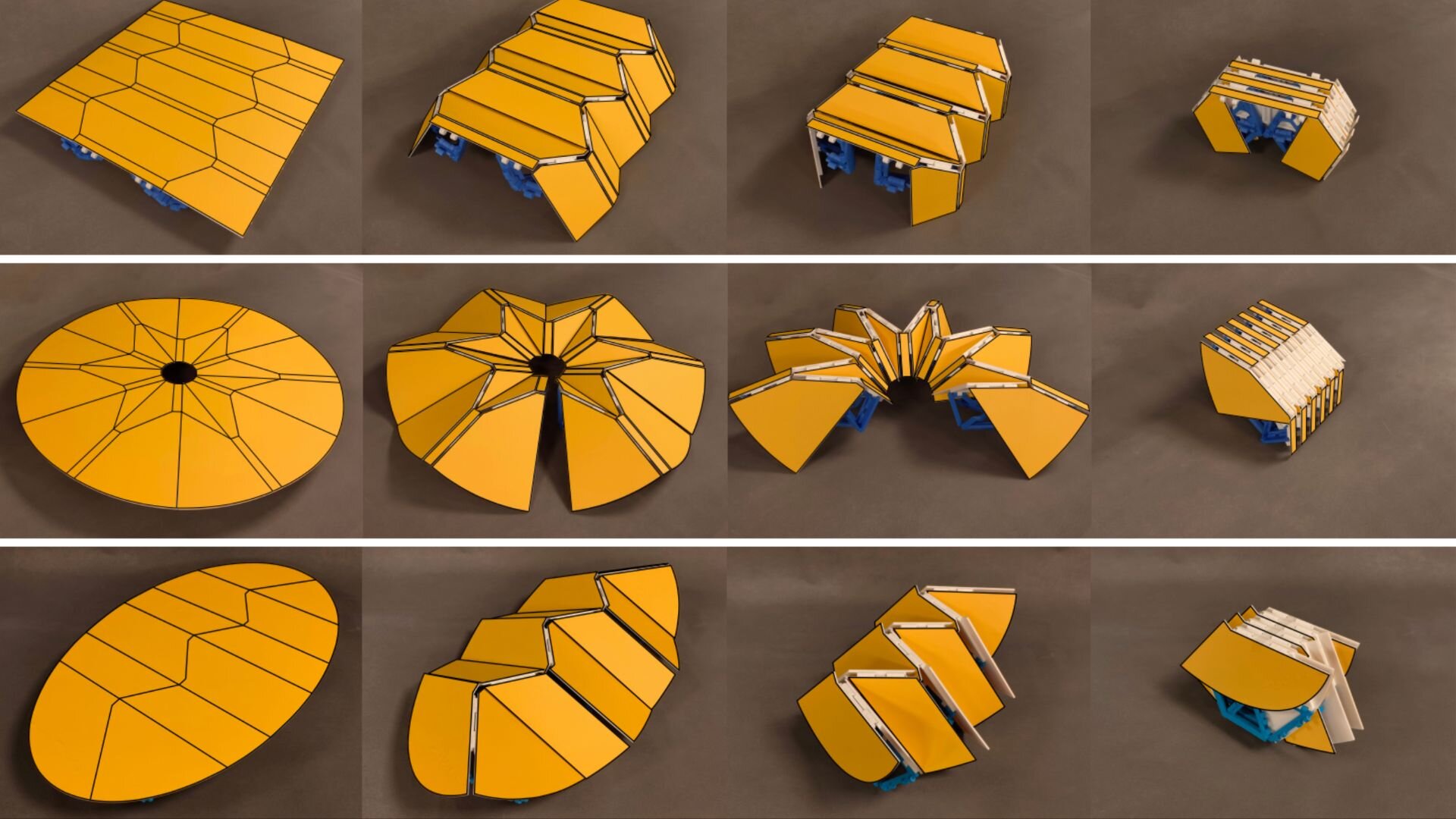
A study in Nature Communications introduces a novel method for creating deployable origami structures from thick materials that transform into smooth, continuous surfaces by removing specific panels, expanding potential applications in architecture, aerospace, and medical fields.