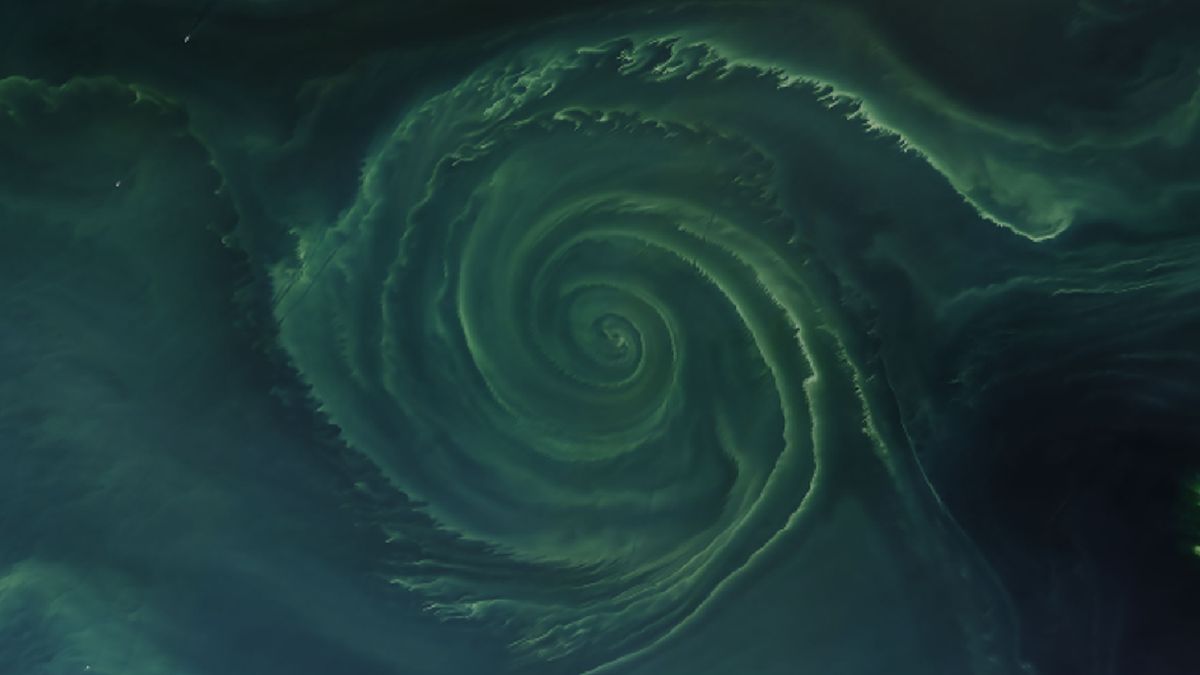
A striking image captured by NASA's Landsat 8 satellite in July 2018 shows a massive algal bloom in the Gulf of Finland, part of the Baltic Sea. The bloom, consisting mainly of cyanobacteria, formed a 15.5-mile-wide spiral and created a large "dead zone" due to decreased oxygen levels in the water. These blooms have increased in size and frequency due to nutrient run-off from human activities and rising sea temperatures, exacerbating the problem.
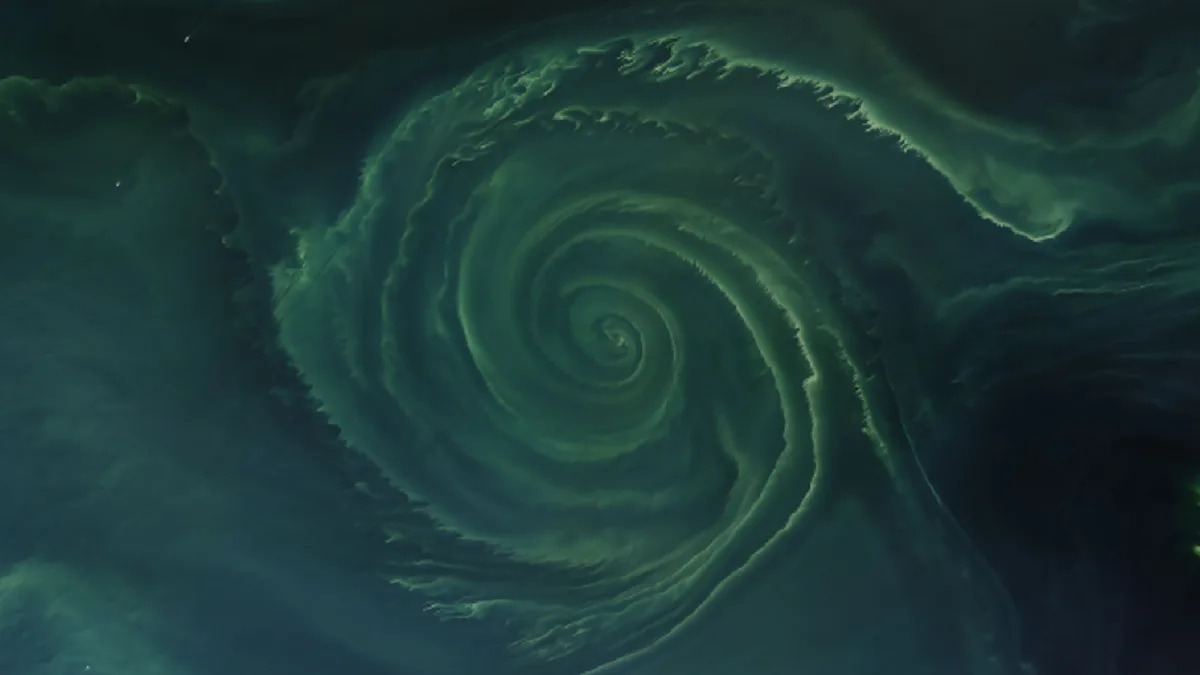
A striking satellite image captured by Landsat 8 in July 2018 shows a massive algal bloom in the Gulf of Finland, forming a 15.5-mile-wide green spiral. While visually stunning, these blooms create toxic "dead zones" by depleting oxygen levels in the water, suffocating marine life. The frequency and size of such blooms have increased due to human activities and climate change, with the Baltic Sea experiencing its lowest oxygen levels in 1,500 years.
A new phenomenon called the "workday dead zone" is emerging, where employees struggle to get anything done due to a combination of distractions, fatigue, and lack of motivation. This period typically occurs in the late afternoon, after lunch, and before the end of the workday. Factors such as meetings, email overload, and social media contribute to this unproductive time. To combat the workday dead zone, experts suggest implementing strategies like time blocking, prioritizing tasks, and creating a conducive work environment.