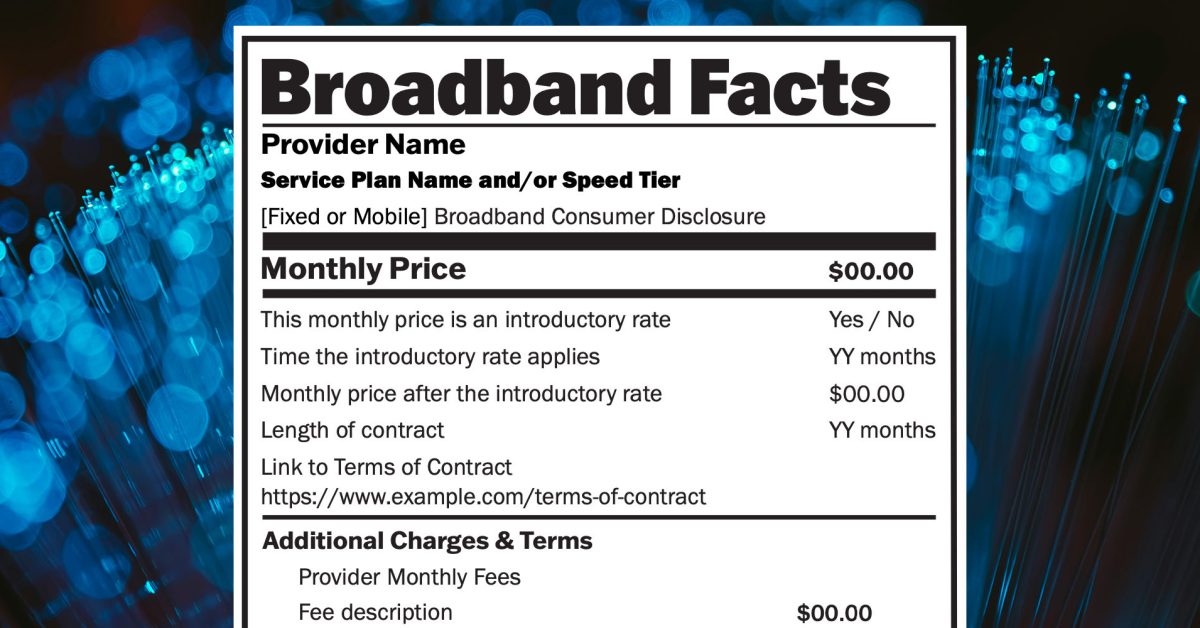
The Federal Communications Commission (FCC) has implemented a new rule requiring internet service providers (ISPs) with over 100,000 subscribers to display broadband "nutrition" labels, disclosing true costs, speeds, data allowances, and hidden fees. The labels must include information on introductory rates, additional charges, real-life speeds, data caps, and surcharges, aiming to address consumer complaints about misleading marketing and hidden costs. This move aims to provide consumers with transparent and upfront information about broadband packages.

Verizon has introduced a new individual plan for its unlimited storage tier, priced at $13.99 per month, allowing users to upload unlimited photos, videos, documents, PDFs, and PNGs from their phone and computer. While there are some limitations, such as a 10GB file size limit and a daily upload limit of 50GB, Verizon's offering stands out in a market where most cloud storage services have data caps. This unlimited plan is particularly appealing as other options, like Dropbox and Google One, have either eliminated or capped their storage plans. However, users should be cautious of potential future changes or restrictions imposed by Verizon.
The Federal Communications Commission (FCC) is investigating why American ISPs continue to cap data usage despite having the technical ability to offer unlimited data plans. During the COVID-19 pandemic, many ISPs temporarily or permanently removed data limits on consumer broadband, but have since reinstated them. The FCC wants to understand how data caps are affecting consumers and competition and is also looking into its own legal authority to take action on data caps.
The Federal Communications Commission (FCC) is gathering data to understand why some broadband providers continue to impose data caps on consumer plans despite the exponential increase in data consumption. The FCC wants to evaluate the impact on consumers and determine whether action is required to ensure future data caps do not harm provider competition or consumers' access to services. The agency is also seeking feedback from consumers on how these data caps affect their lives and livelihood through a new Data Caps Experience Form. Commission Chair Jessica Rosenworcel believes internet access is a required service, not a luxury, for users worldwide.
FCC Chairwoman Jessica Rosenworcel has requested a formal inquiry into the impact of data caps on internet users and why broadband providers still impose them. The inquiry will seek public comment on the impact of data caps on consumers, their experience with data caps, and how they impact competition. The FCC has also created a "Data Caps Experience Form" for users to share their experiences. Rosenworcel wants to ensure that data caps do not harm competition or consumers' ability to access broadband internet services.