A federal appeals court has blocked a controversial Florida law restricting Chinese citizens from buying land, stating that it "blatantly violates" protections against discrimination. The law, championed by Gov. Ron DeSantis, faced a legal challenge from Chinese immigrant plaintiffs represented by the ACLU, and the court granted an injunction for two plaintiffs fearing they would be forced to cancel home purchase contracts. The law specifically targets Chinese individuals and those from other hostile countries, but the court's decision is seen as a warning to other states considering similar legislation.

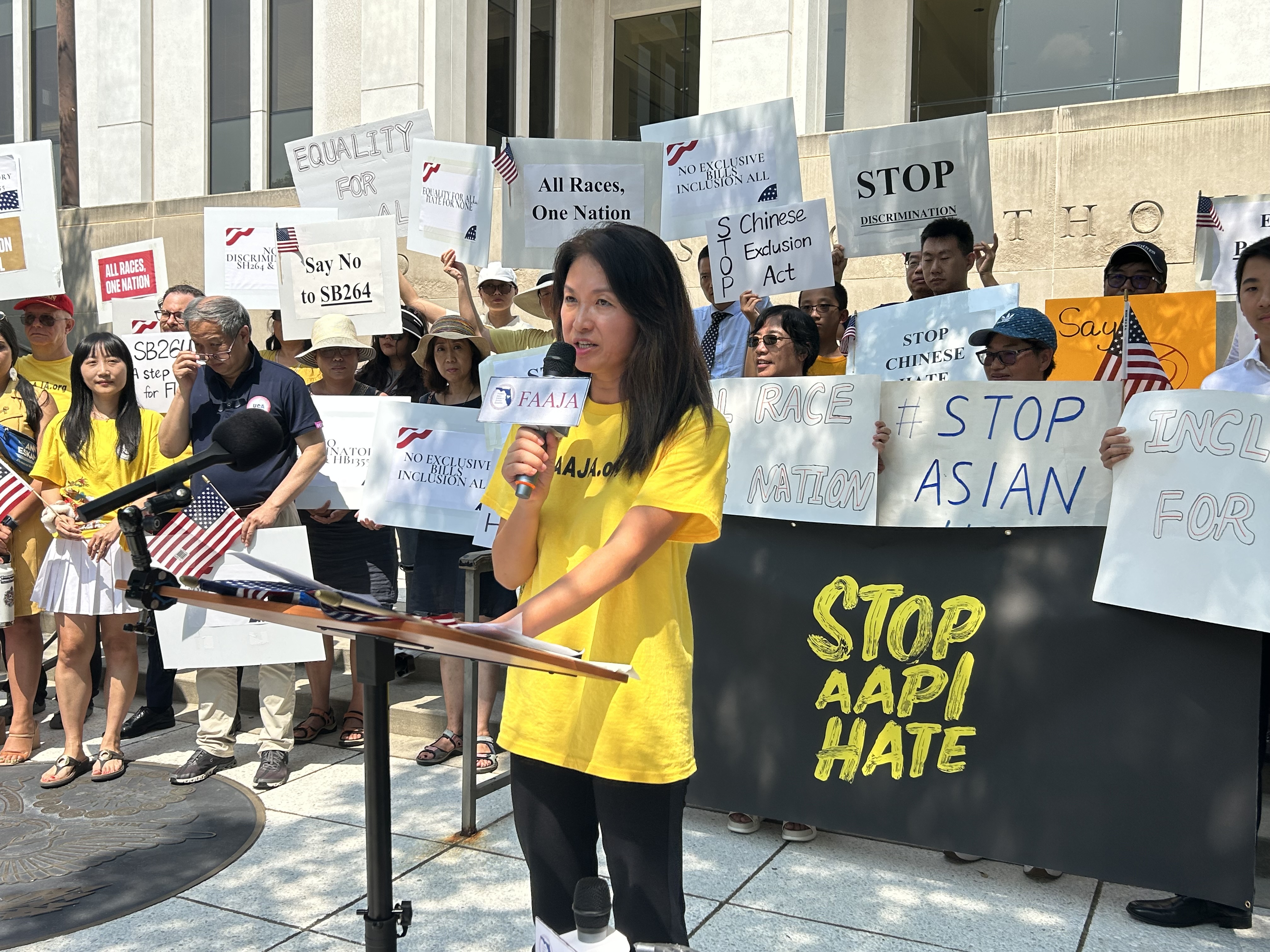
Lawmakers in 33 states have introduced 81 bills this year to restrict Chinese land ownership, particularly agricultural land or property near military bases, citing national security concerns. While some bills have bipartisan support, Asian American advocacy groups and legislators argue that the legislation could encourage discrimination against Chinese Americans and fuel anti-Asian sentiment. Critics also argue that national security concerns are exaggerated, as Chinese investors own only about 1% of American agricultural land. The bills face legal challenges, with the American Civil Liberties Union challenging the constitutionality of a Florida law. Momentum for more bills is expected as state legislators seek to appear tough on China.
A federal judge in Florida has denied a request to halt a new state law that restricts citizens from certain countries, including China, from purchasing property in certain parts of Florida. The law, signed by Governor Ron DeSantis, prohibits individuals from "foreign countries of concern" from owning property within 10 miles of military installations and requires registration for those who already own restricted property. A group of Chinese citizens filed a lawsuit arguing that the law stigmatizes them and violates the Fair Housing Act. The judge ruled that the plaintiffs did not demonstrate a substantial likelihood of winning the case, and the American Civil Liberties Union plans to appeal the decision.
A federal judge in Florida has refused to halt a law that restricts land ownership by Chinese citizens, ruling that the law can remain in force while the case is heard in court. The law, signed by Governor Ron DeSantis, prohibits Chinese citizens without US citizenship or permanent residency from owning property in Florida, as well as restricting citizens of other countries deemed as "concerns" from purchasing property near military installations or critical infrastructure. Critics argue that the law is discriminatory against Asian immigrants and deploys false claims of national security, while supporters claim it is necessary to combat the influence of the Chinese Communist Party. The American Civil Liberties Union plans to appeal the decision. Similar bills targeting Chinese land ownership have been considered in other states.
Twelve Republican state attorneys general have defended a Florida law that restricts Chinese land ownership near U.S. military installations and major infrastructure, arguing against allegations of racism or unconstitutionality. The attorneys general argue that the law is not driven by racial animus but rather serves as a means for states to exercise sovereignty over their soil. The law, known as SB 264, went into effect on July 1 and applies to individuals from China, Cuba, Venezuela, Iran, Syria, Russia, and North Korea. The American Civil Liberties Union (ACLU) has filed a response, claiming that the law is causing discrimination and harm to Asians in Florida. The Justice Department has also argued that the law violates the equal protection clause of the 14th Amendment and the Fair Housing Act. A hearing on the ACLU's request to block the law is scheduled for July 18.
The Justice Department has stated that a new Florida law signed by Governor Ron DeSantis, which limits Chinese citizens' ability to buy property in the state, is unconstitutional. The law, which also restricts land purchases by citizens of other countries, violates the federal Fair Housing Act and the Equal Protection Clause of the Constitution, according to the Justice Department. The law, set to take effect on Saturday, has faced criticism for potentially exacerbating discrimination and hindering property sales to members of the Asian American and Pacific Islander community. Critics argue that the law wrongly equates Chinese people with the Chinese government and is a solution in search of a problem.
The U.S. Department of Justice has declared a new law signed by Florida Governor Ron DeSantis, which restricts Chinese land ownership in the state, as unconstitutional. The law, aimed at protecting Florida from security threats, violates the Fair Housing Act and the equal protection clause of the 14th Amendment, according to the Justice Department. The law specifically targets individuals from "foreign countries of concern" such as China, Russia, Iran, North Korea, Cuba, Venezuela, and Syria, preventing them from purchasing property in Florida, with some exceptions. Governor DeSantis, who is running for the Republican nomination for president, has defended the law as a stand against China and criticized President Joe Biden's foreign policy. The law is set to take effect on July 1st.
The U.S. Department of Justice has filed a statement of interest in federal court, stating that a new law signed by Florida Governor Ron DeSantis, which restricts Chinese citizens from owning property in the state, violates federal law and the U.S. Constitution. The DOJ argues that the law violates the Fair Housing Act and the Equal Protection Clause of the 14th Amendment, causing harm based on national origin and undermining constitutional rights. The law, which takes effect on July 1, designates seven nations as "foreign countries of concern" and imposes restrictions on property ownership for residents from those countries. The DOJ's involvement marks the latest conflict between the Biden administration and DeSantis, who is seeking the Republican nomination for president.