
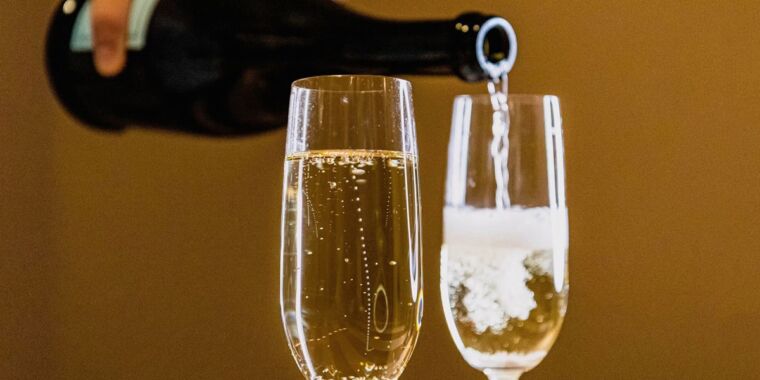
Cracking the Mystery of Champagne's Unique Bubbles
Brown University physicist Roberto Zenit has discovered that surfactant molecules coat champagne bubbles and encourage more swirling, thereby disrupting the wake and creating stable vertical columns of bubbles. This is unlike other carbonated beverages, where the wake of rising bubbles knocks other bubbles sideways so that multiple bubbles rise simultaneously. Carbonation is a fascinating topic within fluid dynamics, and champagne's effervescence arises from the nucleation of bubbles on the glass walls. When the bubbles in champagne burst, they produce droplets that release aromatic compounds believed to enhance the flavor.