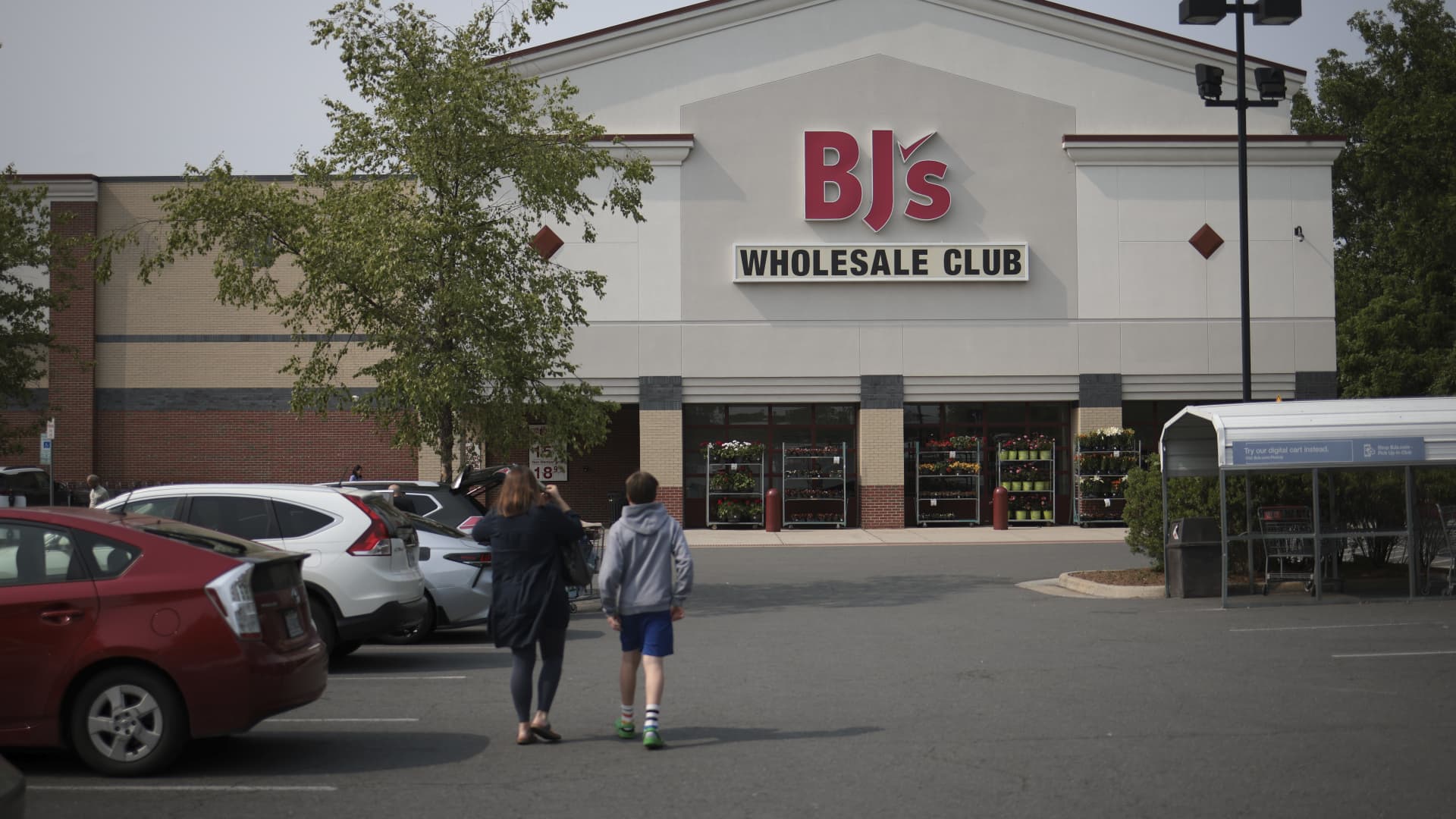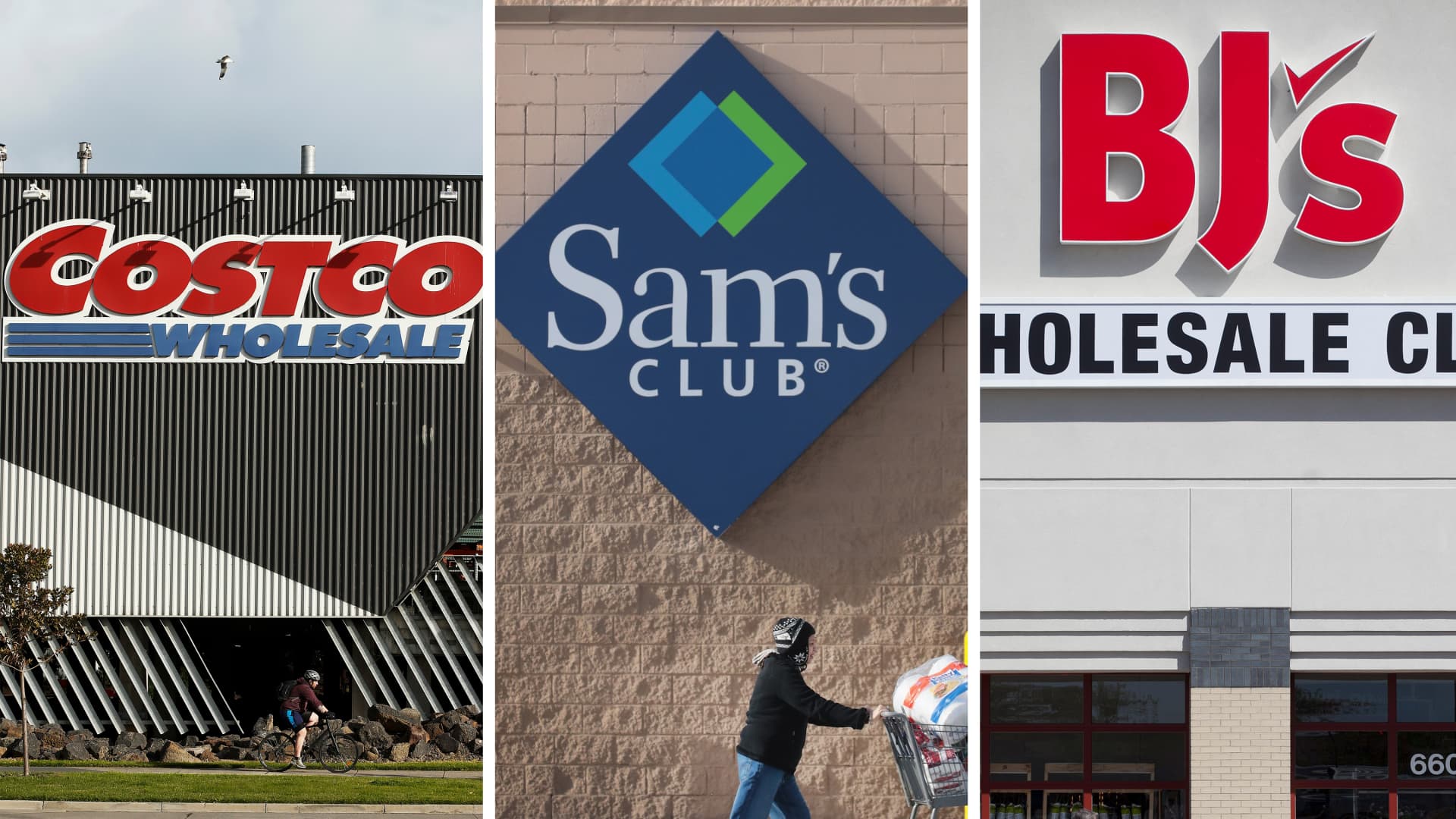
Costco, Sam's Club, and BJ's Wholesale are expanding their store networks and attracting more members, especially younger demographics, driven by increased demand for value, convenience, and digital shopping options. These clubs are innovating with new products, technology, and store formats to sustain growth amid economic and tariff challenges.
BJ's Wholesale Club shares rose after reporting strong third-quarter earnings, with net income up nearly 20% year-over-year, despite slightly missing revenue estimates. The company announced its first membership fee increase in seven years, following a similar move by Costco, and introduced a new $1 billion stock buyback program. BJ's also raised its full-year sales growth and earnings per share guidance.
BJ's Wholesale Club plans to open five new locations in Florida, Indiana, South Carolina, and Tennessee, creating 150 new jobs in each area. The company's expansion plan for fiscal 2024 includes establishing 12 new clubs and opening 15 gas stations. BJ's aims to bring its value-driven shopping experience to new and existing markets, with a strong focus on member acquisition and engagement. The Massachusetts-based company currently operates in 20 states with 244 clubs and 175 gas locations.
BJ's Wholesale Club plans to open four new clubs in the Southeast and one in the Midwest this year, aiming to expand its reach and attract more members in a competitive market dominated by Costco and Sam's Club. The company, which has been in growth mode since 2016, plans to open a dozen new clubs this fiscal year. With an emphasis on grocery items and a focus on attracting budget-conscious shoppers, BJ's aims to differentiate itself from its larger rivals and steal sales from regional and national supermarkets.
BJ's Wholesale reported Q1 earnings that were in line with expectations, but its Q2 comps are tracking below the 5.7% increase seen in Q1. However, commentary from BJ's leadership suggests that consumers are growing more cautious while inflation continues to moderate. Retail sales in April rose less than expected, but economists say consumers remain inclined to spend, though they are becoming more selective in their purchases. BJ's CEO expects inflation to decelerate through this year, and the latest data on consumer prices showed headline inflation rose 5% over last year in April, the slowest annual increase in two years.