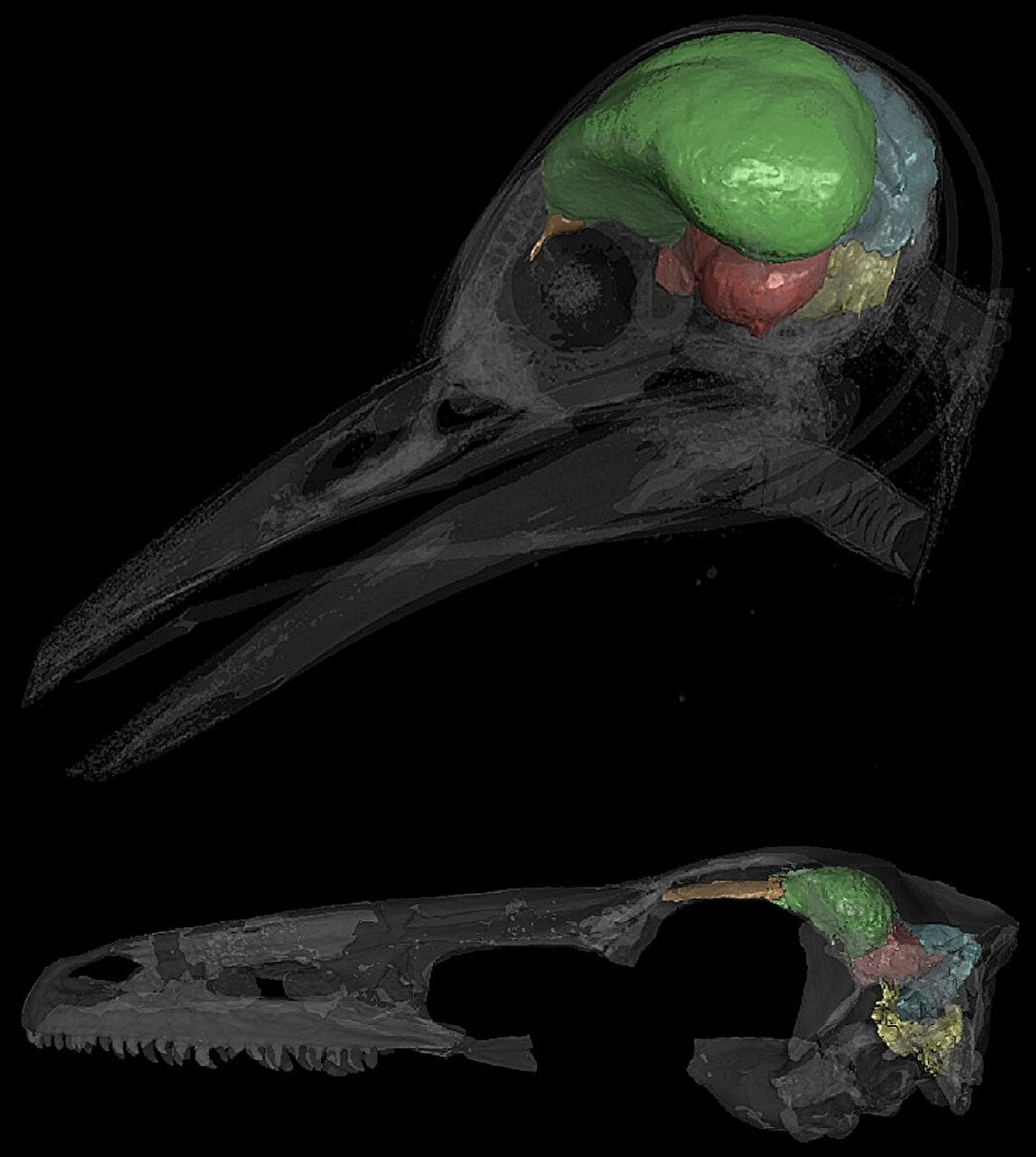
Unraveling the Evolutionary Secrets of Bird Flight
Scientists from Johns Hopkins University School of Medicine have used Positron Emission Tomography (PET) and dinosaur fossil comparisons to uncover the role of the cerebellum in enabling bird flight. Their research revealed an adaptive growth in the cerebellum's size, indicating its involvement in the planning, steering, and learning of motor functions among fossilized vertebrates. The study also identified increased brain activity in optic flow pathways during flight. By comparing modern bird brain activity with dinosaur fossil documentation, the researchers traced the development of neural conditions for flight in avian ancestors. This discovery sheds light on the evolutionary history of flight and paves the way for further analysis of specific brain regions involved in flight readiness.