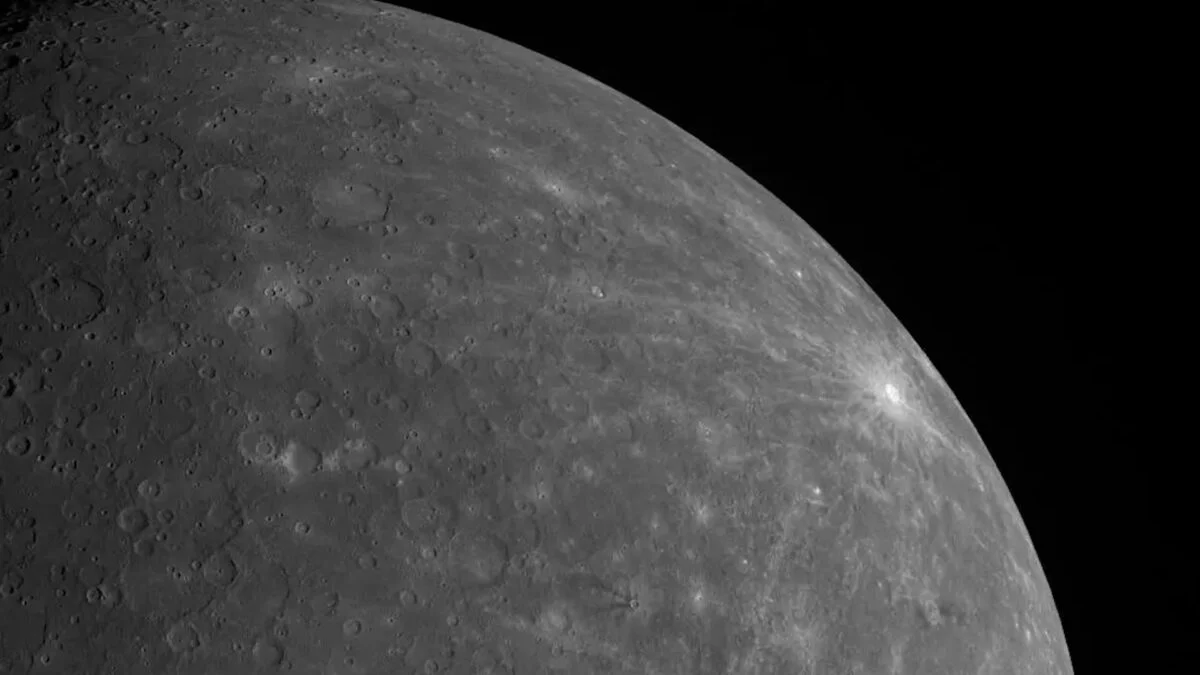
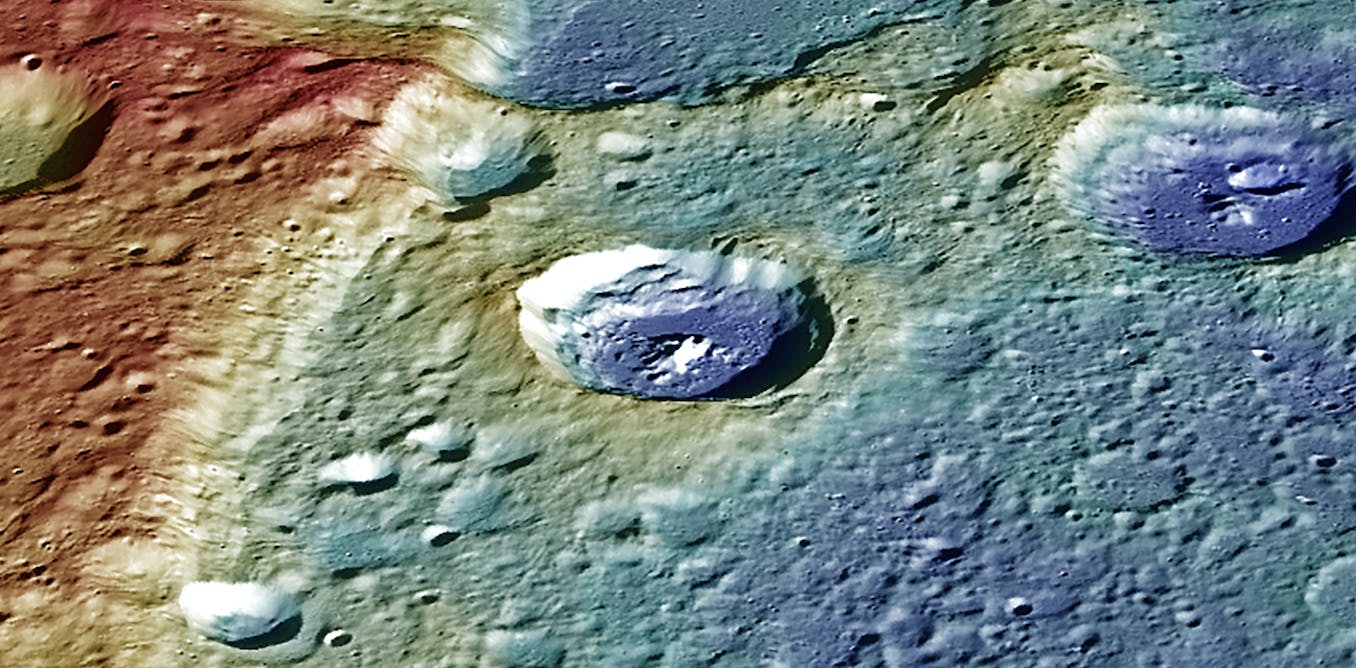
A new study suggests that Mercury's surface features, including cracks and fractures, may be significantly influenced by tidal forces from the Sun, in addition to cooling and contracting, with ongoing research from the BepiColombo mission aiming to further explore these effects.
New research suggests that Mercury, the closest planet to the Sun, is still shrinking due to the cooling of its interior. The planet's surface develops "thrust faults" as it progressively has less area to cover, similar to wrinkles on an aging apple. The age of Mercury's scarps, which are evidence of its shrinkage, has been difficult to determine, but recent findings indicate that many scarps have continued to move in geologically recent times. The joint European/Japanese BepiColombo mission, set to orbit Mercury in 2026, will provide further confirmation of these findings. The Moon, which has also cooled and contracted, has shown evidence of recent activity near its scarps, providing insights into Mercury's geological processes.