Tesla has requested NHTSA to keep its responses to regulators confidential regarding its Robotaxi launch, amid concerns over safety incidents and lack of transparency in crash data. The agency is investigating Tesla's autonomous system, which has already shown significant errors during initial operations, and has not been provided with detailed safety data by Tesla, raising questions about the system's compliance with safety standards.
Nvidia Corp. is expanding its workforce in China, increasing its staff from about 3,000 to 4,000 by the end of the year, with a focus on enhancing research in autonomous driving technologies. The company has added around 200 employees in Beijing to strengthen its self-driving research team, alongside enlarging its after-sales service and networking software development teams.
Tesla shares rose as Morgan Stanley analyst Adam Jonas increased his price target to $400, citing Tesla's leadership in autonomous driving and potential benefits from Elon Musk's relationship with President-elect Trump. Despite potential challenges like reduced EV tax incentives and new tariffs, Tesla's market value has surged by $450 billion since Election Day. Analysts expect Tesla's AI and self-driving technologies to expand its market reach, with regulatory support anticipated under the new administration.
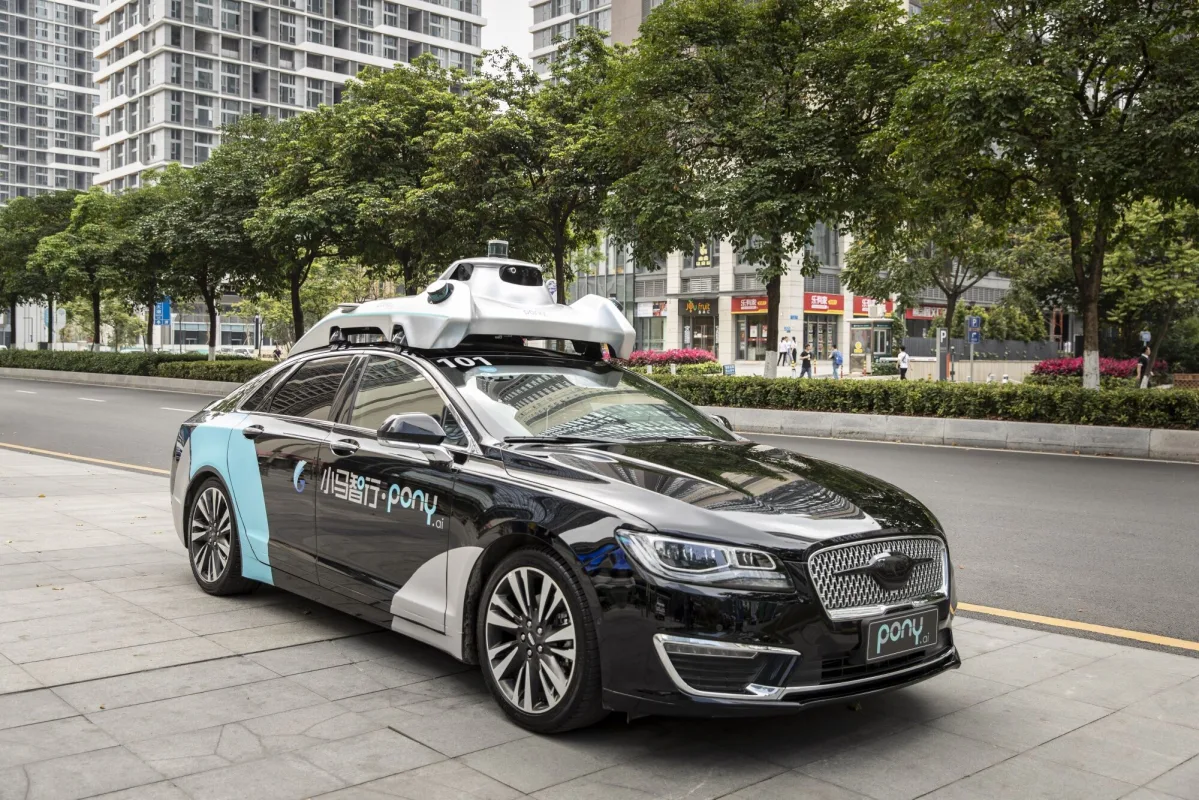
Pony AI Inc., a Chinese autonomous driving startup, saw its American depositary shares rise 19% on their US trading debut after raising $413.4 million through an IPO and private placements. The company, which develops self-driving vehicles, priced its shares at the top of the marketed range, giving it a market value of nearly $5.4 billion. The IPO is part of a modest revival of Chinese companies listing in the US, with Pony AI's offering contributing to the $1.2 billion raised by Chinese firms in US IPOs this year.
Tesla's stock surged 10%, reaching its highest level since early 2022, as Wall Street grows optimistic about the company's prospects under the Trump administration. Analysts at Wedbush raised their price target for Tesla, citing potential regulatory easing for autonomous and AI initiatives. Tesla's market cap now exceeds $1.1 trillion, with significant losses for short sellers amid the stock's post-election rally.
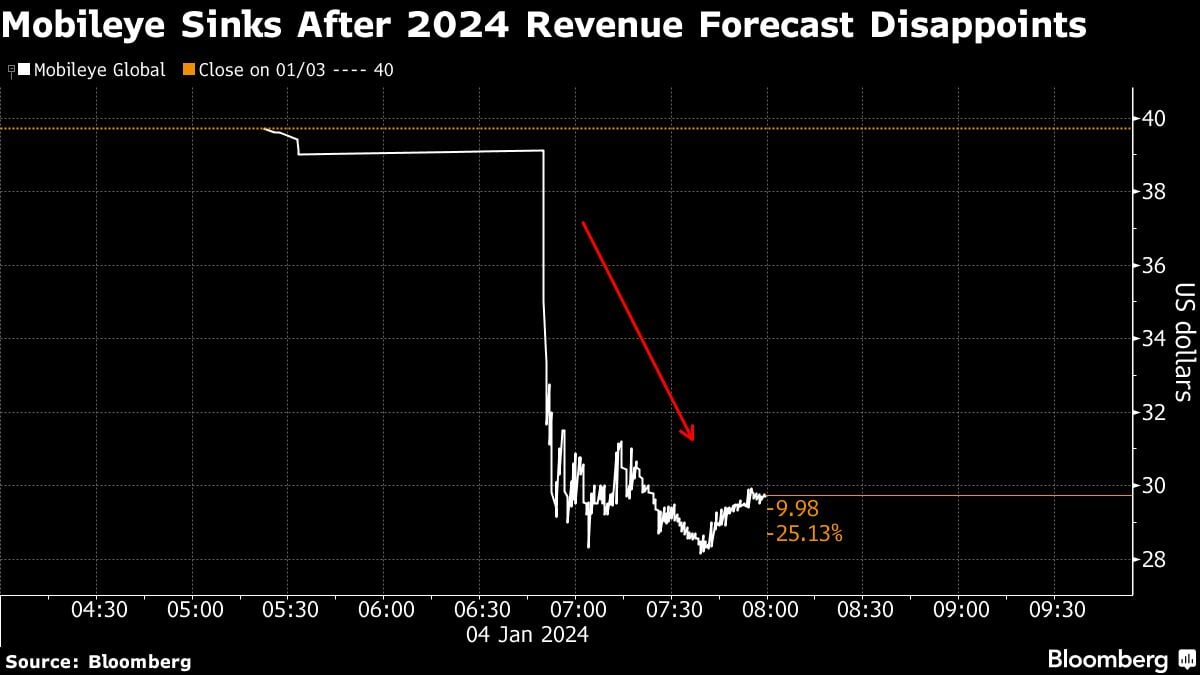
Mobileye Global Inc.'s stock plummeted by as much as 29% after the company's full-year revenue forecast for 2024 came in significantly lower than analysts' expectations, projecting between $1.83 billion and $1.96 billion versus the anticipated $2.58 billion. The company attributes the lower forecast to customers having excess ADAS chip inventory post-pandemic, which they expect to be utilized in the first quarter. The news affected not only Mobileye but also Intel Corp., which holds an 88% stake in the company. The chip industry is facing challenges with oversupply and reduced demand, leading to inventory gluts and price drops. Mobileye's disappointing outlook has led to downgrades from analysts and concerns over the timing of revenue growth.
Mobileye Global, an autonomous driving technology company, has projected its fiscal 2024 revenue to be significantly lower than market estimates, anticipating a decrease in customer orders as they manage excess inventory. This announcement led to a sharp 26% drop in the company's shares in premarket trading. Mobileye expects a roughly 50% decline in first-quarter revenue year-over-year and forecasts total fiscal 2024 revenue to be between $1.83 billion and $1.96 billion, below the expected $2.58 billion.
BYD has surpassed Tesla in electric vehicle (EV) sales, with the Chinese automaker selling 526,409 fully electric cars in the final quarter of 2023 compared to Tesla's 484,507. Despite a 38% increase in Tesla's year-over-year deliveries, BYD's total EV sales for 2023 reached 3,023,679, a 62% increase from the previous year. BYD's success is attributed to its focus on battery technology and a vertically integrated business model, contrasting with Tesla's emphasis on autonomous driving and high-tech features. As BYD continues to expand and innovate, including the launch of new EV brands and direct sales models, the competition between the two companies is expected to intensify in 2024.