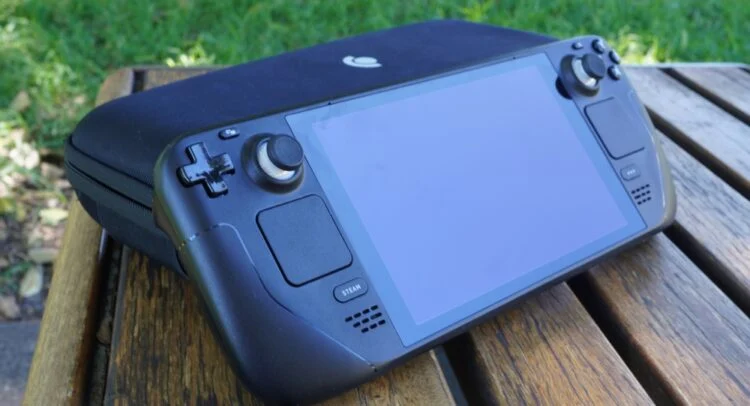
AMD's stock rose following rumors that its Magnus Zen 6 APU will power Valve's Steam Deck 2, potentially aligning with next-gen consoles like PlayStation 6 and Xbox. The new APU is expected in 2026, suggesting a possible release of the Steam Deck 2 after that. AMD's stock has performed well this year, supported by efforts to compete in the gaming market, with analysts giving it a moderate buy rating and a target price of $145.90.
NVIDIA and MediaTek are reportedly developing a dedicated APU for gaming laptops, expected to launch by early 2024, initially exclusive to Dell's Alienware lineup, aiming to compete in the mobile processor market dominated by AMD and Intel.
AMD is set to launch its Ryzen 8000G desktop APU series on January 31st, featuring Zen4/RDNA3 mobile silicon in a new form factor for the AM5 socket. The series includes the 8-core Ryzen 7 8700G and 6-core Ryzen 5 8600G models, equipped with integrated RDNA3 graphics and a built-in XDNA1 Ryzen AI accelerator. AMD claims these APUs will outperform Intel's Core i7-14700K and even compete with systems powered by a Core i5-13400F and GeForce GTX 1650 graphics card. The Ryzen 7 8700G will retail at $329, the Ryzen 5 8600G at $229, and the Ryzen 5 8500G at $179, with availability starting on January 31st.
AMD's upcoming Ryzen 7 8700G desktop APU has been leaked, revealing significant improvements over its predecessors. The APU features 8 Zen4 cores and 16 threads, with a base clock of 4.2 GHz and a boost clock of 5.1 GHz. It also introduces Radeon 780M graphics with 12 Compute Units and a 2.9 GHz boost clock, marking a transition from Vega graphics to the more powerful RDNA3 architecture. Benchmark results suggest a substantial performance increase, potentially doubling the speed of the Ryzen 7 5700G's integrated graphics. However, real-world gaming performance is yet to be assessed through independent reviews.
The AMD Ryzen 7 8700G "Hawk Point" APU has been spotted in Geekbench benchmarks, revealing an 8-core, 16-thread configuration with a 5.1 GHz boost clock and an integrated Radeon 780M GPU with 12 Compute Units. The APU, which is part of the upcoming Ryzen 8000G series, was tested on an ASUS TUF Gaming X670E-PLUS WIFI board with DDR5-4800 memory, indicating potential for higher performance with faster memory. The Ryzen 7 8700G showed a 15% increase in Vulkan performance and an 18% increase in OpenCL performance over the Ryzen 5 8600G. More details are expected at AMD's CES 2024 event, with the "Hawk Point" APUs set to launch in late January.
AMD is set to update its desktop APU lineup with the Ryzen 8000G series, featuring the Ryzen 5 8600G with 6 Zen4 cores and Radeon 760M RDNA3 graphics. The Ryzen 5 8600G shows a significant performance boost over its predecessor, the Ryzen 5 5600G, with higher CPU and GPU clock speeds. The new APU is expected to launch this quarter, potentially being announced at CES 2024.
The AMD Ryzen 5 8600G "Hawk Point" APU has been spotted in Geekbench benchmarks, revealing a 6-core configuration with a 5 GHz boost clock and an integrated Radeon 760M iGPU with 8 compute units. This APU is part of the Ryzen 8000G series for the AM5 desktop platform, combining Zen 4 CPU architecture with RDNA 3 GPU architecture. The Ryzen 5 8600G shows a 20% performance increase over its mobility counterparts and is expected to offer significant value for budget and mainstream gamers. More details are anticipated at AMD's CES 2024 event.
Specifications and benchmarks of AMD's upcoming Ryzen 8000G "Phoenix" APU family for the AM5 desktop platform have been leaked. The APUs will feature the Zen 4 core architecture for the CPU side and the RDNA 3 core architecture for the graphics. The flagship SKU, Ryzen 7 8700G, will offer 8 cores, 16 threads, a base clock of 4.2 GHz, and a boost clock of 5.1 GHz. Benchmarks show that the RDNA 3 iGPU on the Ryzen 8000G APUs offers over 2.5x performance boost compared to the previous generation. The APUs are expected to launch on January 31st.
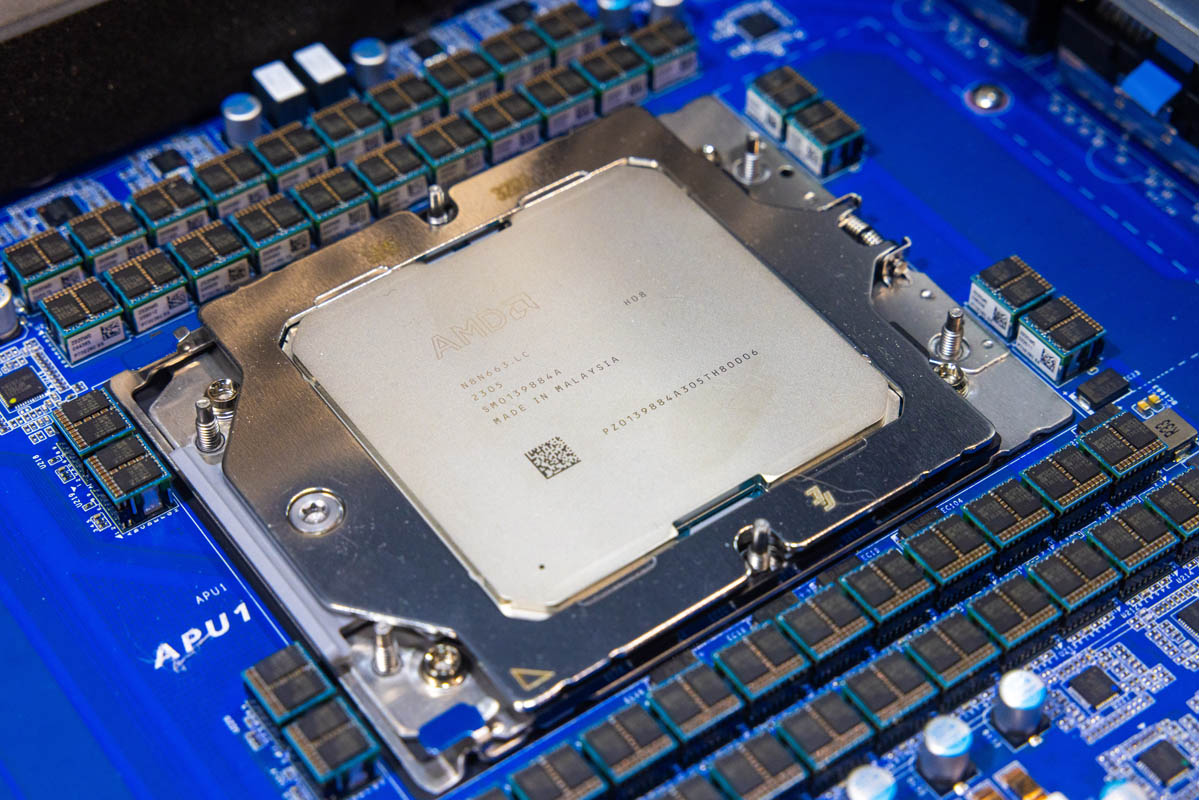
At SC23, AMD showcased its high-end GPUs and APUs, including the MI300A and MI300X. The MI300A is a large APU with a socketed processor, similar to the SP5 socket used in AMD's Genoa, Genoa-X, and Bergamo CPUs. It features onboard HBM for memory needs and multiple PCIe Gen5 interfaces. The MI300X is an all-GPU configuration. Details on CXL support and memory expansion via Type-3 CXL devices are still unknown.
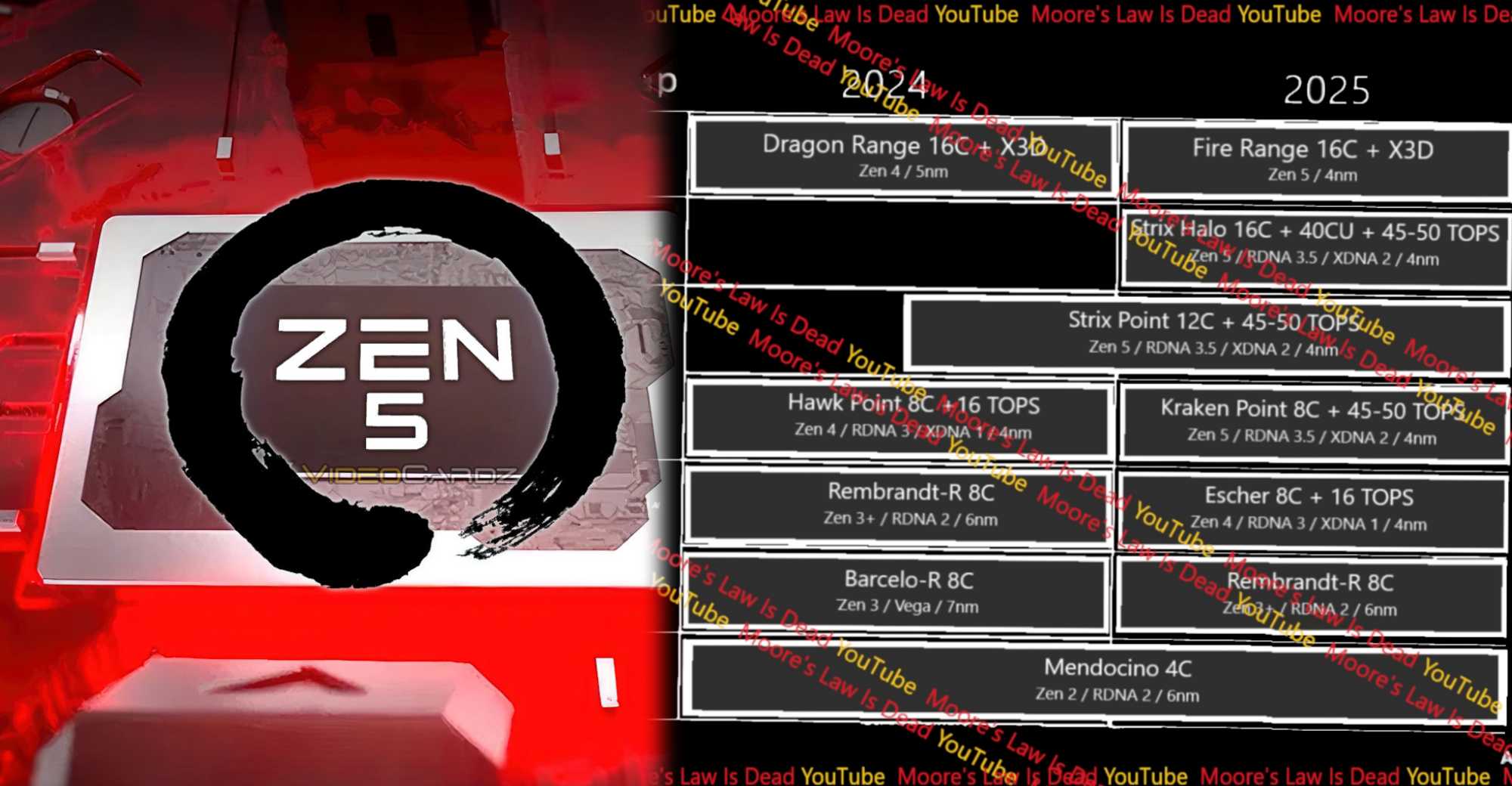
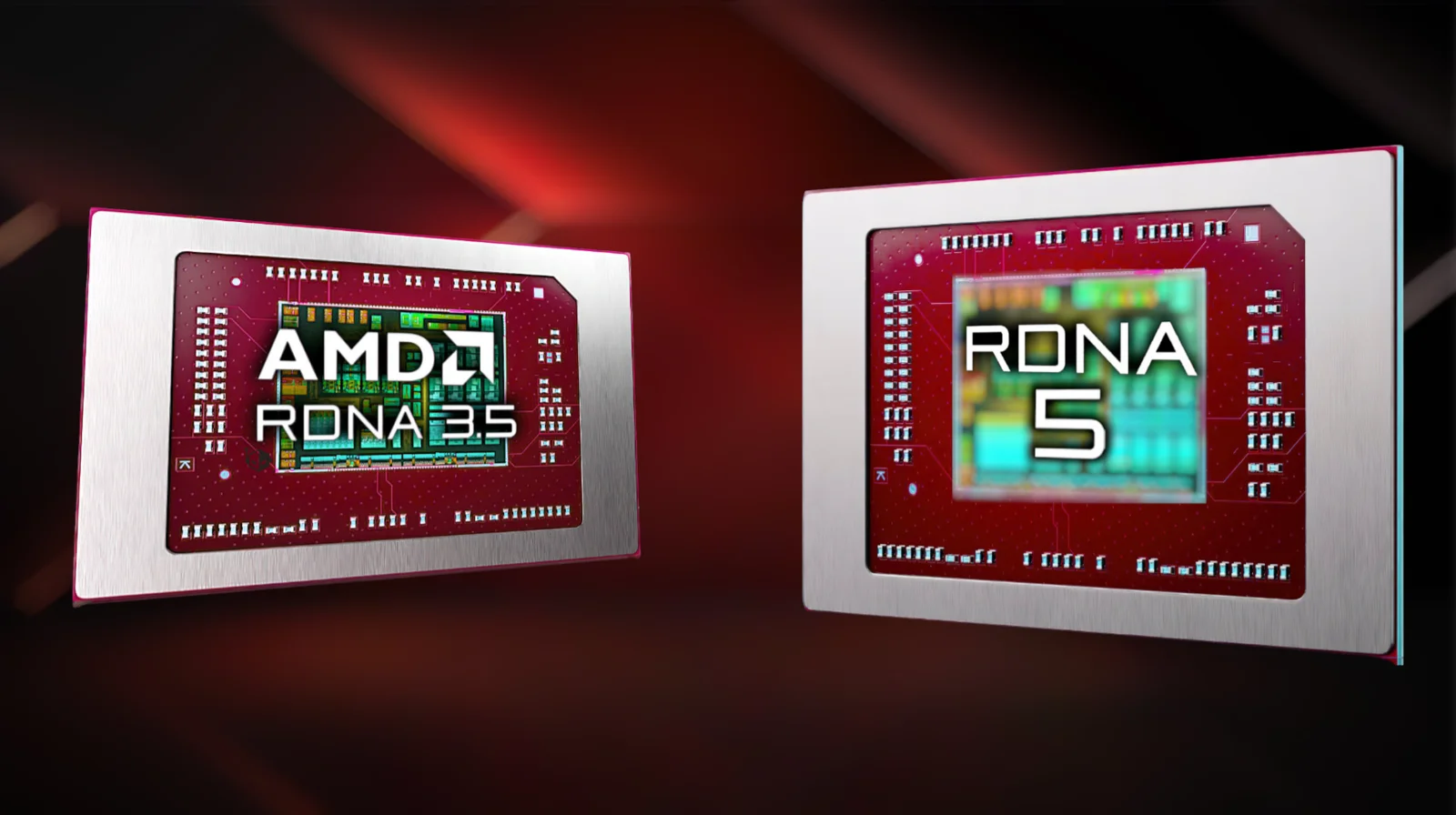
A leaked roadmap reveals AMD's plans for their upcoming Zen5 processors, focusing on APUs with integrated graphics architecture. The roadmap shows the release of the Dragon Range architecture in 2024 for high-performance gaming systems, followed by the Fire Range series in 2025. The Strix Point APU, featuring Zen5 CPU cores, RDNA 3.5 GPU cores, and XDNA 2 AI-cores, is expected to launch in mid-2024, while the Strix Halo APU with 16 Zen5 cores and RDNA 3.5 Compute Units is slated for a 2025 release. The increased AI performance is likely in response to the requirements of the upcoming Windows 12 operating system.
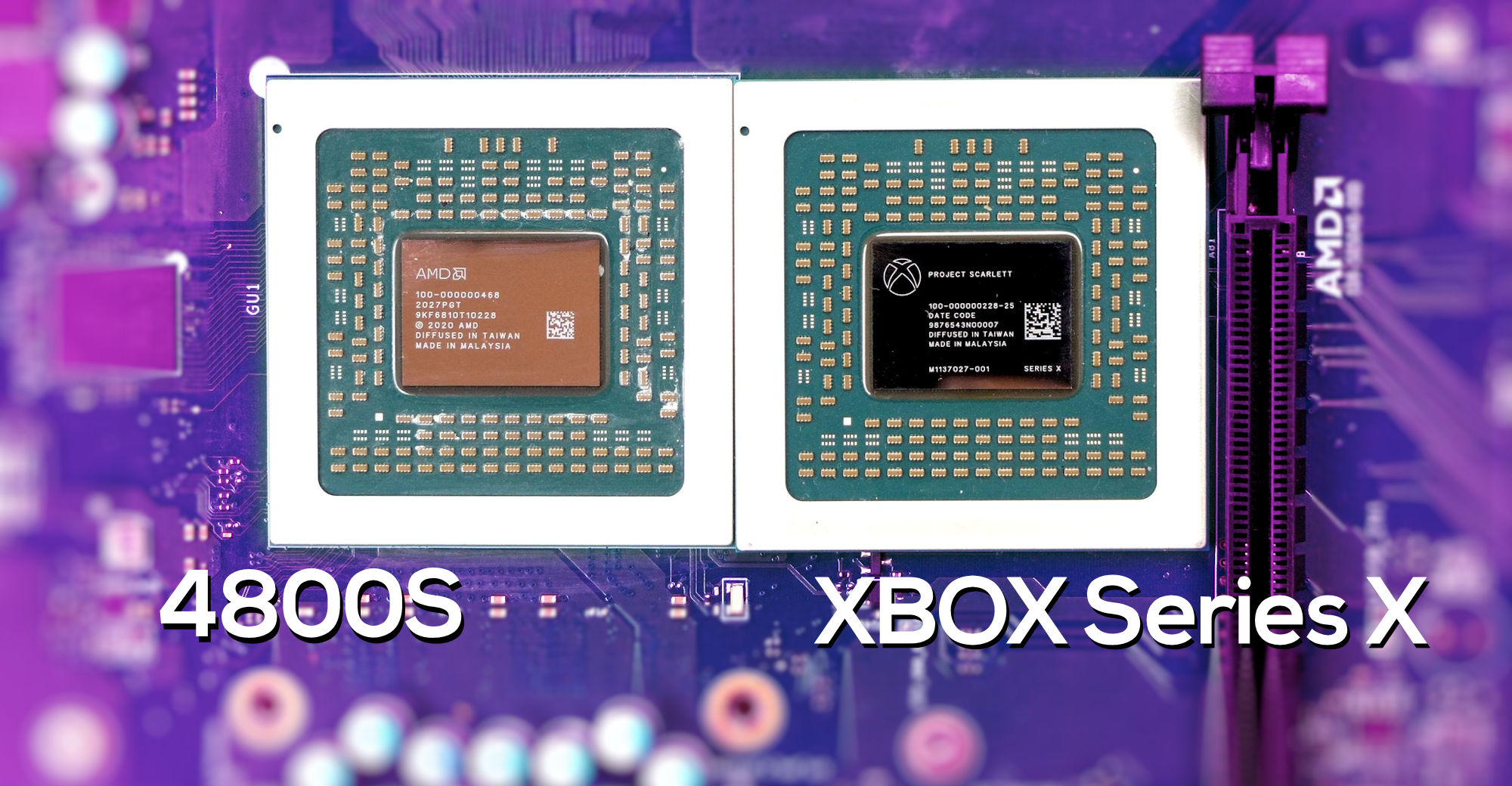
The AMD 4800S Desktop Kit is a repurposed Xbox Series X APU for the PC market. It features a large processor with 8 Zen2 cores and disabled RDNA2 GPU cores. The kit offers improvements over its predecessor, including PCIe Gen4 x4 interface, two M.2 slots, and more SATA ports. However, its gaming performance falls between two Zen2 CPUs and is inferior to the Zen4 based Ryzen 5 7600. The availability of the 4800S is limited, making it not recommended to buy, especially considering cheaper and faster alternatives on the market.
Hank Azaria, who played the character Apu in The Simpsons, has revealed that he was "afraid" to appear in the 2017 documentary The Trouble With Apu, which called out the problems with the depiction of the character. Azaria expressed regret for playing Apu with a stereotypical Indian accent and acknowledged that he helped to create a marginalizing and dehumanizing stereotype. He also admitted that he caused pain to performers and made their path harder.
Hank Azaria, former voice actor of Apu on "The Simpsons," opened up about the controversy surrounding his portrayal of the character as a white man on NPR's "Code Switch" podcast. Comedian Hari Kondabolu, who criticized the character in his documentary "The Problem With Apu," joined Azaria for their first public conversation about the issue. Azaria admitted that he now finds his casting "embarrassing" and acknowledged how his character fed into "the broader dehumanization of Desi people in the United States." Since Azaria stopped voicing the character, Apu has been mostly sidelined from the show.