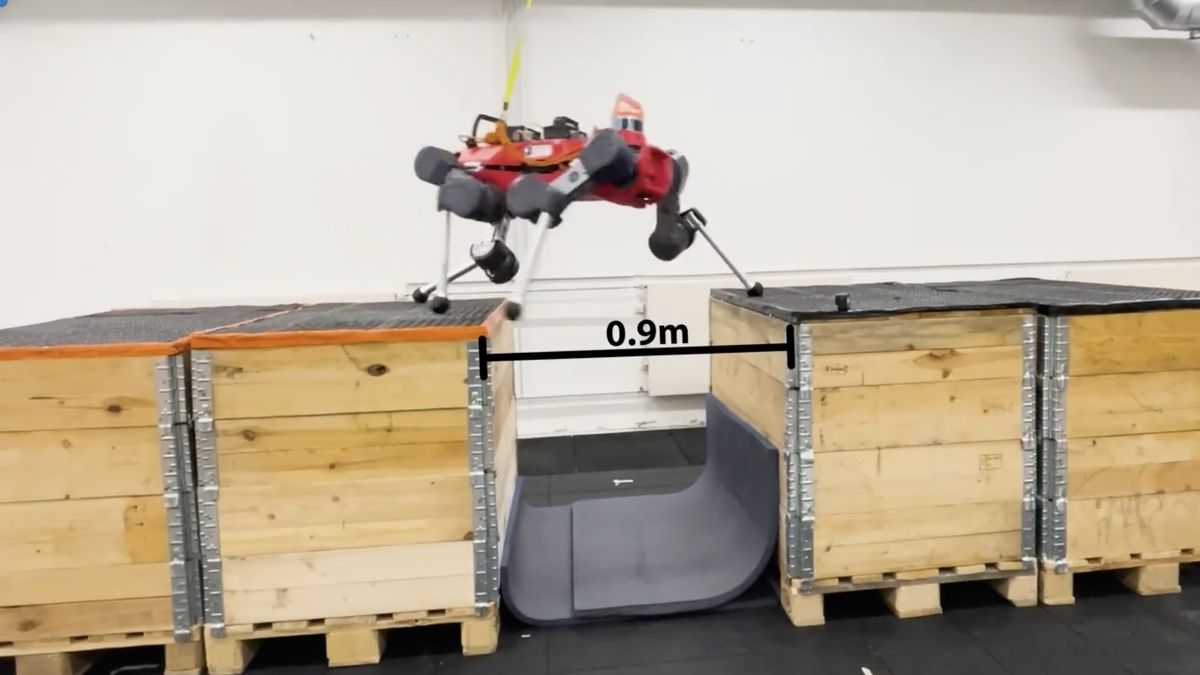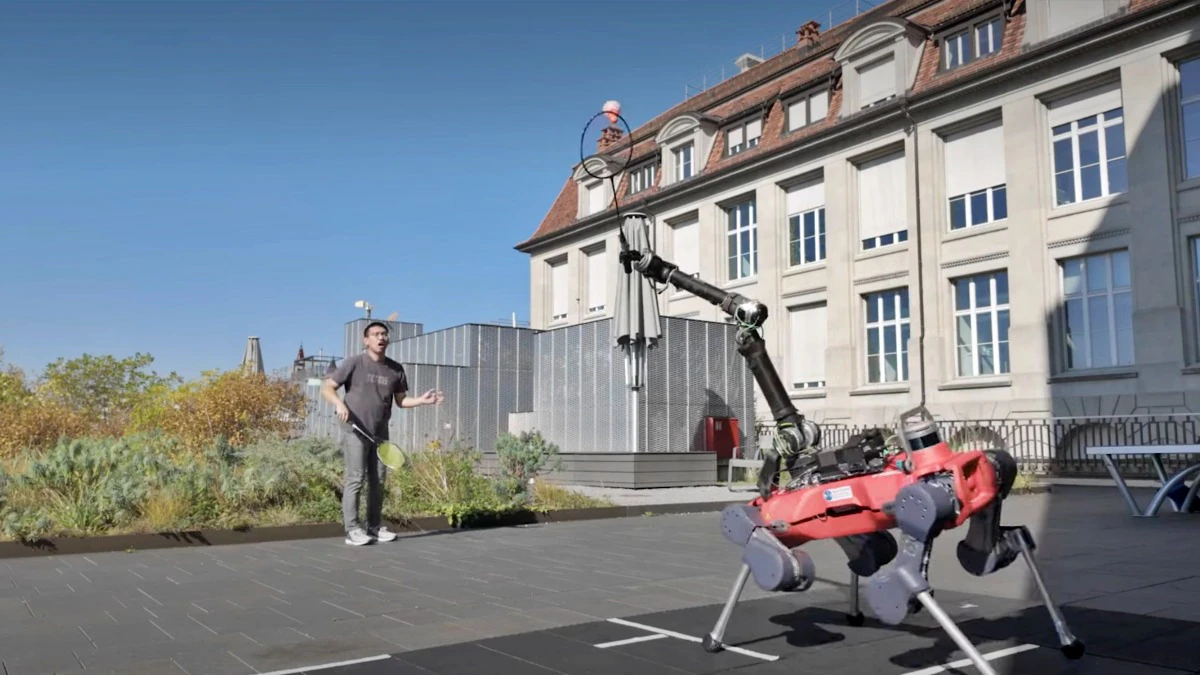
Researchers at ETH Zurich have trained the four-legged robot dog ANYmal to play badminton using AI-driven prediction models and advanced control systems, demonstrating significant progress in robotic agility and real-time physical skills with potential applications in disaster response and industrial assistance.
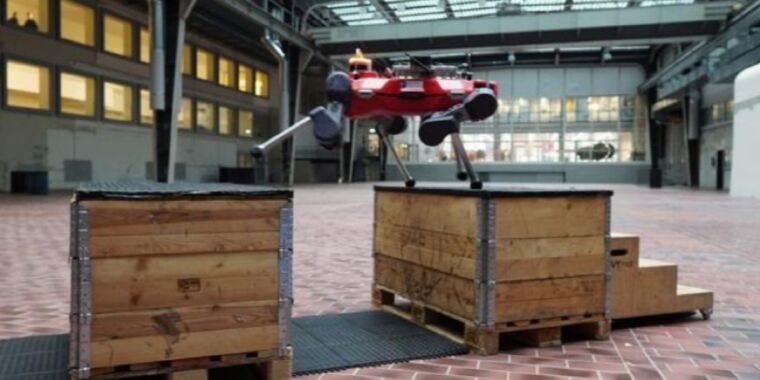
Researchers at ETH Zurich have enhanced the capabilities of the quadrupedal robot ANYmal, enabling it to perform rudimentary parkour moves and navigate rubble and tricky terrain. The robot's upgrades include improved proprioception, reinforcement learning, and model-based control, allowing it to jump across gaps, climb obstacles, and maneuver under obstacles. While ANYmal's advancements are impressive, challenges remain in scaling its capabilities to diverse and unstructured scenarios. Nonetheless, the research aims to increase the agility and capabilities of legged robots for applications such as search-and-rescue missions in challenging environments.
Scientists have used AI to train a four-legged robot, ANYmal, to navigate a basic parkour course, showcasing agility and skills that could be useful in search and rescue missions. By employing neural networks, the robot learned to walk, crouch, climb, and jump, resembling the agility of free runners. The training methods, described in a study, aim to enhance the capabilities of robot dogs for various applications. The robot's successful navigation of the real course demonstrates the potential for deployment in disaster environments, with plans for further improvements to its agility.