Supercomputer Unveils Cicada Wings' Bacterial Annihilation Secrets
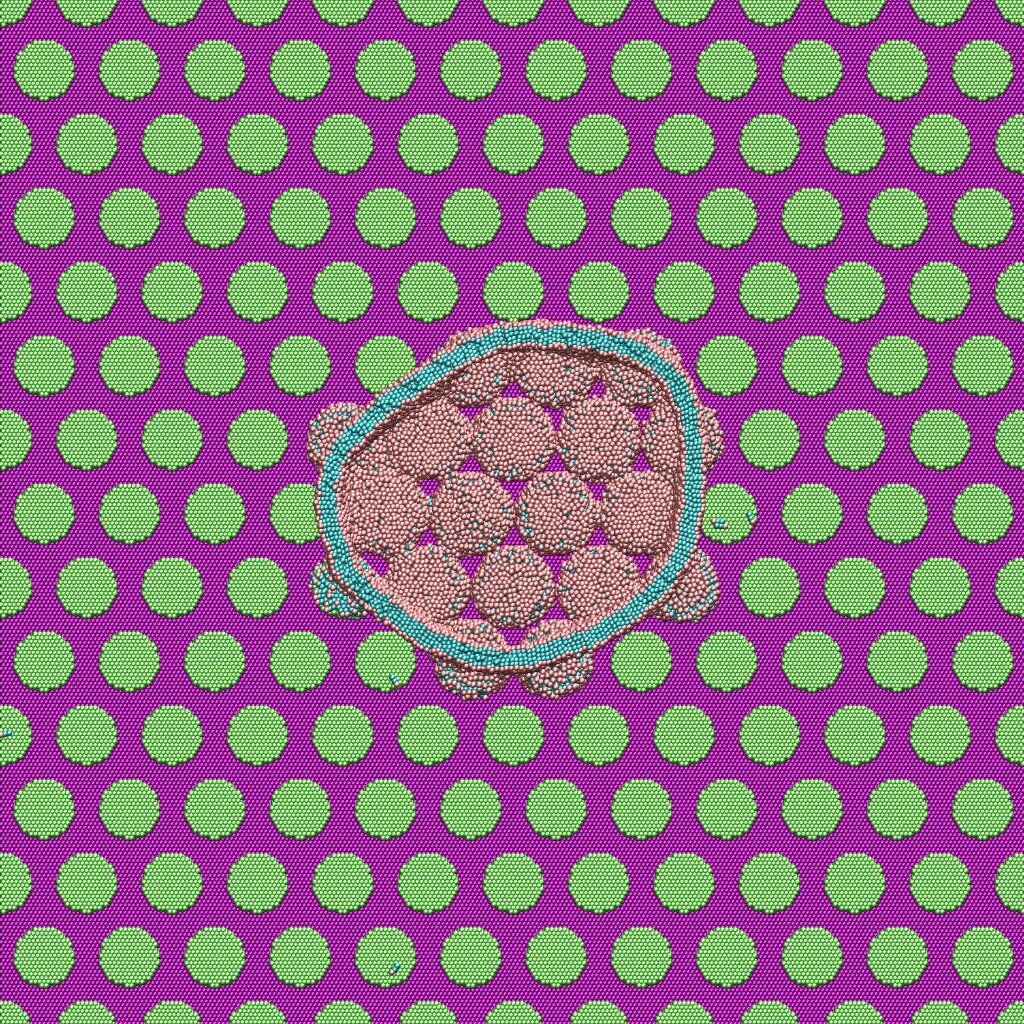
Scientists at Stony Brook University and Oak Ridge National Laboratory have used supercomputer simulations to gain insight into how cicada wings kill bacteria. By replicating the nanostructure of cicada wings, researchers were able to create nanosurfaces with antibacterial properties. The simulations showed that the nanopillars on the nanosurfaces interact with bacterial cell membranes, causing them to stretch and collapse, leading to the bacteria's death. Surprisingly, the height of the nanopillars was not crucial to their antibacterial effectiveness. The researchers plan to further investigate the self-cleaning functionality of the nanosurfaces before applying them to biomedical devices.